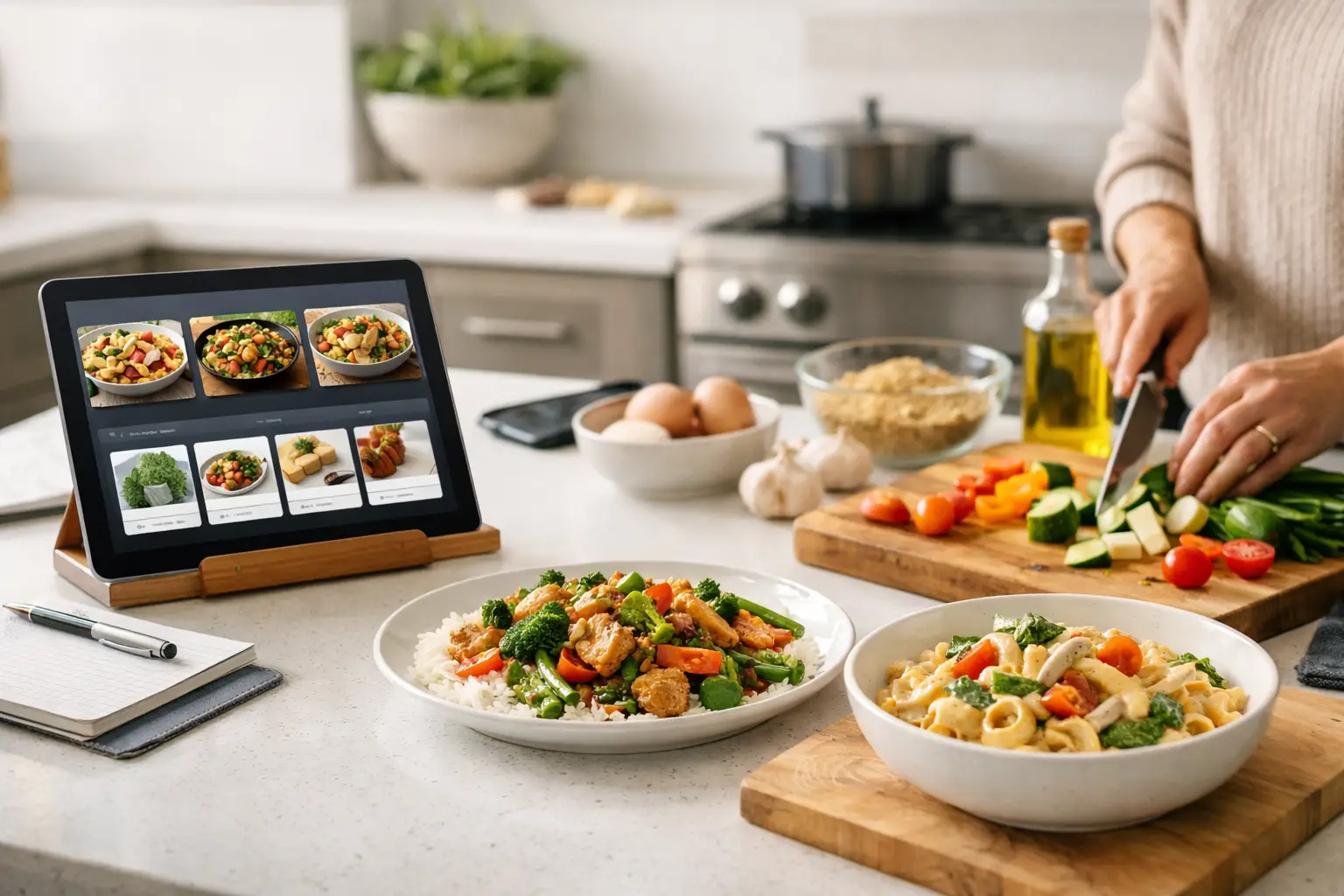
AI Chef Assistant for Easier Weeknight Meals
At 5:30 p.m., the hardest part of dinner is rarely the cooking. It is deciding what to make from half-used vegetables, a package of chicken, leftover rice, and whatever everyone in the house will actually eat.
An AI chef assistant can shorten that decision by turning a few real-life details into a recipe that fits your kitchen, schedule, and preferences.
For busy home cooks, the value is not a long list of impressive ideas. It is getting one useful answer: a meal you can make tonight and a practical way to use what you already have. FlavorLab brings recipe ideas, pantry-first cooking, nutrition estimates, meal planning, and creator-led inspiration into one connected kitchen experience.
What an AI Chef Assistant Can Actually Help With
Think of an AI chef assistant as a practical cooking sounding board. Instead of searching broadly for “easy dinner,” you can share the details that matter:
- The ingredients in your fridge
- The time you have
- The number of servings you need
- The cuisine you are craving
- Any dietary preferences you want to accommodate
That context changes the result.
A request for a quick pasta dinner is useful, but a request for a 25-minute vegetarian pasta for two using spinach, mushrooms, lemon, and pantry staples is much more likely to lead to a meal you will actually cook.
The FlavorLab AI Chef can turn that kind of request into a structured recipe with ingredient amounts, clear cooking steps, estimated nutrition, and a finished-dish image to help you picture the result.
It can also help before you choose a dish. If you have carrots that need using, a few eggs, tortillas, and cheese, ask for several possible directions rather than one fixed recipe.
You might land on breakfast tacos, a vegetable quesadilla, or a baked frittata depending on your appetite and the time available. You can also browse FlavorLab recipes when you want inspiration without starting from a blank prompt.
The goal is not to hand every food decision to a screen. It is to remove the blank-page moment, then leave you with enough flexibility to cook in a way that still feels like your own.
Start With Your Real Constraints
The best prompts are specific without being fussy.
Start with what is non-negotiable:
- Ingredients that need to be used
- The number of people eating
- The available cooking time
- Dietary needs or preferences
- The kind of food you want
For example:
> Make a 30-minute family dinner for four with ground turkey, broccoli, rice, and no dairy.
Another useful prompt could be:
> I need a filling lunch for one using canned chickpeas and cucumber, with minimal cooking.
Both prompts are more useful than asking for a generic healthy recipe because they reflect the meal in front of you.
A few additional details can make the output significantly better:
- Mention ingredients that are close to spoiling, not just everything in your kitchen.
- Say what equipment you have, such as an oven, air fryer, blender, or one large pan.
- Be honest about time. A 15-minute meal and a 45-minute meal require different choices.
- Include texture or flavour preferences such as mild, spicy, crunchy, creamy, or kid-friendly.
There is a trade-off here. The more constraints you add, the narrower the recipe becomes.
That is ideal when you need to use specific ingredients or meet a firm preference. On a weekend, when you want inspiration more than efficiency, leave the request more open and ask for a few cuisine-specific ideas instead.
Ask for substitutions before you need them
A recipe should not fall apart because you are missing one ingredient.
When a suggested dish includes something you do not have, ask for a replacement that works with the same cooking method. Plain yogurt may stand in for sour cream in some sauces, while lemon and olive oil can add brightness when fresh herbs are missing.
The important question is not simply:
> What can replace this ingredient?
A more useful question is:
> What replacement will keep the dish balanced?
A useful cooking assistant should suggest changes based on the ingredient’s role in the recipe, such as:
- Richness
- Acidity
- Crunch
- Moisture
- Structure
- Seasoning
Use your judgement, especially when baking.
Substitutions are usually more forgiving in soups, stir-fries, bowls, and salads than in cakes or breads, where proportions and ingredient chemistry matter more. For baked recipes, ask for a fully revised recipe rather than making several untested swaps.
Use It to Rescue Your Pantry, Not Just Fill It
Food waste often happens because ingredients become invisible.
A bag of greens gets tucked behind condiments, or a carton of mushrooms is bought with good intentions and forgotten until the weekend. A pantry-aware approach brings those ingredients back into the dinner decision.
Before making a grocery list, check what needs attention first. Enter a few items that are nearing their best quality and ask for meals built around them.
This can lead to smarter combinations:
- Roasted vegetables folded into grain bowls
- Wilting herbs blended into a sauce
- Leftover cooked rice turned into a quick skillet meal
- Soft vegetables added to soups or pasta sauces
- Small amounts of protein reused in wraps or salads
This is the idea behind FlavorLab’s Pantry Rescue experience: start with what is already in your kitchen, then build a realistic meal around it instead of buying another disconnected set of ingredients.
Pantry-first cooking also makes weekly meal planning more practical.
Rather than choosing five unrelated dinners and buying a long list of one-off ingredients, plan around overlap.
Roast extra vegetables for lunches. Use one bunch of cilantro across tacos, rice bowls, and a dip. Cook a larger batch of grains once, then change the toppings and seasonings over the next few meals.
An assistant can suggest those connections, but it cannot see what is in your fridge unless you tell it.
A simple pantry record makes recommendations more useful and helps prevent duplicate purchases. It does not need to be perfect. Even tracking the ingredients you buy often or tend to forget can improve your weekly plan.
Turn One Good Recipe Into a Better Week
A recipe solves one meal. A connected cooking plan solves the repeated decisions around it.
When you find a dinner that works, look at what else it can support.
If you are making chicken and roasted vegetables on Monday, the leftovers might become:
- Wraps
- Grain bowls
- Salads
- Tacos
- A quick soup
If you are cooking lentils for one dish, consider whether a second recipe can use the remaining portion.
This saves time without forcing your household to eat the exact same meal repeatedly.
Shopping lists matter here too.
A useful list combines ingredients across planned meals so you can see the total amount of onions, greens, grains, and proteins you need. It also makes it easier to check your pantry before buying more.
The result is a grocery trip that reflects your actual week instead of a collection of disconnected recipe tabs.
For students and smaller households, planning can be lighter. Choose two dinners, one flexible lunch option, and a few ingredients that can move between meals.
For families, plan several anchor meals and leave one night open for leftovers or a fast pantry dinner.
The right system depends on how predictable your schedule is.
Keep the Cooking Experience Simple
Once the meal is chosen, the assistant should fade into the background.
Read the recipe first, set out the ingredients, and use a cooking view that lets you focus on one step at a time.
This is especially helpful for beginners who feel overwhelmed by scanning a full recipe while trying to chop, stir, and watch the pan.
Use the instructions as a guide, not a rulebook.
Vegetables may need longer than stated if they are cut larger. A sauce may need a splash of water if it reduces too quickly. Taste as you go when it is safe, and adjust seasoning gradually.
Cooking improves through these small observations, not through perfect execution on the first attempt.
Nutrition estimates can help when comparing meals or planning around general goals, but they are not medical advice or an exact record of what is on your plate.
Portions, brands, substitutions, and cooking methods all affect the final numbers. FlavorLab’s Nutrition Lab is best used as a practical guide for understanding a recipe, not as a substitute for professional dietary guidance.
Make the Assistant Work for Your Cooking Style
The most useful habit is to treat each recipe as the start of a conversation.
Ask for:
- A faster version
- A different protein
- A vegetarian alternative
- A dairy-free variation
- A milder version for children
- A side dish that uses your remaining vegetables
Save meals your household enjoys and notice the patterns.
Maybe you need more one-pan dinners on weeknights, more make-ahead lunches, or more ideas for using frozen food well.
An AI chef assistant is at its best when it supports your decisions rather than replacing them.
It can offer structure when you are tired, fresh ideas when your routine feels repetitive, and a practical way to use food you have already bought.
Make Tonight’s Dinner Easier
Ready to stop staring into the fridge and wondering what to cook?
Create your free FlavorLab account, open Pantry Rescue, and turn the ingredients already in your kitchen into a meal worth making.