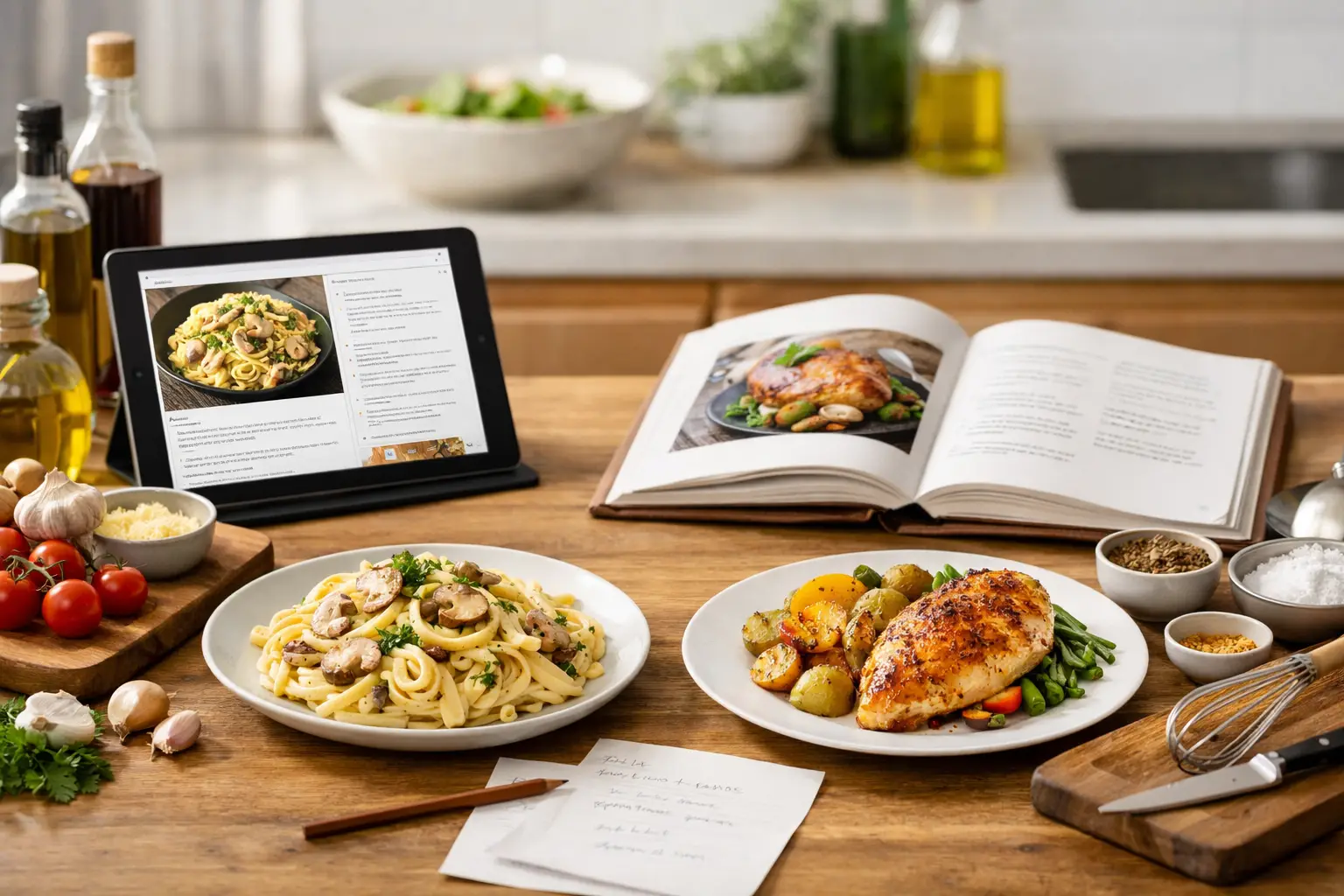
AI Recipes vs Cookbooks: Which Is Better for Everyday Cooking?
A cookbook can introduce you to a meal you remember for years.
An AI recipe can rescue dinner when you have twenty-five minutes, half a bag of spinach, several mushrooms, and no interest in making another grocery trip.
The real question in AI recipes vs cookbooks is not which one is better in every situation. It is which tool solves the cooking problem in front of you.
Cookbooks provide a creator’s experience, tested techniques, culinary context, and recipes worth returning to.
AI recipe tools provide speed, flexibility, and suggestions shaped around your ingredients, cooking time, dietary preferences, serving needs, and available equipment.
For most home cooks, the best kitchen routine does not require choosing one side permanently. Cookbooks and AI recipes can support different parts of the same cooking life.
FlavorLab brings these ideas together through recipe discovery, personalized recipe generation, pantry-first cooking, nutrition guidance, meal planning, and creator-led cooking content.
AI Recipes vs Cookbooks: The Main Difference
A cookbook begins with the author.
The author chooses the recipes, ingredients, methods, flavours, and lessons they want to share. A good cookbook can have a recognizable voice and a clear point of view.
One book may focus on practical family dinners. Another may teach bread baking, regional food traditions, restaurant techniques, or vegetable-focused cooking.
An AI recipe begins with your circumstances.
You might request:
- A vegetarian pasta using mushrooms and frozen peas
- A high-protein breakfast for one
- A dairy-free chicken dinner
- A meal using rice and vegetables that need attention
- A thirty-minute family dinner with mild flavours
- A vegan version of a familiar curry
- A one-pan meal that produces lunch leftovers
Instead of searching through an index and adapting several recipes yourself, you can describe the dinner you need right now.
A cookbook answers:
What has this author developed and chosen to teach?
An AI recipe tool answers:
What could I make with these ingredients and limitations?
Both questions are useful. They simply lead to different kinds of cooking experiences.
Where Cookbooks Still Shine
Cookbooks are especially valuable when you want to learn, not only get food onto the table.
A focused baking book can explain:
- Why ingredient temperature matters
- How mixing affects texture
- Why dough needs to rest
- How flour, fat, eggs, and liquid interact
- What visual signs indicate that something is ready
A regional cookbook may introduce the history, pantry staples, techniques, and eating traditions behind a cuisine rather than presenting one disconnected recipe.
Cookbooks also provide curation.
Instead of receiving an unlimited number of possibilities, you receive a collection chosen to work together. You can cook through one chapter, become familiar with the author’s style, and gradually build confidence.
They are particularly useful when:
- Learning a new technique
- Baking
- Cooking for guests
- Preparing a celebration meal
- Exploring a cuisine more deeply
- Following a trusted creator
- Making a recipe where precision matters
- Looking for inspiration away from a screen
Recipes in professionally produced cookbooks may also go through development, editing, and testing, although the exact process varies by publisher and author.
That structure can be reassuring when the meal matters or the cooking method is unfamiliar.
The Limitations of Cookbooks
A cookbook cannot know what is currently inside your refrigerator.
It does not know that:
- You are missing one major ingredient
- You need dinner for two instead of six
- Someone at the table avoids dairy
- Your cauliflower needs using today
- You only have one skillet
- You have twenty minutes rather than an hour
- You want enough leftovers for lunch
You can adapt a cookbook recipe, but that may require cooking experience, additional research, or a trip to the store.
A beautiful cookbook can also remain unused when its recipes require long ingredient lists or more preparation than your weeknight schedule allows.
This does not make the cookbook unsuccessful. It means it may be solving a different problem.
When you need something practical for tonight, explore these meal ideas for tonight when time is tight.
Where AI Recipes Are Most Useful
AI recipe tools are most useful when your constraints are specific.
They can help you start with:
- Available ingredients
- Dietary preferences
- Cooking time
- Number of servings
- Preferred cuisine
- Cooking equipment
- Desired protein level
- Meal type
- Mood or craving
- Ingredients that need using soon
Consider a simple example.
You have tortillas, black beans, one bell pepper, cheese, plain yogurt, and twenty minutes.
A cookbook may contain an excellent quesadilla recipe, but it may require ingredients you do not own.
An AI request can ask for a meal using exactly those ingredients and return a direction for seasoned bean quesadillas, sautéed peppers, and a quick yogurt sauce.
The dinner becomes a response to your kitchen instead of another shopping task.
For more ways to turn cupboard ingredients into meals, see these recipes from pantry ingredients that work.
AI Recipes Make Adaptation Easier
AI can also make recipe adaptation feel more approachable.
You can ask for a version that is:
- Vegan
- Vegetarian
- Dairy-free
- Gluten-conscious
- Higher in protein
- Less spicy
- More family-friendly
- Suitable for fewer servings
- Made with a different cooking appliance
- Based on cheaper or more available ingredients
This can help cooks who are building confidence and experienced cooks who are tired of their usual dinner rotation.
However, adaptation still requires judgement.
Changing one ingredient may affect:
- Texture
- Moisture
- Browning
- Structure
- Cooking time
- Flavour balance
- Estimated nutrition
Replacing spinach with kale is usually a simpler adjustment than replacing eggs in a cake.
Replacing one bean with another may be straightforward. Replacing flour, butter, eggs, or a leavening ingredient in baking may require a recipe specifically tested for that change.
Use the Recipe Substitution Guide for Everyday Cooking when you need to understand what an ingredient contributes before replacing it.
For plant-based conversions, read How to Adapt Recipes to Be Vegan Without Losing Flavour.
Convenience Is Not the Same as Reliability
AI recipe generation is convenient, but convenience should not be confused with guaranteed accuracy.
A generated recipe may occasionally include:
- An unrealistic cooking time
- An ingredient that does not match the stated dietary preference
- A quantity that needs adjustment
- A method that assumes different equipment
- A flavour combination that sounds better than it cooks
- Missing preparation instructions
- A serving estimate that does not fit your household
Always read the complete ingredient list and method before beginning.
Check whether:
- Every ingredient is used in the instructions
- The cooking order makes sense
- The quantities appear reasonable
- The stated time includes preparation
- The method matches your equipment
- The dietary label matches the ingredients
- Food will be cooked and handled safely
Taste during cooking when appropriate and adjust seasoning gradually.
When a generated instruction seems unsafe, unclear, or technically incorrect, do not follow it simply because it appears confidently written.
Use trusted food-safety guidance and your own observation of what is happening in the pan.
Cookbooks Offer a Human Point of View
The strongest argument for cookbooks is not nostalgia. It is human judgement and perspective.
A cookbook author may spend years developing a particular approach to:
- Bread
- Regional cooking
- Family meals
- Vegetarian food
- Baking
- Grilling
- Budget cooking
- Restaurant techniques
Over time, readers begin to understand the author’s rhythm, flavour preferences, and reasoning.
Cookbooks can also preserve cultural knowledge and personal stories that should not be reduced to a list of ingredients.
An AI tool does not replace that relationship.
It offers flexibility and breadth rather than one consistent culinary voice.
This is why creator recipes and cooking videos remain valuable even as personalized recipe generation becomes more common.
You can browse recipes on FlavorLab when you want inspiration from existing dishes before generating a personalized version.
Better AI Prompts Produce More Useful Recipes
A broad request leaves many decisions open.
For example:
> Give me a chicken recipe.
A stronger request may be:
> Create a thirty-minute dairy-free chicken dinner for four using broccoli and rice, with mild flavours and only one skillet.
Include details such as:
- Ingredients you already have
- Ingredients that need using soon
- Number of servings
- Maximum cooking time
- Dietary preferences
- Desired cuisine
- Available equipment
- Preferred spice level
- Whether you need leftovers
- Ingredients you dislike
The more specific the request, the easier it is for the result to fit your real kitchen.
A useful prompt might be:
> Create a comforting vegetarian dinner for three using mushrooms, spinach, canned white beans, and pasta. Keep it under thirty-five minutes and use one pan besides the pasta pot.
Or:
> Adapt a chicken curry into a mild vegan dinner using chickpeas and cauliflower, with enough for tomorrow’s lunch.
Use the FlavorLab AI Chef to generate recipes around these practical details.
Cookbooks and AI Can Work Together
You do not need to choose one tool for every meal.
A useful routine might look like this:
- Learn a reliable technique from a cookbook or creator.
- Save the method you enjoyed.
- Use AI to adapt it to available ingredients.
- Record the changes that worked.
- Keep the successful version for future meals.
For example, you may learn a dependable tomato sauce technique from a cookbook.
Later, AI can help you adapt that sauce around:
- Lentils
- Additional vegetables
- A smaller quantity of pasta
- A dairy-free preference
- Ingredients that need using soon
The cookbook provides the foundation. AI helps fit it to tonight’s circumstances.
Use Both to Reduce Food Waste
Cookbooks often encourage buying ingredients for a planned recipe.
AI tools can help with the ingredients that remain afterward.
Those may include:
- Wilted greens
- Half a sweet potato
- Leftover chicken
- Open coconut milk
- Cooked rice
- Extra herbs
- A partial bag of vegetables
- Half-used sauces
Instead of allowing those ingredients to disappear behind newer groceries, include them in a personalized recipe request.
For example:
> Create a dinner using cooked rice, half a can of coconut milk, spinach, and chickpeas. Add only common pantry ingredients.
This approach allows planned cookbook meals and flexible pantry meals to support each other.
Match the Tool to Your Mood
Your time is not the only factor affecting dinner.
Some nights you want to learn and experiment. Other nights you need a low-decision meal that feels familiar.
Choose a cookbook when you feel:
- Curious
- Creative
- Ready to learn
- Interested in a particular creator or cuisine
- Willing to spend more time cooking
Choose AI when you feel:
- Tired
- Short on time
- Unsure what to make
- Determined to use available ingredients
- In need of a highly specific adaptation
Use these mood-based dinner ideas for real weeknights when the right dinner depends on your energy and appetite as much as your ingredients.
Nutrition Information Needs Context
AI-generated nutrition estimates can be helpful for comparing meal ideas, but they are not exact personal assessments.
Results can change according to:
- Ingredient brands
- Cooking oil
- Portion size
- Packaged sauces
- Substitutions
- Preparation method
- Toppings and side dishes
A recipe may say it serves four, but your household may divide it into three larger portions.
A generic database entry may also differ from the product in your kitchen.
Use FlavorLab’s Nutrition Lab to review practical estimates, but treat the results as guidance rather than medical advice.
Anyone with specific medical, allergy, or nutritional needs should rely on suitable professional advice and carefully check ingredient labels.
Keep a Record of What Worked
Personalization becomes more useful when it connects to your actual cooking habits.
After trying a recipe, note:
- Which substitutions worked
- Whether the cooking time was realistic
- Which flavours your household enjoyed
- Whether the portions were sufficient
- What you would change next time
- Whether the leftovers reheated well
An AI-generated recipe that works once can become part of your regular rotation.
A cookbook recipe adapted successfully around your pantry can become a personalized family favourite.
The goal is not to create a completely new meal every day. It is to build a dependable collection that fits your real life.
Which One Should You Use Tonight?
Reach for a cookbook when you want to:
- Learn a technique
- Follow a trusted creator
- Explore a cuisine
- Prepare a tested favourite
- Make a meal that deserves extra attention
Reach for AI when you need:
- A recipe based on available ingredients
- A specific dietary adaptation
- A different number of servings
- A quick answer for tonight
- A way to use leftovers
- A meal matched to your time and equipment
On many nights, use both.
Begin with the knowledge, techniques, and inspiration of cooks you trust. Then use personalization to make those ideas work with tonight’s ingredients and schedule.
Turn Tonight’s Ingredients Into a Clear Plan
The debate between AI recipes and cookbooks does not need a single winner.
Cookbooks provide culinary voices, dependable foundations, and deeper learning.
AI provides flexibility when time, ingredients, and preferences change.
FlavorLab is designed to connect those needs: discover existing recipes, learn from creator-led content, and generate a personalized meal when a fixed recipe does not fit your kitchen.
Create a free FlavorLab account to discover recipes, generate meals around your ingredients, review nutrition guidance, and turn tonight’s dinner problem into a practical cooking plan.