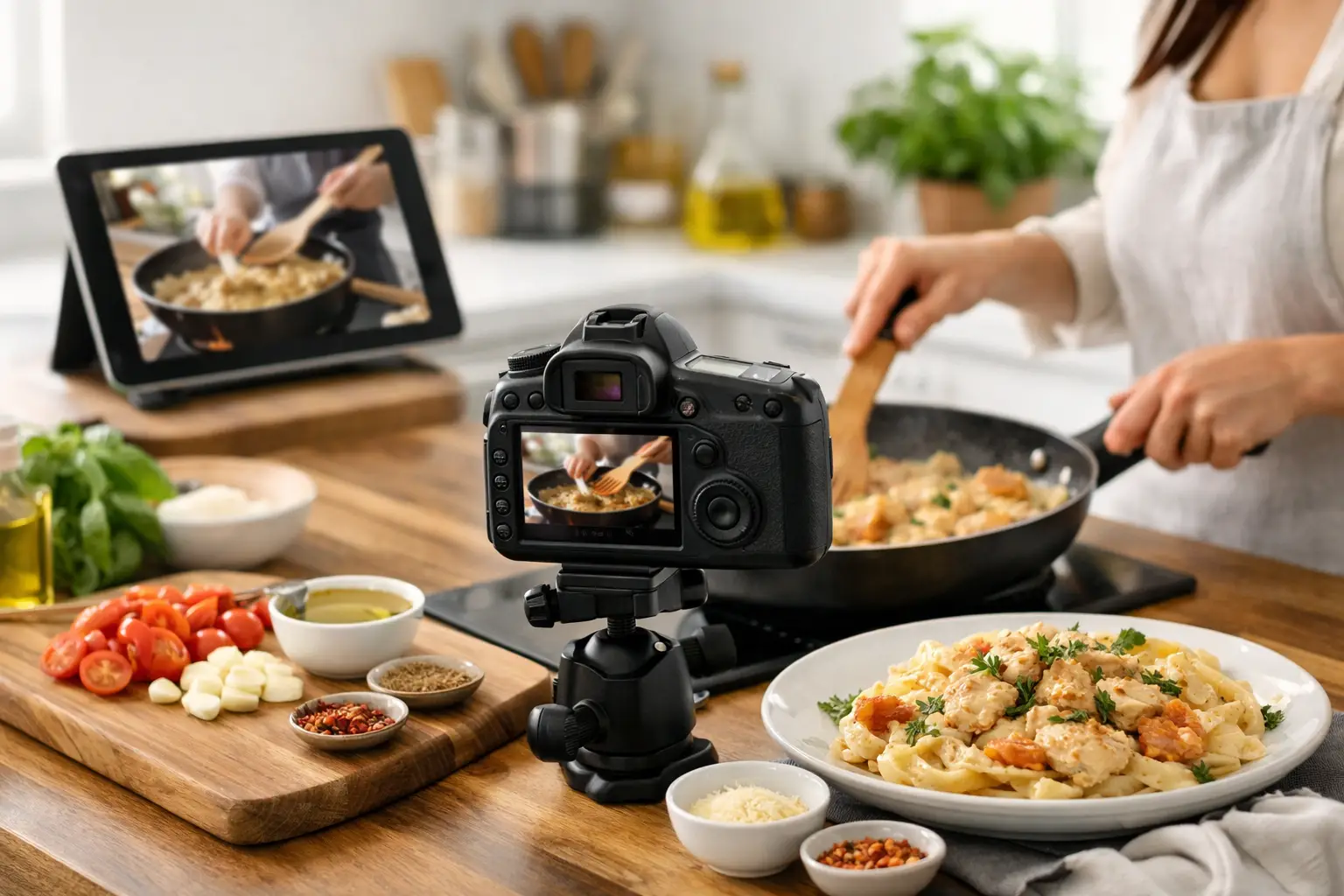
Cooking Videos That Actually Help You Cook
A 45-second pasta video can make dinner look effortless.
Then you begin cooking and realize the video skipped the ingredient amounts, pan temperature, preparation order, and the moment when the sauce suddenly became thick and glossy.
The best cooking videos do more than make food look appealing. They help you decide whether a recipe fits your kitchen, understand what each stage should look like, and turn an interesting idea into a meal you can realistically prepare.
For busy home cooks, video is especially useful when it answers the question behind a written instruction.
What does “cook until golden” actually look like?
How thick should the sauce become?
How finely should the vegetables be chopped?
How should properly kneaded dough feel?
A written recipe gives you ingredients, quantities, timing, and structure. A helpful video supplies visual context.
FlavorLab connects recipe discovery, personalized recipe generation, pantry-first cooking, nutrition guidance, meal planning, and creator-led cooking inspiration in one practical kitchen experience.
Why Cooking Videos Are Useful in a Real Kitchen
Video is not always the fastest way to read a recipe, but it can be one of the clearest ways to understand a technique.
Watching dough change from rough to smooth, onions soften without burning, chicken develop colour in a skillet, or soup thicken during simmering can give beginners more confidence.
It can also help experienced cooks decide whether an unfamiliar method is worth trying.
Useful cooking videos generally help with at least one of these areas:
- A technique you have not used before
- An unfamiliar texture or consistency
- A dish with important timing
- A new way to use familiar ingredients
- A visual method that is difficult to explain in writing
- A recipe with several preparation stages
- A finishing technique such as folding, shaping, glazing, or garnishing
Think of a short cooking video as inspiration and a full video as visual guidance.
Neither should completely replace a structured written recipe when quantities, servings, timing, dietary details, or food-safety instructions matter.
When you want to explore recipes before choosing a video or meal, browse recipes on FlavorLab.
Short Cooking Videos Are Best for Inspiration
Short-form cooking videos are useful when you need a quick idea.
You might discover:
- A simple sauce for leftover vegetables
- A new way to fold a wrap
- A technique for crisping chickpeas
- A topping for baked potatoes
- A faster method for chopping an ingredient
- A different way to assemble a rice bowl
- A use for leftover pasta or cooked grains
Short videos work particularly well when they teach one clear idea.
For example, a brief clip may successfully demonstrate:
- What toasted spices look like
- How finely to slice an onion
- How to shape a dumpling
- How to layer a sandwich
- When to turn food in a skillet
- How to finish pasta in its sauce
The difficulty begins when a short clip tries to represent an entire complicated recipe while skipping the information needed to reproduce it.
Baking projects, layered desserts, unfamiliar sauces, dough-based recipes, and dishes with precise timing generally need more than a fast visual summary.
A useful short cooking video should lead viewers toward a complete recipe containing the ingredients, quantities, cooking time, servings, dietary information, and full instructions.
Full Cooking Videos Are Better When Details Matter
Choose a longer cooking video when:
- You are preparing the recipe for the first time
- The technique is unfamiliar
- Texture is important
- The cooking order affects the result
- You are cooking for guests
- The recipe involves dough, pastry, or baking
- Several components must finish together
- The written instructions are difficult to visualize
A longer video can show preparation order, heat changes, texture development, and how the cook responds when something does not behave as expected.
You do not need to watch every second while standing in the kitchen.
A calmer approach is:
- Read the complete written recipe.
- Confirm that you have the ingredients and equipment.
- Watch the video once before cooking.
- Return to the sections showing unfamiliar techniques.
- Keep the written steps available while preparing the food.
This is easier than trying to memorize an entire video while measuring ingredients and watching the stove.
What to Check Before Following a Cooking Video
A good cooking video should help you understand the amount of effort required.
Before committing to the recipe, check whether you can find:
- A complete ingredient list
- Ingredient quantities
- Number of servings
- Preparation time
- Cooking time
- Required equipment
- Oven temperature or heat guidance
- Dietary and allergen information
- A structured written method
- Storage or reheating guidance when relevant
The finished dish should also be shown clearly.
A close-up beauty shot may look appealing, but it does not tell you how much food the recipe produces or whether the portion is enough for your household.
Ask practical questions before cooking:
- Does the recipe genuinely fit my available time?
- Do I own the required equipment?
- Can I replace an unavailable ingredient?
- Will the recipe make enough servings?
- Does it suit the dietary needs of everyone eating?
- Are the difficult steps explained clearly?
For flexible dinner options that fit limited time, explore these meal ideas for tonight when time is tight.
Warning Signs in a Cooking Video
Fast editing is not automatically a problem. A short, polished video can still be useful.
However, be cautious when a video:
- Uses vague instructions such as “cook until done”
- Does not provide ingredient quantities
- Hides important preparation behind quick cuts
- Shows a finished dish without explaining the middle stages
- Claims an unrealistic cooking time
- Changes pans or ingredients without explanation
- Leaves out resting, marinating, chilling, or preheating time
- Shows a different result from the written recipe
- Does not mention major dietary or allergen concerns
- Encourages unsafe handling or cooking practices
A video may say a meal takes twenty minutes while excluding chopping, preheating, marinating, or cleanup.
That does not necessarily make the idea useless, but it means you should estimate the real workload before beginning.
Turn a Cooking Video Into a Meal You Can Make
The gap between watching and cooking is where many appealing recipe ideas disappear.
Close that gap by making a brief plan.
Check the Servings
A skillet meal shown in a video may feed two adults, four smaller portions, or one person with leftovers.
Confirm the intended yield and adjust major ingredients before cooking.
Pay particular attention to:
- Protein
- Rice and grains
- Pasta
- Sauces
- Cooking oil
- Cheese
- Bread
- Toppings
Scaling only the main ingredient while leaving the sauce unchanged can produce an unbalanced result.
Separate Preparation From Cooking
Before turning on the stove:
- Chop vegetables
- Measure spices
- Open cans
- Prepare sauces
- Set out utensils
- Confirm the cooking order
This prevents the familiar situation where garlic is already burning while you are still searching for soy sauce.
Identify What Can Change
Some ingredients can be replaced easily.
Spinach may replace kale with a shorter cooking time. Frozen peas may replace fresh peas in a cooked dish. Chickpeas may replace another bean.
Other substitutions can change the structure of the recipe.
Be more careful with:
- Baking ingredients
- Eggs
- Flour
- Leavening agents
- Dairy in technical sauces
- Ingredients responsible for binding
- The central protein or vegetable
- Highly concentrated seasonings
Use the Recipe Substitution Guide for Everyday Cooking when you need to understand what a missing ingredient contributes before replacing it.
Let Your Ingredients Guide What You Watch
The most useful cooking videos often begin with an ingredient problem.
You may have:
- Mushrooms that need using
- Half a bag of carrots
- Cooked rice
- An open jar of sauce
- A can of chickpeas
- Leftover chicken
- Frozen vegetables
- Bread beginning to dry
- Herbs losing freshness
Instead of searching broadly for “easy dinner,” combine the ingredient with the kind of meal you need.
Examples include:
- Quick dinner using mushrooms and pasta
- Vegetarian meal with chickpeas and spinach
- Leftover-rice dinner in thirty minutes
- Family meal using chicken and potatoes
- Soup using carrots and canned beans
- Lunch using leftover roasted vegetables
This produces more practical results than endlessly scrolling through unrelated food videos.
For additional pantry-first meal formats, explore these recipes from pantry ingredients that work.
Build a Saving System That Remains Useful
Saving every appealing food video can feel productive until you have hundreds of clips and no idea what to cook.
Create a few categories based on your real cooking decisions:
- Quick dinners
- Pantry meals
- Vegetarian recipes
- Baking
- Lunches
- Freezer-friendly meals
- Family dinners
- Weekend cooking projects
- Techniques to learn
When saving a video, add a short note explaining why it may be useful