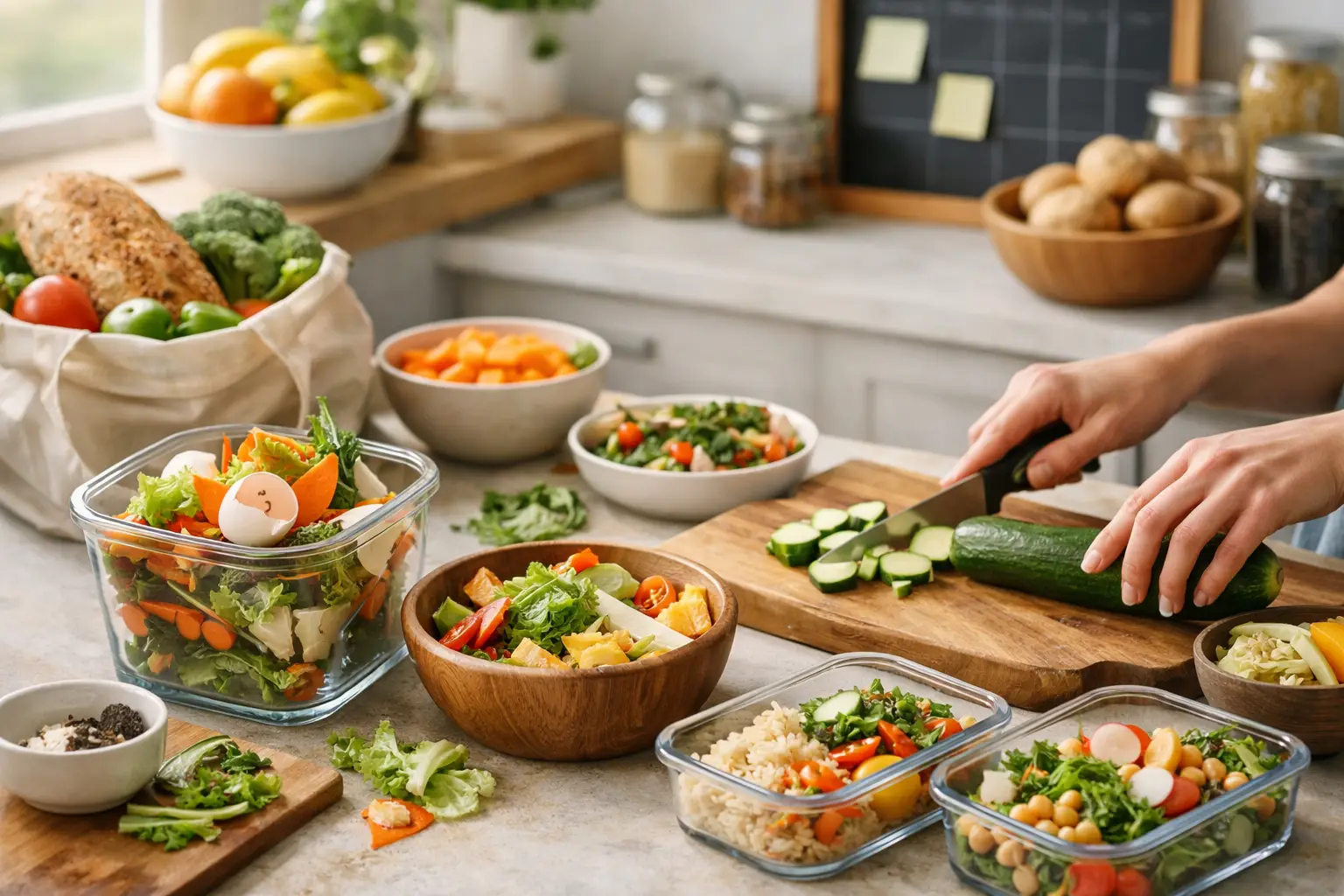
That forgotten bag of spinach at the back of the crisper drawer is rarely a sign that you are bad at cooking. More often, it means life got busy, dinner plans changed, or a grocery shop was built around good intentions rather than the week you actually had. This guide to reducing food waste focuses on small kitchen habits that make food easier to find, cook, and enjoy before it is past its best.
Reducing waste does not mean forcing yourself to eat the same leftovers for four days or turning every meal into a complicated project. It means giving ingredients a clear next job. A half onion can become tomorrow’s soup base, wilted herbs can become a sauce, and a planned freezer meal can rescue a hectic weeknight.
Start with a kitchen reset, not a perfect plan
Before making a new shopping list, take five minutes to look through your fridge, freezer, and cupboards. Group foods by urgency: use soon, use later, and pantry staples. This simple check prevents the classic double-up, such as buying another tub of yogurt or bag of rice because the first one was hidden behind other groceries.
Put foods that need attention where you will see them first. A small bin or a visible shelf labelled “use next” works well for fruit, open jars, leftovers, and produce nearing its best. The goal is not a magazine-ready fridge. It is a fridge that answers the question, “What should I cook first?”
Be realistic about your routine, too. If you normally order takeout on Friday or eat at a family member’s home on Sunday, do not buy ingredients for seven full dinners. Plan for the meals you are likely to make, then leave room for changes.
Shop for flexibility, not just individual recipes
A recipe can be useful, but a week of highly specific recipes can leave you with half-used ingredients that do not fit anywhere else. Build your shop around flexible foods that can work across several meals. For example, roasted chicken can become wraps, fried rice, soup, or a grain bowl. Carrots can go into a tray bake, pasta sauce, muffins, or lunchbox snacks.
Choose a few meals with overlapping ingredients instead of buying a different set of vegetables, herbs, and sauces for every night. If you buy cilantro for tacos, plan a second use in a lime rice bowl or a blended green sauce. If a recipe calls for a small amount of cream, decide whether the rest will become a pasta sauce, soup, or breakfast eggs.
Buying in bulk can save money, but only when the food has a home. Larger packs suit households that cook often, share meals, or freeze portions promptly. For one or two people, a smaller package may cost more per unit but waste less overall. The better value is the amount you actually use.
Store food in a way that gives it a chance
Good storage stretches the useful life of ingredients, but it is not one-size-fits-all. Some produce does better cold, while others lose flavour or texture in the fridge. Keep leafy greens dry and loosely protected, refrigerate berries after checking for any soft or mouldy ones, and store potatoes and onions in a cool, dark, well-ventilated spot rather than together.
A few habits make a noticeable difference:
- Cool cooked food and refrigerate it in shallow containers so it can be stored promptly and reheated more evenly.
- Label leftovers with the date and a clear name. “Chicken” is less helpful than “Tuesday chicken curry.”
- Freeze portions you will not realistically eat within the next few days, rather than hoping you will get to them.
- Keep your freezer organized enough to see what is there, especially breads, cooked grains, sauces, and single servings.
Freezing is one of the most practical ways to reduce waste, but texture matters. Crisp vegetables may not be great thawed for a salad, yet they can be excellent in soup, stir-fries, or sauces. Freeze herbs in chopped portions for cooking, ripe bananas for baking or smoothies, and tomato paste in small amounts so you do not lose an opened can to the back of the fridge.
Learn the difference between “not perfect” and unusable
A bruised apple, wrinkled pepper, or soft carrot is often still useful. Trim damaged spots when appropriate and cook the rest sooner rather than later. Soft vegetables can be roasted, blended into soup, added to curry, or grated into fritters. Stale bread can become croutons, breadcrumbs, baked French toast, or a savoury strata.
Date labels also need context. A best-before date usually speaks to quality when the product is unopened, not an automatic safety deadline. Use your senses and follow safe food-handling practices, especially with perishable foods. If something has an off smell, mould, an unusual appearance, or you are uncertain about its safety, do not taste it to test it. When in doubt, throw it out.
This distinction helps you avoid two unhelpful extremes: discarding food the moment it looks less than ideal, or keeping questionable food because you feel guilty. Reducing waste should never come at the expense of food safety.
Give leftovers a new identity
Leftovers are easier to eat when they do not feel like a repeat performance. Instead of reheating each component exactly as it was, use it as an ingredient in a different meal. Roast vegetables can become a frittata filling. Cooked rice can become crispy rice patties or fried rice. A little cooked meat, tofu, or beans can turn into quesadillas, noodle bowls, stuffed sweet potatoes, or a quick lunch salad.
It helps to plan one “use-it-up” meal each week. This can be a flexible stir-fry, soup, pasta, grain bowl, omelette, or tray bake. Start with what needs using, then add a flavour direction: soy and ginger, tomato and herbs, lemon and garlic, or a mild curry-style sauce. You do not need a perfect recipe to make a satisfying meal.
For beginners, keep a few dependable rescue ingredients on hand: eggs, canned beans, pasta, frozen vegetables, broth, tortillas, and a favourite sauce or seasoning blend. They make it easier to turn small amounts of leftover food into dinner without another grocery run.
Make meal planning serve real life
Meal planning is less about assigning every meal a fixed place and more about reducing last-minute decisions. A practical approach is to choose three or four anchor dinners, one flexible use-it-up meal, and a couple of low-effort options for busy nights. Then shop for lunches and breakfasts you genuinely enjoy eating.
Build in a sequence. Cook delicate produce early in the week, use heartier vegetables later, and schedule meals with frozen ingredients for nights when plans may change. If you make a large dish, decide before cooking whether it is for lunches, another dinner, or the freezer. That decision prevents leftovers from becoming accidental fridge clutter.
A visible combined shopping list also helps households avoid duplicate purchases. Add items as you notice them running low, then check your pantry before shopping. If someone else in your home buys groceries, a shared list keeps the process simpler and cuts down on surprise extras.
Track what your household actually wastes
For one week, notice what gets discarded and why. Maybe salad greens are bought with optimism but lunches are eaten out. Maybe milk is fine, but fresh herbs are never finished. Maybe leftovers are made but packed in containers that are easy to forget.
Treat this as useful information, not a guilt trip. You may decide to buy bagged spinach only when you have two planned uses, choose frozen berries more often, or make a smaller batch of a meal your household does not enjoy as leftovers. The most sustainable system is the one you can keep using when the week gets full.
Small adjustments add up because they remove friction. When food is visible, recipes are flexible, and your plan leaves room for real life, using what you buy becomes much easier. The next time you are staring at a few tired vegetables and an open container of something, try Pantry Rescue in FlavorLab to turn what you have into a practical meal idea.