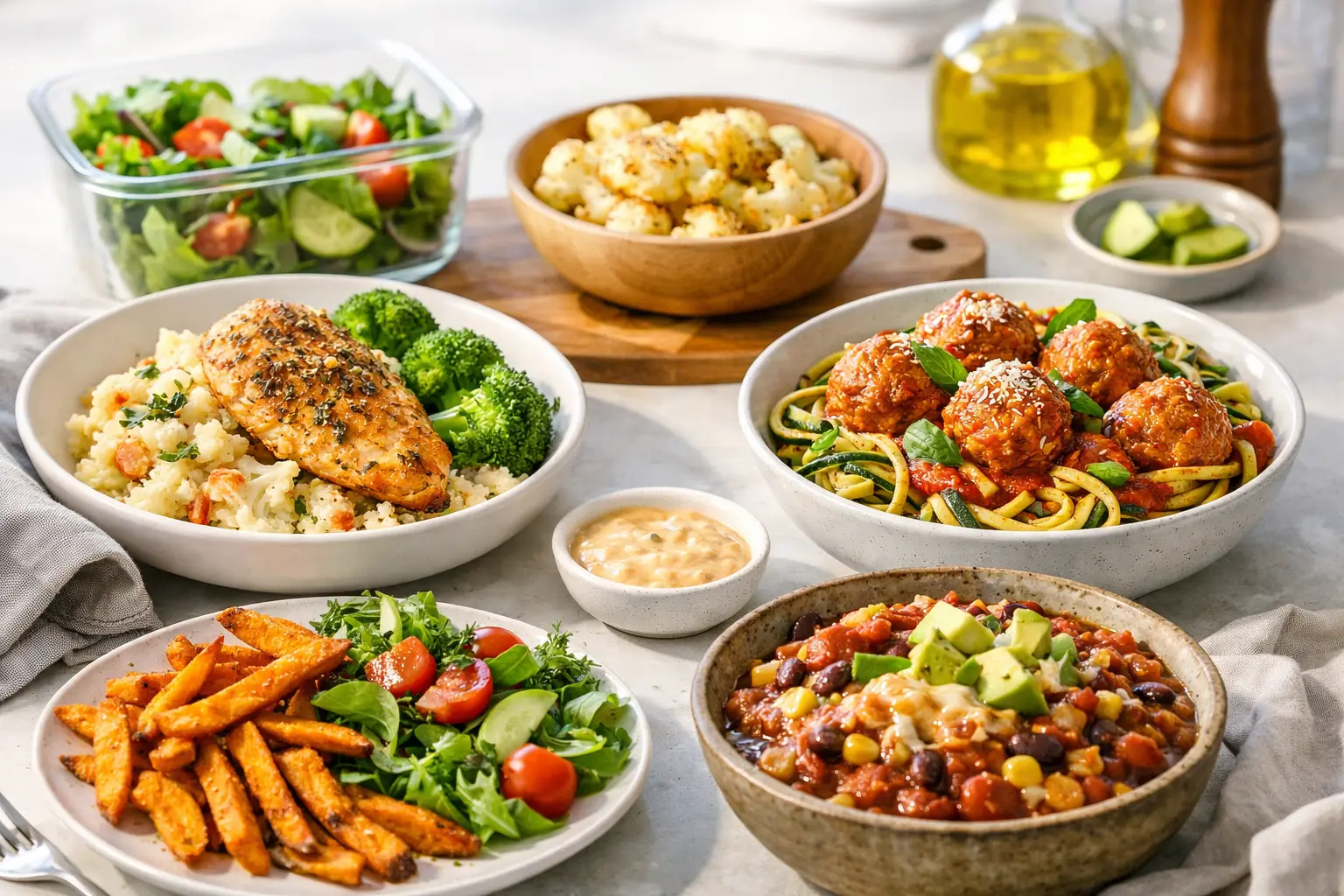
Healthy Comfort Food That Still Feels Like Dinner
A bowl of creamy pasta after a long day is not a nutrition failure. Neither is a crisp-topped casserole, a stack of pancakes, or a proper grilled cheese.
Healthy comfort food should not make every familiar meal taste like a compromise. The goal is to keep the warmth, texture, and satisfaction that make comfort food comforting while building a meal that can carry you through the evening.
For busy home cooks, the most useful definition of healthy is usually practical: a meal with enough substance, protein, fibre, and produce to feel satisfying, made with ingredients you can afford and genuinely want to cook again.
That will look different for every household. A student cooking in a small kitchen may need one-pan meals and frozen vegetables. A family may need a dinner that lets everyone add their own toppings. Both approaches can work.
FlavorLab helps home cooks connect comforting recipe ideas with pantry-first cooking, personalized recipes, nutrition guidance, and practical meal planning.
What Makes Healthy Comfort Food Work?
Comfort food often relies on a few powerful qualities:
- Creamy sauces
- Rich savoury flavour
- Crispy edges
- Soft carbohydrates
- Warm spices
- Familiar textures
- Generous portions
Removing all of those qualities at once is why many “lightened-up” recipes leave people unsatisfied and looking for something else shortly afterward.
A better approach is to protect the part of the dish you love most and balance the rest.
If macaroni and cheese is about the sauce, keep a real cheese sauce and add roasted broccoli, peas, spinach, or white beans.
If shepherd’s pie is about the golden potato topping, keep that topping and build the filling with lentils, mushrooms, vegetables, or a combination of meat and beans.
You are not trying to make dinner less enjoyable. You are making it more complete.
A dependable formula is:
- Start with a comforting base.
- Add a satisfying protein.
- Include vegetables or fruit where they naturally fit.
- Use seasoning to make every part taste intentional.
- Keep the texture or flavour that makes the dish comforting.
This approach is more reliable than replacing ingredients simply because the replacements sound healthier.
Keep One Familiar Anchor
Every good comfort meal needs an anchor.
It might be:
- Noodles
- Mashed potatoes
- Rice
- Bread
- Pastry
- Cheese
- A creamy broth
- A crisp crumb topping
Keep that familiar element, especially when cooking for selective eaters or when you are tired.
Familiar food lowers the barrier to getting dinner on the table. Once the anchor is chosen, ask what the dish needs around it.
Tomato soup and grilled cheese can become a more complete meal with white beans blended into the soup and sliced apples or a simple salad alongside.
A baked potato can hold chilli, black beans, Greek yogurt, shredded chicken, sautéed greens, lentils, or leftover roasted vegetables.
The comfort stays in place while the meal gains more staying power.
When you want more meat-free meals with familiar ingredients, explore these easy vegetarian recipe ideas for busy weeknights.
Build Flavour Before Adding More Richness
Butter, cheese, and cream are delicious, but they are not the only routes to flavour.
Before automatically adding more richness, try building depth through cooking and seasoning.
You can:
- Brown onions slowly
- Toast tomato paste
- Cook spices briefly in oil
- Roast vegetables until caramelized
- Brown mushrooms properly
- Add garlic or ginger
- Use citrus zest
- Add mustard or miso
- Finish with herbs
- Add a small splash of vinegar or lemon juice
These steps create contrast and savoury depth.
They are especially useful when you are reducing the amount of a rich ingredient, but they also improve the full version of the dish.
A creamy chicken-and-rice skillet with lemon, thyme, browned mushrooms, and properly seasoned vegetables will often taste more memorable than one that depends on extra cream alone.
Use Additions Instead of Replacements When Possible
Some substitutions are genuinely helpful.
Plain yogurt can add tang and creaminess to sauces or toppings. Whole-grain pasta can work well in hearty baked dishes. Blended cottage cheese can create a smooth sauce with additional protein.
But a direct replacement does not always preserve what people love about a meal.
Cauliflower does not behave exactly like potato, and zucchini noodles do not create the same experience as spaghetti.
Instead of forcing one ingredient to imitate another, combine them.
Try:
- Half potato and half cauliflower mash
- Regular pasta with a vegetable-packed sauce
- Beef chilli with beans added
- Macaroni and cheese with broccoli or peas
- Mashed potatoes over a lentil-and-mushroom filling
- Pancakes served with yogurt, fruit, and eggs
- Rice bowls with both vegetables and a satisfying sauce
This keeps the familiar part of the meal while making the overall plate more balanced.
Healthy Comfort Food Ideas for Busy Weeknights
The most useful comfort-food ideas are flexible enough to work with what you already have.
Think less about perfect recipes and more about repeatable dinner formats.
Build a Flexible Baked Pasta
Start with pasta and either a tomato-based or cheese-based sauce.
Add vegetables that are easy to chop or pull from the freezer, such as:
- Spinach
- Broccoli
- Peas
- Mushrooms
- Peppers
- Zucchini
- Cauliflower
Then add turkey, chicken, lentils, white beans, tofu, or a combination.
Finish with enough cheese to create the browned, stretchy topping people expect.
You do not need an excessive amount of cheese when the sauce is well seasoned and the top becomes properly golden.
Make a Comforting Bowl Meal
Start with rice, potatoes, noodles, couscous, or another filling base.
Add a brothy curry, chilli, stew, saucy beans, or a creamy vegetable mixture.
Stir in easy vegetables such as:
- Frozen peas
- Corn
- Carrots
- Cabbage
- Spinach
- Green beans
- Roasted vegetables
Finish with yogurt, grated cheese, green onions, herbs, toasted seeds, or a flavourful sauce.
These small additions can make a simple bowl feel like a complete meal.
You can browse recipes on FlavorLab when you want comforting inspiration without starting from a blank page.
Try Breakfast for Dinner
Breakfast-for-dinner can be quick, flexible, and deeply satisfying.
Scrambled eggs with roasted potatoes, sautéed peppers, and toast create a practical weeknight meal.
Oatmeal can become savoury with an egg, cheddar, greens, and black pepper.
Pancakes can be served with Greek yogurt, fruit, nut or seed butter, and eggs instead of being expected to carry the entire meal alone.
A vegetable omelette with toast and roasted potatoes can also use small amounts of vegetables, cheese, and herbs before they are forgotten.
Upgrade Freezer-Friendly Classics
A freezer-friendly dish can be balanced without becoming complicated.
Try:
- Adding lentils or finely chopped mushrooms to meatballs
- Stirring peas and carrots into chicken pot pie filling
- Adding spinach to lasagna
- Mixing beans into chilli
- Adding vegetables to macaroni and cheese
- Making sheet-pan nachos with beans, peppers, tomatoes, and enough cheese to hold everything together
The goal is not to give the meal a perfect label. It is to create a dinner that feels good before, during, and after eating.
Make the Choice Easier When You Are Tired
Many weeknight cooking problems are decision problems first.
You may have chicken, half a bag of spinach, a sweet potato, and a carton of tomato passata but no desire to search through dozens of recipes.
This is where flexible planning makes balanced eating more realistic than strict meal rules.
Choose two or three comfort-meal formats for the week, such as:
- A pasta bake
- A soup-and-toast night
- A loaded bowl
- A tray-bake dinner
- Tacos or quesadillas
- Breakfast for dinner
Buy ingredients that overlap.
Onions, carrots, greens, canned beans, yogurt, cheese, grains, and a couple of proteins can move between several meals.
When plans change, those ingredients remain useful instead of becoming forgotten one-time purchases.
If you need a recipe tailored to a specific craving, dietary preference, cooking time, or serving size, use the FlavorLab AI Chef to create a personalized dinner idea.
Give Leftovers a New Purpose
Leftovers deserve a plan.
Repeating ingredients is not boring when the final meal changes shape.
For example:
- Roast extra vegetables for tomorrow’s quesadillas.
- Turn leftover chilli into a baked-potato topping.
- Use cooked chicken in a creamy soup with rice.
- Turn roasted potatoes into a breakfast hash.
- Add leftover lentils to pasta sauce.
- Use cooked rice in a comforting fried-rice dinner.
- Turn extra tomato soup into the base of a pasta sauce.
A little planning can prevent cooked food from being forgotten while making the next meal easier.
When your fridge contains a mixture of odds and ends, FlavorLab’s pantry-first tools can help turn available or soon-to-expire ingredients into realistic meal ideas.
Use Frozen and Pantry Ingredients Without Apology
Healthy comfort food does not need to begin with a refrigerator full of perfect fresh produce.
Frozen and canned ingredients can make weeknight meals much more achievable.
Useful options include:
- Frozen spinach
- Frozen peas
- Frozen mixed vegetables
- Canned tomatoes
- Canned beans
- Canned lentils
- Tomato passata
- Jarred sauces
- Dried pasta
- Rice
- Oats
- Stock
- Shelf-stable gnocchi
Frozen vegetables are already washed and prepared, and canned beans can add protein and fibre without requiring soaking or long cooking.
A creamy soup made with frozen vegetables is still a home-cooked meal. A pasta bake using canned tomatoes and frozen spinach can still be satisfying and practical.
Convenience ingredients are tools, not failures.
Healthy Does Not Mean Low-Calorie Every Time
Healthy comfort cooking is not about making every meal equally low in calories, high in protein, or packed with vegetables.
Some nights, the useful win is cooking at home instead of ordering something that does not match what you wanted.
Other nights, it is using produce before it spoils.
Sometimes, it is simply sitting down to a meal that everyone will eat.
Portion size, hunger level, budget, cultural food traditions, dietary needs, and activity levels all matter.
A rich dish can fit into a balanced week. A salad can be unsatisfying when it lacks enough protein, carbohydrates, fat, or flavour.
Rather than judging a meal one ingredient at a time, pay attention to whether it leaves you comfortably satisfied and whether it is something you would happily cook again.
Use Nutrition Information as a Guide
Nutrition estimates can be useful when comparing recipes or adjusting a meal, but they should be treated as practical guides rather than exact medical information.
Ingredient brands, serving sizes, substitutions, and cooking methods can all change the final numbers.
Use FlavorLab’s Nutrition Lab to review practical estimates and better understand how different ingredients affect a recipe.
The goal is not to turn comfort food into a calculation. It is to give you more information when that information helps you make a decision.
Start With One Dinner You Already Love
You do not need to rebuild your entire routine at once.
Start with one comfort meal your household already enjoys.
Keep its best feature and add one useful element.
For example:
- Add vegetables to baked pasta.
- Add beans to chilli.
- Add fruit and yogurt beside pancakes.
- Add chicken or lentils to soup.
- Add roasted vegetables to a rice bowl.
- Add greens to a creamy skillet dinner.
Then season the meal like it deserves your attention.
Small, repeatable changes are usually more useful than forcing every comforting recipe into a completely different version.
Make Your Next Comforting Dinner Easier
Healthy comfort food should still feel warm, generous, and worth sitting down for.
Keep the familiar part you love, add ingredients that make the meal more complete, and use the tools that make cooking easier on busy nights.
Create a free FlavorLab account to discover comforting recipes, generate meals around your ingredients and cravings, review nutrition guidance, and plan dinners your household will want to eat again.