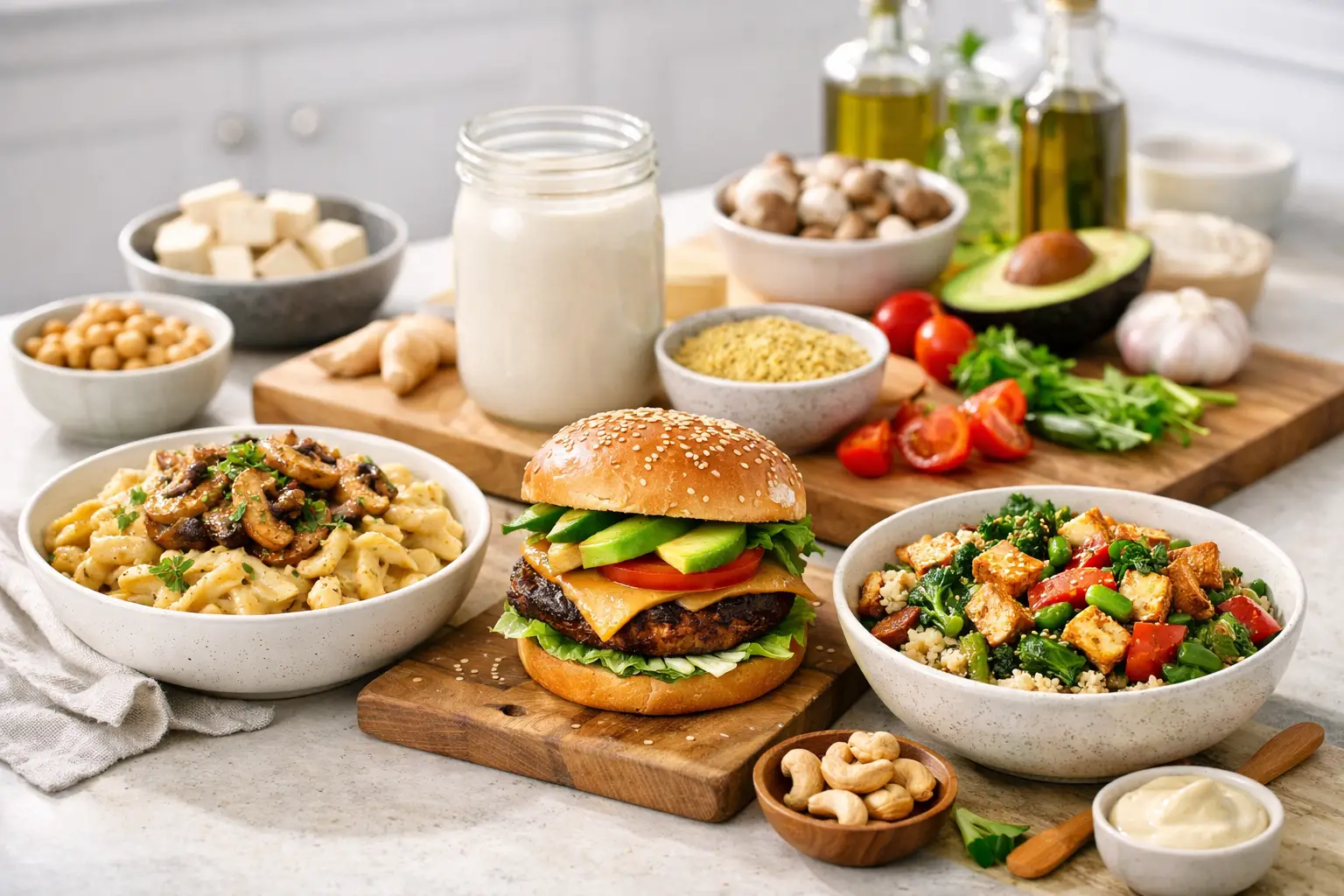
How to Adapt Recipes to Be Vegan Without Losing Flavour
A creamy pasta, a familiar family curry, a tray of tacos, or a batch of weekend muffins does not need to disappear when you begin eating more plant-based meals.
Learning how to adapt recipes to be vegan is less about finding one perfect substitute and more about understanding what each original ingredient contributes.
Does it add richness? Bind a batter? Create structure? Help a cake rise? Add savoury depth? Produce a crisp or golden finish?
Once you identify the ingredient’s job, choosing a useful vegan replacement becomes much easier.
For busy home cooks, the most practical approach is often to start with recipes they already enjoy. Adapting a familiar meal is usually faster, more affordable, and less stressful than buying a long list of speciality ingredients for an entirely new dish.
FlavorLab helps home cooks discover recipes, generate personalized meals, use pantry ingredients, review nutrition estimates, and adapt dishes around dietary preferences.
Adapt Ingredients by Function, Not Habit
Animal-based ingredients can perform very different jobs depending on the recipe.
Butter in a sauce may provide richness and flavour. Butter in cookies affects spread, tenderness, and browning.
An egg in pancakes provides moisture and binding. Eggs in a sponge cake also create structure and lift. An egg wash on pastry mainly adds colour and shine.
Cheese may provide:
- Creaminess
- Saltiness
- Stretch
- Browning
- Savoury flavour
- A crisp topping
Before changing the recipe, identify the function of each non-vegan ingredient.
Common functions include:
- Fat and richness
- Moisture
- Binding
- Structure
- Leavening
- Creaminess
- Browning
- Protein
- Saltiness
- Acidity
- Savoury depth
Then choose a replacement that can perform the most important function in that particular dish.
For more help identifying ingredient roles, read the Recipe Substitution Guide for Everyday Cooking.
Check Which Ingredients Are Actually Vegan
Some non-vegan ingredients are obvious, such as meat, milk, butter, eggs, and honey.
Others may be easier to miss.
Check labels on:
- Broth and stock
- Worcestershire-style sauces
- Pesto
- Curry pastes
- Salad dressings
- Gravy mixes
- Seasoning packets
- Marshmallows
- Gelatin desserts
- Pastry
- Bread
- Chocolate
- Prepared sauces
- Meat substitutes
Traditional Worcestershire sauce often contains anchovies, and some prepared pesto contains dairy cheese.
Gelatin is animal-derived, while honey is generally not considered vegan.
Packaged foods can change formulas, so checking the current ingredient label is more reliable than assuming a familiar product is vegan.
When cooking for another person, also ask about allergies and dietary requirements instead of assuming that vegan automatically means suitable for everyone.
Start With the Easiest Vegan Swaps
Some ingredients can be replaced relatively easily in everyday recipes.
Plant-Based Milk
Unsweetened, unflavoured plant-based milk can often replace dairy milk in:
- Soups
- Sauces
- Pancakes
- Muffins
- Mashed potatoes
- Smoothies
- Oatmeal
- Casseroles
Choose a milk that suits the recipe.
Soy milk often provides more protein and body. Oat milk can work well in creamy dishes. Almond milk is usually lighter. Coconut milk creates richness but adds a noticeable flavour.
Avoid vanilla-flavoured or sweetened milk in savoury recipes unless that flavour genuinely fits the dish.
Butter
Plant-based butter is often the closest replacement when the original butter affects texture, particularly in cookies, pastry, cakes, and frosting.
Neutral oil works well for:
- Sautéing
- Roasting
- Marinades
- Muffins
- Quick breads
- Some cakes
Oil does not behave exactly like solid butter. Cookies may spread more, and pastry may lose some structure.
For technical baking, use a tested vegan recipe or a plant-based butter designed for baking.
Broth
Replace chicken, beef, or seafood broth with vegetable broth.
To strengthen the flavour, add ingredients such as:
- Miso
- Soy sauce
- Tomato paste
- Mushrooms
- Garlic
- Onion
- Dried herbs
- Nutritional yeast
- A small amount of vinegar or lemon juice
Taste before adding extra salt because broth, miso, and soy sauce can all contribute sodium.
Honey
Maple syrup, agave syrup, date syrup, or another suitable sweetener can often replace honey.
The flavour and water content may differ, especially in baking.
Maple syrup works particularly well in:
- Granola
- Oatmeal
- Sauces
- Dressings
- Glazes
- Roasted vegetables
- Muffins
When honey is an important structural ingredient in baking, use a tested vegan conversion rather than assuming every liquid sweetener will behave identically.
Replace Meat According to Its Role
The best meat alternative depends on what the meat contributes to the meal.
It may provide:
- Protein
- Bulk
- Chewiness
- Browning
- Fat
- Savoury flavour
- A crisp topping
- A central piece on the plate
Do not expect one vegan ingredient to copy all of those qualities at once.
For Ground Meat
Useful options include:
- Lentils
- Crumbled tofu
- Tempeh
- Textured vegetable protein
- Finely chopped mushrooms
- Beans
- Plant-based ground products
Lentils provide substance and affordability but do not brown like beef.
Mushrooms add moisture and savoury flavour but are not a major source of protein.
Combining lentils and finely chopped mushrooms can create a more satisfying pasta sauce, taco filling, chilli, or shepherd’s-pie-style filling than using either one alone.
For Chicken or Meat Pieces
Use:
- Firm or extra-firm tofu
- Tempeh
- Chickpeas
- Seitan when suitable
- Soy curls
- Plant-based meat alternatives
- Roasted cauliflower or mushrooms for texture
Press or drain tofu when appropriate, season it before cooking, and give it enough contact with a hot pan or oven to develop colour.
A plain substitute added at the last moment can make a once-flavourful dish taste unfinished.
For Crispy or Savoury Toppings
Try:
- Toasted breadcrumbs
- Crispy chickpeas
- Roasted nuts or seeds
- Fried onions
- Smoked tofu
- Toasted mushrooms
- Crumbled tempeh
- Nutritional yeast
The replacement does not need to imitate meat exactly. It needs to provide the texture and flavour the finished dish requires.
For flexible meals built from beans, lentils, rice, pasta, and other staples, explore these recipes from pantry ingredients that work.
Season Vegan Proteins Before Cooking
Meat is usually seasoned during cooking, so vegan replacements deserve the same attention.
Useful flavour builders include:
- Garlic
- Onion
- Smoked paprika
- Cumin
- Coriander
- Soy sauce
- Miso
- Tomato paste
- Mushroom powder
- Mustard
- Chilli
- Citrus
- Fresh herbs
- Toasted spices
For tofu, tempeh, beans, or lentils, build flavour in layers.
Season the ingredient itself, cook it until it develops colour, and then add the sauce.
A tofu stir-fry will usually taste better when the tofu is browned and seasoned before the vegetables and sauce are added.
A lentil pasta sauce benefits from sautéed onion, tomato paste, herbs, and enough simmering time for the flavours to combine.
Handle Eggs Differently in Baking and Cooking
Eggs are among the most context-dependent ingredients in a recipe.
One replacement will not work equally well in muffins, custard, sponge cake, scrambled eggs, and pastry glaze.
Flax or Chia Mixture
For one egg in many muffins, pancakes, cookies, and quick breads, combine:
- 1 tablespoon ground flaxseed or chia seeds
- 3 tablespoons water
Let the mixture stand until it becomes gel-like.
This can help with moisture and binding but may create a denser texture.
It works best when replacing one or two eggs in a forgiving recipe.
Applesauce, Banana, or Pumpkin
Approximately 1/4 cup of applesauce, mashed banana, or pumpkin purée can replace one egg in some:
- Muffins
- Brownies
- Pancakes
- Quick breads
- Soft cookies
These ingredients add moisture but may reduce lift and create a softer result.
Banana has a noticeable flavour, so it is not ideal for a delicate vanilla cake or savoury recipe.
Aquafaba
Aquafaba is the liquid from cooked or canned chickpeas.
It can be whipped and used in certain recipes where egg whites provide foam or lightness, such as:
- Meringue-style desserts
- Mousses
- Some cakes
- Macaron-style baking
Aquafaba works best in recipes specifically tested for it.
Commercial Egg Replacers
Commercial egg replacers can be more reliable in cakes or baked recipes where structure and lift matter.
Follow the manufacturer’s instructions because different products are designed for different uses.
Replacing Several Eggs
A recipe containing three or more eggs often depends heavily on their structure, lift, or emulsification.
Instead of replacing every egg with flax, banana, or applesauce, look for a tested vegan version of that particular recipe.
Savoury Egg Alternatives
For scrambled eggs, try tofu seasoned with:
- Turmeric for colour
- Black salt for an egg-like aroma when desired
- Nutritional yeast
- Pepper
- Garlic or onion powder
- A splash of plant-based milk
For breading, a thin mixture of flour and plant-based milk or water can help crumbs stick.
For pastry browning, brush the surface with plant-based milk, oil, or a suitable mixture recommended by the recipe.
Rebuild the Richness Dairy Provided
Dairy often performs several jobs at once.
It can add:
- Fat
- Creaminess
- Tang
- Salt
- Protein
- Body
- Browning
That is why simply replacing cream with a thin plant-based milk can leave a sauce watery or bland.
For Creamy Soups and Sauces
Try blending in:
- Soaked or softened cashews
- White beans
- Silken tofu
- Cooked cauliflower
- Cooked potato
- Coconut milk
- Plant-based cream
- Oat-based cooking cream
Each option creates a different result.
Cashews are rich but may not suit nut allergies or every grocery budget.
White beans are affordable, mild, and useful in soups and pasta sauces.
Silken tofu creates smoothness and adds protein.
Coconut milk is rich but may change the flavour direction of the dish.
For Sour Cream or Yogurt
Use plain, unsweetened plant-based yogurt.
Add lemon juice or vinegar when the dish needs more tang.
Check whether the product is suitable for cooking because some plant-based yogurts may separate under high heat.
For Cheese-Like Flavour
Nutritional yeast adds savoury flavour, but it is not an exact replacement for melted cheese.
A balanced vegan cheese-style sauce may need:
- Fat or creaminess
- Salt
- Acidity
- Savoury flavour
- Enough thickness
Try combining nutritional yeast with ingredients such as:
- White beans
- Cashews
- Silken tofu
- Plant-based milk
- Miso
- Dijon mustard
- Lemon juice
- Garlic
- Cooked potato
Add strong ingredients gradually so every vegan sauce does not end up tasting identical.
Preserve Savoury Depth and Browning
Meat and dairy often contribute browned, salty, and fermented flavours.
When those ingredients are removed, rebuild that depth intentionally.
Useful ingredients include:
- Miso
- Soy sauce
- Tamari
- Tomato paste
- Mushrooms
- Mushroom powder
- Nutritional yeast
- Roasted garlic
- Caramelized onions
- Smoked paprika
- Toasted nuts or seeds
- Vinegar
- Lemon juice
Cooking method matters too.
Roast vegetables until their edges brown.
Allow mushrooms to release their moisture and develop colour.
Toast tomato paste briefly before adding liquid.
Brown tofu or tempeh before coating it in sauce.
These small steps create flavour that cannot be achieved by adding more salt at the end.
Taste for Balance at Every Stage
After changing the main ingredients, taste for:
- Salt
- Acidity
- Sweetness
- Heat
- Bitterness
- Savoury depth
- Texture
A squeeze of lemon can brighten lentil stew.
A small amount of sugar can soften sharp canned tomatoes.
Fresh herbs can lift a rich curry.
Toasted seeds or breadcrumbs can give a creamy pasta the texture it is missing.
A recipe title can also create unrealistic expectations.
A creamy dish does not always need an exact heavy-cream imitation. A cheese-style sauce may taste better when treated as a savoury, tangy sauce with its own character.
Let the adapted meal be enjoyable on its own terms instead of judging it only by how closely it copies meat or dairy.
Five Familiar Meals That Are Easy to Adapt
1. Pasta Bolognese
Replace ground meat with lentils, finely chopped mushrooms, textured vegetable protein, or a combination.
Build flavour with onion, garlic, tomato paste, herbs, and enough simmering time.
2. Creamy Pasta
Replace dairy cream with blended white beans, silken tofu, cashew cream, oat-based cream, or coconut milk when its flavour fits.
Add nutritional yeast, miso, mustard, garlic, or lemon juice for balance.
3. Tacos
Use black beans, lentils, crumbled tofu, tempeh, mushrooms, or plant-based ground products.
Keep the toppings familiar with salsa, cabbage, avocado, lime, corn, and vegan yogurt or cheese when desired.
4. Curry
Replace meat with chickpeas, lentils, tofu, tempeh, cauliflower, potatoes, or peas.
Use coconut milk, blended cashews, or a tomato-based sauce depending on the style of curry.
5. Muffins or Quick Bread
Use plant-based milk and plant-based butter or oil.
Replace one egg with a flax mixture, applesauce, banana, or a tested commercial replacer according to the flavour and structure of the recipe.
When you need a quick dinner rather than a long adaptation project, use these meal ideas for tonight when time is tight.
Plan Vegan Adaptations Around What You Have
The most practical vegan adaptation is often the one that uses ingredients already in your kitchen.
A can of chickpeas, frozen spinach, plant-based milk, and tomato sauce can become pasta, soup, curry, or a grain bowl without a special grocery trip.
Useful staples include:
- Canned beans and lentils
- Chickpeas
- Tofu
- Vegetable broth
- Nutritional yeast
- Plant-based milk
- Canned tomatoes
- Coconut milk
- Rice
- Pasta
- Oats
- Spices
- Frozen vegetables
Keep notes about substitutions that work well for your household.
You may discover that oat milk works best in your pancakes, white beans are your preferred creamy-soup base, and lentils with mushrooms make the most satisfying pasta sauce.
Those small observations make future adaptations faster.
Turn Your Ingredients Into a Vegan Recipe Prompt
When requesting a customized recipe, include:
- The ingredients you already have
- Ingredients that need using soon
- Number of servings
- Available cooking time
- Desired cuisine
- Cooking equipment
- Vegan preference
- Desired texture or mood
Instead of asking:
> Give me a vegan recipe.
Try:
> Create a creamy vegan pasta for four using mushrooms, spinach, white beans, and pantry ingredients in under 35 minutes.
Or:
> Adapt my family’s chicken curry into a vegan dinner using chickpeas or tofu without making it overly spicy.
Use the FlavorLab AI Chef to turn those details into a structured recipe.
You can also browse recipes on FlavorLab when you want inspiration before adapting a particular dish.
Check Nutrition After Major Changes
Replacing meat, dairy, or eggs can change the estimated:
- Protein
- Fat
- Carbohydrates
- Fibre
- Sodium
- Calories
- Serving size
A creamy sauce made with white beans will have a different nutrition profile from one made with coconut milk or cashews.
A lentil filling will differ from a mushroom-only filling.
Use the easy recipe nutrition calculator guide to understand how ingredient amounts and serving sizes affect estimates.
You can also use FlavorLab’s Nutrition Lab to compare practical recipe estimates.
Nutrition estimates are general guides rather than medical advice. Anyone with specific nutritional, allergy, or medical needs should seek appropriate professional guidance.
Adapt One Familiar Recipe First
You do not need to transform every recipe at once.
Begin with one meal your household already enjoys.
Identify the animal-based ingredients, write down what each one contributes, and replace the most important functions.
Keep the familiar seasoning, cooking method, and main structure where possible.
Then taste, adjust, and save the version that worked.
Create a free FlavorLab account to generate personalized vegan recipes, adapt meals around your available ingredients, review nutrition estimates, and discover plant-based dinners worth making again.