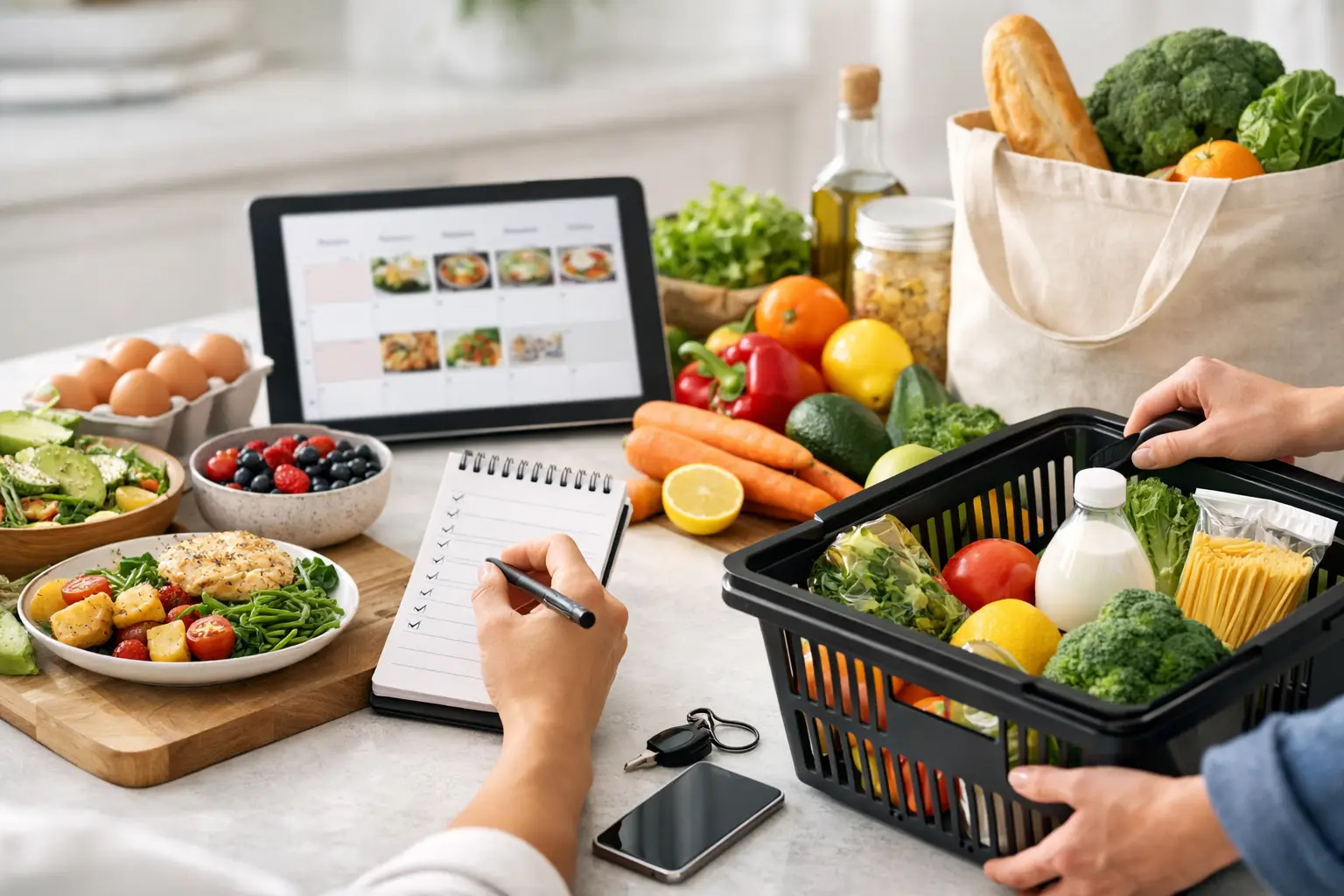
The grocery list usually fails before you leave the kitchen. It starts as “milk, chicken, something for lunches,” then grows in the store into duplicate yogurt, a forgotten dinner ingredient, and a bag of produce with no plan. Learning how to build shopping lists around real meals, your existing pantry, and your actual week turns shopping into a quicker task and makes dinner decisions much easier.
A good list is not a catalogue of food you might want. It is a short plan for the meals you are likely to cook, with enough flexibility for a busy Tuesday or an unexpected leftover night.
Start with your week, not the grocery flyer
Before writing a single item, look at the next five to seven days. Count the dinners you expect to cook at home, then be honest about your schedule. A week with late meetings, kids’ activities, exams, or weekend plans is not the time to plan seven elaborate meals.
Choose meals based on effort as well as appetite. You might plan a sheet-pan chicken dinner, a pasta night, tacos, one leftovers night, and a quick pantry meal such as eggs on toast or chickpea bowls. That gives you structure without assuming every evening will go perfectly.
It also helps to plan ingredients with overlap. If one meal needs spinach, another can use the rest in omelettes, grain bowls, or pasta. If you buy cilantro for tacos, work it into a rice bowl later in the week. Overlap reduces waste, but it should not make every meal taste the same. The goal is to give ingredients more than one job.
For households with different preferences, keep the main meal flexible. Build-your-own bowls, wraps, pasta, and stir-fries let people choose toppings or proteins without requiring separate dinners. Add the shared ingredients to the list first, then any individual extras.
Check what you already have
The fastest way to overspend is shopping from memory. Take five minutes to check the fridge, freezer, pantry, and any produce that needs to be used soon. You do not need a perfectly labelled kitchen to do this well. A quick scan is enough to spot the half bag of rice, open salsa, frozen ground meat, or soft peppers waiting for a purpose.
Write down ingredients you need to use, then let them influence the menu. A package of mushrooms might become risotto, ramen, or fajitas. Lentils can become soup, curry, or a filling for wraps. This is especially useful when you are stuck on what to cook, because the ingredient gives you a practical starting point.
Be specific about quantities before adding an item. “Tomatoes” can mean one tomato for sandwiches or two cans for a sauce. “Cheese” may already be in the fridge, but perhaps not enough for the recipe you chose. Checking first prevents both duplicate purchases and last-minute substitutions that do not quite work.
If keeping track feels hard, a pantry tool can make the habit easier. FlavorLab’s My Pantry and Pantry Rescue features help turn ingredients you have on hand, including ones that are nearing their best-before date, into meal ideas you can actually use in your plan.
How to build shopping lists from recipes
Once you have chosen your meals, pull the ingredients from each recipe into one working list. Do this before you sort anything. It is easier to notice that two dinners both need onions when every ingredient is in front of you.
Then combine repeats and total the amount. If tacos need one onion and soup needs two, write three onions rather than adding “onion” twice. Do the same with staples such as garlic, broth, canned tomatoes, rice, and tortillas. If recipes use different units, use common sense rather than chasing perfect math. Two recipes calling for small amounts of herbs might justify one bunch, while two recipes each needing a full can of beans need two cans.
This is also the moment to separate “must buy” from “nice to have.” A missing protein for Tuesday’s dinner is essential. A new hot sauce you want to try is optional. Both can go on the list, but labelling optional items protects your budget when the total starts climbing.
Recipe-based lists work best when recipes are realistic for your kitchen. Check serving sizes, cooking time, and dietary needs before committing. A meal that takes 50 minutes may be great for Sunday but not for a weekday when everyone is hungry. Build your list around the version of the meal you will truly make, not the version you wish you had time to make.
Organize the list for the way you shop
A list ordered by recipe is useful at home. A list ordered by grocery section is useful in the store. Group items into the areas you usually walk through, such as produce, bakery, dairy and eggs, meat or alternatives, pantry, frozen, and household items.
You do not need a complicated system. The point is to avoid circling back across the store because the oats are mixed in with vegetables and the dish soap is buried below dinner ingredients. If you shop at more than one store, make a separate section for each one or mark items that are only available at a particular stop.
Keep notes beside items when they matter. Add the preferred size, flavour, or substitute: “plain Greek yogurt, large tub,” “whole-wheat wraps,” or “black beans, no added salt if available.” These small details save time when someone else is shopping or when you are moving quickly through a crowded aisle.
For recurring basics, keep a separate running list. Coffee, lunchbox snacks, oats, dish soap, and pet food do not always belong to a recipe, but they still need replacing. Review that running list before you leave instead of relying on an empty-package reminder after you get home.
Plan for flexibility, not perfection
A rigid list can create just as much stress as no list at all. Fresh fish might not look good that day. Your usual vegetables may be sold out. A recipe may suddenly feel too ambitious. Give yourself a few built-in swaps.
For each main meal, think of one easy substitution. Broccoli can become green beans or frozen peas. Chicken can become tofu, beans, or eggs, depending on the dish. A grain bowl can use rice, quinoa, couscous, or whatever grain is already in the cupboard. This keeps one unavailable ingredient from sending you into a second store or abandoning the meal plan altogether.
It is worth leaving room for one low-effort meal and one leftovers meal. Buying ingredients for every breakfast, lunch, and dinner can be useful for some households, but it can also lead to too much food. Students, couples, and families with changing schedules often do better with a few planned meals plus flexible staples.
Avoid the common list mistakes
The most common mistake is listing ingredients without linking them to meals. “Ground turkey, zucchini, rice” sounds organised, but after three days it is easy to forget what those ingredients were meant to become. Keep your meal plan beside the list, even if it is just a short note: Monday tacos, Wednesday pasta, Friday soup.
Another mistake is shopping hungry or without checking what is at home. The first leads to impulse purchases; the second leads to duplicates. A third is buying ingredients for a new recipe that uses several one-time items. Trying something new is part of the fun of cooking, but choose recipes that share ingredients with the rest of the week when you can.
Finally, do not treat the list as a test you can fail. If plans change, move ingredients into another meal, freeze what you can, or use a simple pantry dinner. The list is there to support your week, not control it.
Make the habit easier each week
The best shopping-list routine is the one you will repeat. Pick a regular time to plan, such as Friday evening or Sunday morning, and keep it short. Start with your calendar, check your food, choose meals, combine recipe ingredients, then organize the list by section. After two or three weeks, you will know which staples your household burns through and which groceries tend to go unused.
When you want a faster starting point, generate meal ideas around what is already in your kitchen, add the recipes you want to make to a plan, and use the combined Shopping List to keep the week in one place. Try planning your next few meals and organizing the ingredients at FlavorLabApp.ca.