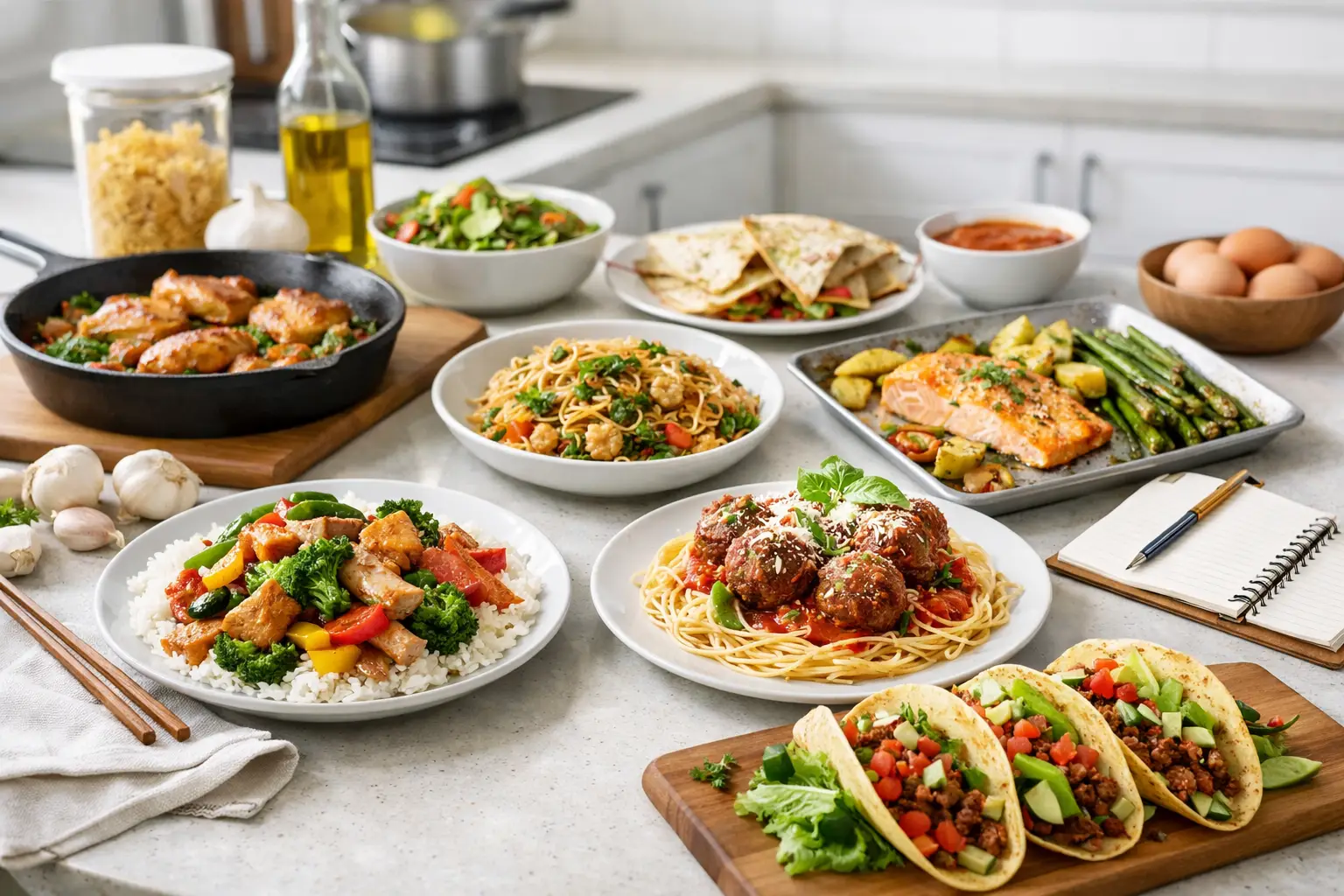
12 Quick Weeknight Dinner Ideas Already on FlavorLab
The best quick weeknight dinner ideas are not complicated recipes forced into a twenty-minute schedule.
They are dependable meals with familiar ingredients, clear cooking steps, and enough flexibility to work with the food already in your refrigerator, freezer, or pantry.
A package of chicken, leftover rice, canned chickpeas, frozen vegetables, pasta, tofu, or a half-used carton of coconut milk can all become the beginning of a proper dinner.
The goal is not to cook perfectly after a long day. It is to choose a meal that fits your available time, energy, dietary preferences, and the people eating with you.
FlavorLab brings recipe discovery, personalized recipe generation, pantry-first cooking, nutrition guidance, meal planning, and creator content into one connected kitchen experience.
The twelve dishes below are based on recipes already included in the FlavorLab recipe collection and project data.
How to Choose a Quick Weeknight Dinner
Before choosing a recipe, identify tonight’s main constraint.
You may need:
- A meal ready in approximately thirty minutes
- Minimal chopping
- One-pan cooking
- A vegetarian or vegan dinner
- A high-protein option
- A meal made mainly from pantry ingredients
- Something comforting
- A dinner that creates useful leftovers
A quick meal usually contains four basic parts:
- A filling base
- A source of protein
- Vegetables
- A flavour-building sauce or seasoning
Rice, pasta, noodles, bread, and grains can provide the base.
Chicken, beef, tofu, chickpeas, lentils, eggs, fish, and beans can provide protein.
Fresh, frozen, canned, and leftover vegetables can all be useful.
The sauce or seasoning gives the meal its direction. Soy sauce and ginger create a different experience from coconut milk and curry paste, even when both meals use similar vegetables.
When you want to explore what is already available, browse recipes on FlavorLab.
1. Vegetable Fried Rice
Vegetable Fried Rice is one of the most practical dinners for leftover cooked rice and small quantities of vegetables.
The FlavorLab version combines rice, mixed vegetables, soy sauce, garlic, and ginger.
Cold rice usually produces the best texture because the grains remain separate more easily in the pan. Freshly cooked rice can still work when it is spread on a plate or tray briefly to release steam.
Useful additions include:
- Frozen peas
- Carrots
- Corn
- Broccoli
- Mushrooms
- Cabbage
- Edamame
- Green onions
For additional protein, add tofu, eggs, chicken, shrimp, or another ingredient that suits your dietary preferences.
Cook wet vegetables separately or in small batches when necessary. Too much moisture can cause the rice to steam instead of developing lightly crisp edges.
This recipe is especially helpful when several leftover ingredients are not large enough to become complete meals on their own.
2. Beef & Broccoli Stir-Fry
Beef & Broccoli Stir-Fry combines beef, broccoli, garlic, ginger, soy sauce, and a glossy savoury sauce.
It is a useful weeknight dinner because the cooking time is short once the ingredients are prepared.
Slice the beef thinly and across the grain so it cooks quickly and remains easier to chew.
Cook the beef in batches when the skillet is small. Crowding the pan can lower the temperature and cause the meat to release liquid rather than brown.
Broccoli can be:
- Stir-fried directly
- Briefly steamed
- Blanched before cooking
- Replaced partly with frozen broccoli when necessary
Serve the finished stir-fry over rice, noodles, quinoa, or another preferred grain.
For help replacing missing sauce or vegetable ingredients, read the Recipe Substitution Guide for Everyday Cooking.
3. Creamy Garlic Pasta
Creamy Garlic Pasta is a straightforward Italian-inspired dinner made with pasta, garlic, olive oil, plant cream, parsley, and black pepper.
Its short ingredient list makes it useful on evenings when the refrigerator looks nearly empty.
Add vegetables such as:
- Spinach
- Mushrooms
- Broccoli
- Frozen peas
- Asparagus
- Roasted peppers
White beans, lentils, tofu, tuna, shredded chicken, or shrimp can make the meal more substantial.
Reserve some pasta water before draining. Its starch can help loosen the sauce while allowing it to cling to the noodles.
Add liquid gradually. A creamy sauce should coat the pasta without becoming watery.
Finish with black pepper, parsley, lemon juice, nutritional yeast, parmesan, or another suitable savoury ingredient.
4. Chickpea & Spinach Curry
Chickpea & Spinach Curry combines chickpeas, spinach, tomatoes, onion, spices, and coconut milk.
It is a useful pantry-first dinner because many of the ingredients can be stored for extended periods.
Begin by cooking the onion until softened. Add the spices and cook briefly before adding tomatoes, chickpeas, and coconut milk.
Cooking spices in a small amount of oil can deepen their aroma, but avoid burning them.
Additional vegetables may include:
- Cauliflower
- Peas
- Sweet potato
- Green beans
- Carrots
- Bell peppers
Serve the curry with rice, naan, flatbread, couscous, or potatoes.
Taste near the end and adjust with salt, lemon or lime juice, fresh herbs, or additional spice.
For more meals built from cupboard and freezer staples, explore these recipes from pantry ingredients that work.
5. Quinoa Chickpea Salad
Quinoa Chickpea Salad combines quinoa, chickpeas, cucumber, cherry tomatoes, red onion, and herbs.
This is a strong option when you want something fresh that still contains enough substance to function as dinner.
Cook the quinoa in advance when possible and allow it to cool before assembling the salad.
A simple dressing can be made with:
- Olive oil
- Lemon juice
- Vinegar
- Garlic
- Salt
- Black pepper
- Mustard
Add feta, tofu, avocado, olives, roasted vegetables, nuts, or seeds when appropriate.
The salad can also be packed for lunch, making it a useful cook-once, eat-twice meal.
Store delicate herbs and crunchy toppings separately when you expect leftovers.
6. Coconut Vegetable Curry
Coconut Vegetable Curry uses coconut milk, broccoli, bell peppers, chickpeas, herbs, and spices.
It provides a flexible way to use several vegetables without needing a separate cooking method for each one.
Begin with the vegetables that require the longest cooking time. Add quicker-cooking vegetables later so they do not become overly soft.
Vegetables that work well include:
- Broccoli
- Cauliflower
- Peppers
- Zucchini
- Green beans
- Carrots
- Spinach
- Frozen peas
Chickpeas provide substance, but tofu, lentils, chicken, or shrimp can be used in suitable variations.
Coconut milk brings richness and can soften the impact of salt and spice, so season the dish gradually.
Finish with lime juice, fresh herbs, chilli, or green onions when available.
7. Authentic Grilled Chicken With Herb Marinade
Authentic Grilled Chicken With Herb Marinade is built around chicken breasts, visible grill marks, herbs, and a flavourful marinade.
It can be served with:
- Rice
- Roasted potatoes
- Couscous
- Pasta salad
- Quinoa
- Grilled vegetables
- A large chopped salad
Marinating the chicken earlier in the day can reduce evening preparation.
When time is limited, cut thick chicken breasts into thinner pieces so they cook more evenly.
Use a grill, grill pan, skillet, oven, or air fryer according to the equipment available.
Always cook chicken thoroughly and avoid using marinade that has contacted raw chicken as a finishing sauce unless it has been safely boiled.
Cook extra chicken when practical. The leftovers can support tomorrow’s wraps, bowls, salad, soup, or pasta.
8. Hearty Lentil Soup
Hearty Lentil Soup contains lentils, carrots, celery, tomatoes, herbs, and spices.
Lentils are useful for weeknight cooking because they are affordable, filling, and compatible with many different flavour directions.
Red lentils cook quickly and soften into the soup.
Green and brown lentils hold their shape more clearly but may require additional cooking time.
Add ingredients such as:
- Spinach
- Frozen vegetables
- Chickpeas
- Potatoes
- Rice
- Pasta
- White beans
Blend a small portion of the soup when you want a thicker texture without adding cream.
Finish with lemon juice or vinegar to brighten the flavour.
Serve it with toast, crackers, flatbread, grilled cheese, or another filling side.
9. Spaghetti Carbonara
Spaghetti Carbonara is one of FlavorLab’s original Italian recipes.
The recipe uses spaghetti, guanciale, eggs, pecorino romano, black pepper, and pasta water.
Although the ingredient list is short, timing matters.
Prepare the egg-and-cheese mixture before the pasta finishes cooking.
Remove the pan from direct heat before adding the egg mixture. The residual heat should create a silky sauce without scrambling the eggs.
Add reserved pasta water gradually until the sauce becomes glossy and coats the spaghetti.
Traditional carbonara does not require cream. Its texture comes from eggs, cheese, rendered fat, and starchy pasta water.
Because guanciale and pecorino are salty, taste before adding extra salt.
For more meals that keep their comforting qualities while adding practical balance, read Healthy Comfort Food That Still Feels Like Dinner.
10. Pad Thai
Pad Thai is another FlavorLab recipe suitable for a faster evening when the ingredients are prepared before cooking.
It combines rice noodles, shrimp, tofu, eggs, tamarind, fish sauce, palm sugar, garlic, bean sprouts, peanuts, lime, and chilli.
Soak the rice noodles according to the recipe instead of overboiling them. Overcooked noodles can become soft and difficult to stir-fry.
Mix the sauce before heating the pan.
Once cooking begins, the ingredients move quickly:
- Cook the tofu and shrimp.
- Scramble the eggs.
- Add the noodles and sauce.
- Fold in the bean sprouts.
- Finish with peanuts, lime, and chilli.
Check labels and make suitable changes when preparing a vegetarian, vegan, allergy-conscious, or gluten-free variation.
For more globally inspired meal formats, explore these international recipe ideas for busy nights.
11. Kung Pao Chicken
Kung Pao Chicken is a Chinese FlavorLab recipe featuring chicken thighs, soy sauce, Shaoxing wine, dried chillies, Sichuan peppercorns, garlic, ginger, scallions, peanuts, black vinegar, and sugar.
Prepare all ingredients before heating the skillet or wok because stir-frying happens quickly.
Cook the chicken in a hot pan until browned, then add the aromatic ingredients and sauce.
The recipe’s flavour comes from the contrast between:
- Savoury soy sauce
- Tangy black vinegar
- Sweetness
- Dried chilli heat
- Sichuan peppercorns
- Roasted peanuts
Reduce the chilli quantity when cooking for people who prefer less heat.
Check for peanut allergies before serving and choose an appropriate alternative when necessary.
Serve with steamed rice and vegetables.
12. Thai Green Curry
Thai Green Curry is a FlavorLab vegan recipe containing green curry paste, coconut milk, tofu, zucchini, red bell pepper, baby corn, soy sauce, brown sugar, Thai basil, kaffir lime leaves, and lime juice.
It works well on a busy night because the sauce and vegetables cook in the same pot.
Fry the curry paste briefly until fragrant, then add coconut milk, tofu, and vegetables.
Add basil and lime juice near the end so their fresher flavours remain noticeable.
Thai curry pastes vary in heat, saltiness, and ingredients. Check the label when preparing a vegan or allergy-conscious version because some curry pastes may contain seafood-derived ingredients.
Serve the curry with jasmine rice or another grain.
Make Quick Dinners Fit Your Real Kitchen
A recipe does not stop being useful when one ingredient is missing.
Instead, identify the missing ingredient’s role.
Ask whether it provides:
- Protein
- Creaminess
- Acidity
- Crunch
- Heat
- Savoury depth
- Structure
- A filling base
Then choose a substitution that performs the same important job.
For example, white beans can add substance to pasta, tofu can replace another protein in curry, and frozen vegetables can replace fresh vegetables in many cooked meals.
Do not make several major substitutions at once in a technical recipe unless you are prepared for the final texture and cooking time to change.
Use Nutrition Information as a Practical Guide
Quick meals can vary significantly depending on serving size, oil, sauces, toppings, and substitutions.
A vegetable curry made with coconut milk will have a different nutrition profile from a tomato-based curry.
Fried rice made with tofu will differ from fried rice made with eggs and chicken.
Use the easy recipe nutrition calculator guide to understand how quantities, cooked measurements, and serving sizes affect estimates.
You can also review recipe estimates through FlavorLab’s Nutrition Lab.
Nutrition estimates are general guides rather than medical advice. Actual values can change according to brands, portions, ingredients, and preparation methods.
Generate a Dinner Around Your Ingredients
The twelve recipes above provide useful starting points, but tonight’s ingredients may not match any recipe exactly.
Use the FlavorLab AI Chef to create a recipe around:
- The ingredients you already have
- Your available cooking time
- Number of servings
- Preferred cuisine
- Dietary choices
- Cooking equipment
- Desired mood or texture
A specific request usually produces a more useful result than a broad request for an easy dinner.
For example:
> Create a thirty-minute vegetarian dinner for four using chickpeas, spinach, tomatoes, and rice.
Or:
> Create a high-protein weeknight dinner using chicken, broccoli, and noodles with minimal cleanup.
Make Tomorrow Night Easier
The fastest dinner often gives the following meal a head start.
You can:
- Cook extra rice for fried rice
- Prepare additional chicken for wraps
- Make more lentil soup for lunch
- Chop extra vegetables for curry
- Save cooked quinoa for salad
- Prepare an additional portion of pasta sauce
You do not need a perfectly stocked kitchen.
You need several dependable recipes that can adapt to the ingredients, time, and energy available.
Create a free FlavorLab account to discover these recipes, generate personalized weeknight meals, review nutrition estimates, and turn tonight’s ingredients into a practical dinner.