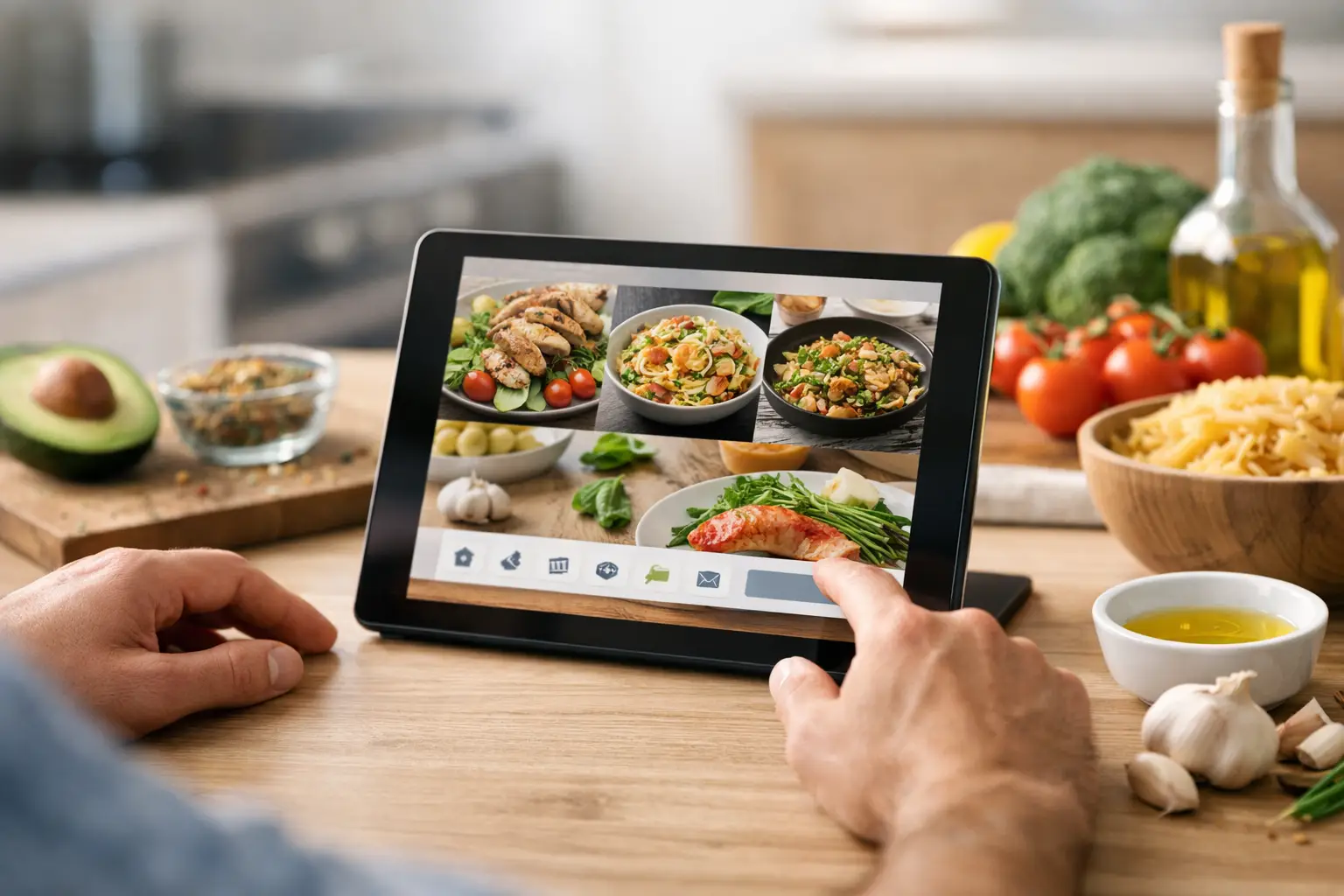
You have half a bag of spinach, chicken thighs that need using, and exactly zero interest in scrolling through 14 recipe pages before dinner. A recipe generator gives that moment a better outcome: type what you have, what you feel like eating, and any dietary needs, then get a recipe built around your actual kitchen.
FlavorLab helps home cooks turn ingredients, cravings, dietary preferences, and specific dish ideas into complete recipes with clear cooking steps, estimated nutrition information, and a finished-dish visual.
That is the difference between collecting meal inspiration and making a decision. The best AI kitchen tools do not just suggest “chicken dinner.” They turn your idea into a clear, cookable plan with portions, steps, swaps, and a visual that helps you see the finished plate before you start.
What a recipe generator actually does
A recipe generator uses your prompt to create a recipe concept that fits the details you provide. Those details can be practical, such as ingredients, serving size, cooking time, or equipment. They can also be personal: a craving for something creamy, a nostalgic comfort-food mood, a high-protein goal, or a request for a dinner that looks good in a quick video.
Instead of starting with a fixed recipe and trying to bend it around your life, you start with your life. Need a dairy-free version of a cheesy pasta? Want a weeknight Korean-inspired bowl that uses ground turkey? Have friends coming over and want a vegetarian main that feels special? A good prompt gives the generator a direction, and the output gives you a starting point you can actually cook.
For home cooks, this can remove the most tiring part of dinner: deciding. For recipe creators, it can turn a loose food idea into a structured first draft with a polished hero image ready to inspire a post, reel, or menu concept.
Start with the details that matter most
You do not need chef language to get a useful result. A plain request such as “make dinner with salmon, rice, broccoli, and a lemon” can work well. But a few focused details will make the recipe feel far more personal.
Think about four things before you type:
- The ingredients you want to use, avoid, or finish before they spoil
- Your food needs, such as gluten-free, halal, vegetarian, low-sodium, or nut-free
- The practical limits, including time, number of people, budget, and kitchen equipment
- The feeling you want from the meal, such as cosy, fresh, spicy, restaurant-style, or lunch-prep friendly
A prompt could read: “Create a 30-minute vegetarian dinner for two using chickpeas, cauliflower, and coconut milk. Make it medium-spicy, high in protein, and suitable for leftovers.” That gives an AI chef enough information to make choices that fit your goal, rather than filling in the blanks with random pantry assumptions.
The same approach works for baking and entertaining. Ask for “a not-too-sweet birthday dessert for eight using strawberries and a stand mixer” or “a make-ahead brunch dish with smoked salmon that looks impressive but is beginner-friendly.” You are not searching for the perfect existing recipe. You are creating one for the occasion in front of you.
How to use a recipe generator for weeknight meals
The fastest way to make the tool useful is to treat it like a kitchen conversation. Start with a rough idea, then refine it once you see the first recipe. If the dish sounds too involved, ask for fewer ingredients. If it is missing a vegetable, ask to add one. If you only have an air fryer, request an air-fryer method.
Turn pantry odds and ends into a plan
Ingredient-led prompts are ideal for reducing food waste. List what needs to be used first, then mention the staples you have available. You might write: “I have bell peppers, mushrooms, tortillas, black beans, cheese, and salsa. Build a dinner for four, and keep active prep under 15 minutes.”
The first result might be a sheet-pan quesadilla situation, stuffed peppers, or a skillet meal. If one direction does not appeal, change the mood instead of beginning again. Ask for something lighter, crunchier, spicier, or more kid-friendly. That small adjustment can produce a completely different meal without forcing you back into search mode.
Make dietary adaptations feel intentional
Many people have learned to view dietary changes as a compromise: remove the ingredient, accept the result. A recipe generator can approach the problem more creatively by rebuilding the dish around the desired texture and flavour.
For example, a dairy-free creamy sauce may need blended cashews, white beans, oat cream, or coconut milk depending on the cuisine and allergy requirements. A gluten-free baking request may need a specific flour blend and a different moisture balance. The more precise your restriction, the better. “No dairy” and “severe milk allergy” are not the same instruction, especially when cross-contact matters.
Always review the ingredient list yourself when an allergy is involved. AI can help with ideas and structure, but package labels, restaurant guidance, and medical advice remain the authority for serious dietary needs.
Build meals around nutrition goals
Nutrition analysis is most helpful when it informs a choice rather than judges it. Maybe you want more protein at breakfast, more fibre in lunches, or a lighter dinner after a rich weekend. Seeing estimated calories, protein, carbohydrates, fat, and other nutritional details can help you understand how a recipe fits into your routine.
Estimates are just that - estimates. Brands, portion sizes, cooking oils, and substitutions can change the numbers quickly. Use nutrition information as a practical guide, then adjust based on your needs. If you are managing a health condition, personalized direction from a qualified health professional is still the right call.
A hero image is more useful than it sounds
Food visuals are not just for people who post recipes online. When you can see a dish before cooking it, you can quickly judge whether it matches what you had in mind. Does that “fresh summer pasta” look bright and lemony, or heavy and cream-based? Does the plated meal feel right for a casual Tuesday or a dinner party?
For creators, a generated hero image also helps bridge the gap between an idea and content planning. You can test a dish concept visually before buying ingredients, filming prep, or setting up a shoot. It is a useful creative tool, especially when you are brainstorming several recipe directions at once.
In an AI kitchen such as FlavorLab, the recipe, image, nutrition view, and conversational refinement can live in the same place. That matters because cooking rarely happens in one clean step. You may start with a craving, remember a dietary need, see the visual, then decide you need a faster version. Keeping that flow together makes experimentation feel easy rather than technical.
Know where your judgement still matters
A generated recipe is a strong draft, not a replacement for tasting, checking, and adapting. Ingredients vary. A jalapeño can be mild or fiery. One oven runs hot, while another takes ten extra minutes to brown vegetables. The ripeness of a tomato or avocado can change the result more than any prompt ever could.
Read the full recipe before cooking, particularly if you are short on time. Check that you have every ingredient, confirm the cooking temperatures, and make sure the quantities make sense for the number of servings. If a recipe calls for an unfamiliar technique, ask for a simpler method or an explanation before you start.
This is also where your own kitchen knowledge grows. The generator can suggest a direction, but you learn what your household likes. Maybe your version needs more acid, less heat, extra sauce, or a larger protein portion. Save those notes mentally or in your own recipe collection. The next prompt will be even better because it starts from what you have learned.
A great dinner does not need to begin with a perfect plan. It can begin with three ingredients, a craving, or one useful question: what could this become tonight?
Visit FlavorLabApp.ca to generate a personalized recipe, explore meal ideas, or turn ingredients already in your kitchen into dinner.