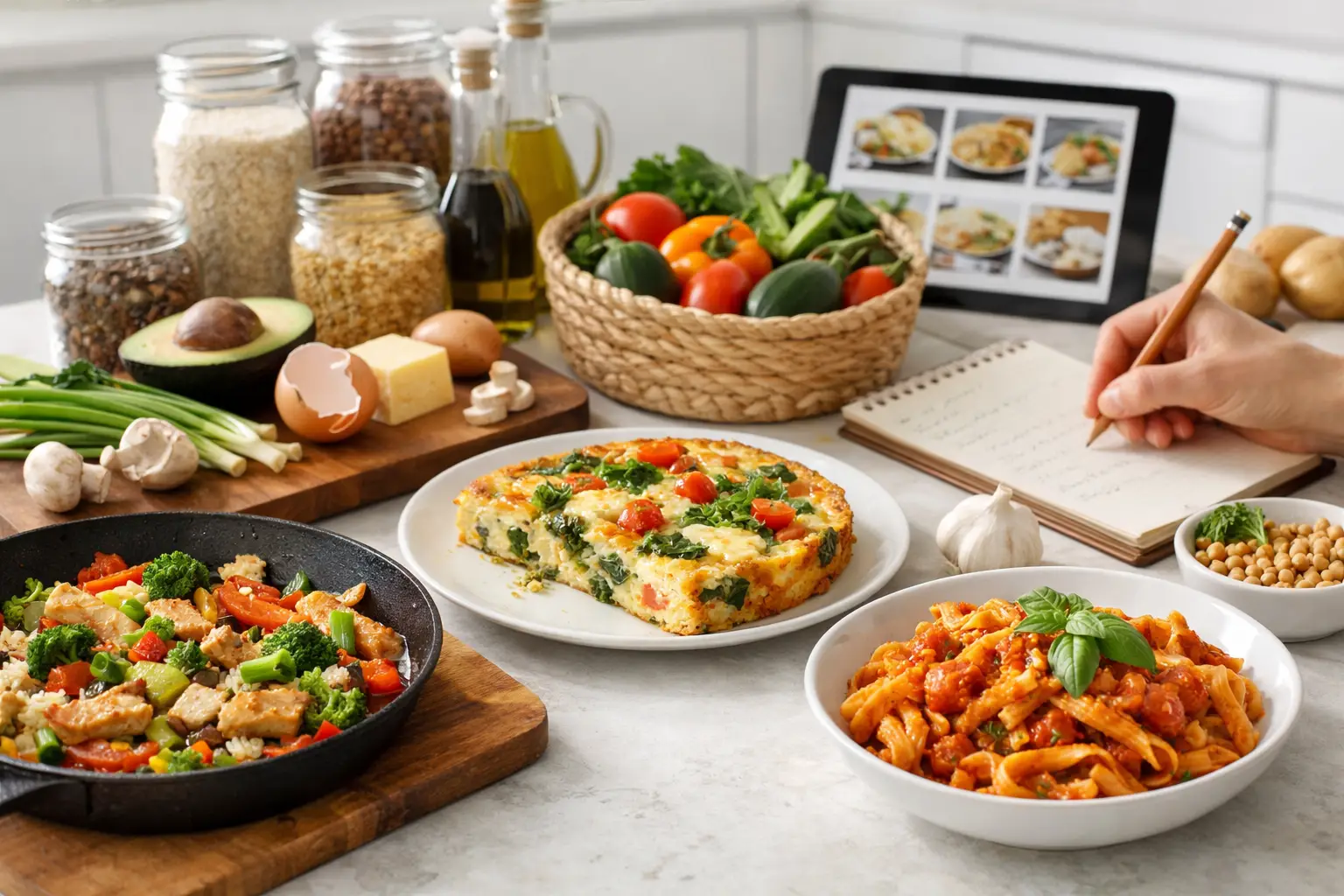
A wilting bunch of spinach, half a package of ground meat, a few eggs, and rice from last night can feel like a problem at 5:30 p.m. The better question is not whether you have the perfect recipe. It is: what can I cook that fits the food, time, energy, and people at my table?
That question gets easier when you stop treating dinner as a search for one brilliant idea. Most useful meals begin with a simple decision: choose one ingredient that needs using, one cooking method that feels manageable, and one flavour direction you already enjoy. From there, you can make something satisfying without a special grocery run.
What Can I Cook Tonight? Use Four Quick Checks
Before opening every cupboard or scrolling through recipes, take a quick kitchen inventory. Look for an ingredient that is close to its best-before date, a protein or filling base, a starch, and something that adds flavour. You do not need all four categories to make a meal, but they help turn random ingredients into a clear plan.
A bag of potatoes, for example, can become crispy sheet-pan potatoes with eggs and greens, a quick soup with beans, or a skillet hash with leftover chicken. Potatoes are the starting point, not the full answer. The rest depends on how much time you have and whether you want something light, comforting, portable, or family-sized.
Next, be honest about your available energy. A 15-minute meal might mean noodles, toast, quesadillas, fried rice, or a fast grain bowl. If you have 45 minutes and want leftovers, a tray bake, pasta sauce, chili-style bean dish, or baked casserole may make more sense. Choosing a recipe that matches the evening is often more useful than choosing the most exciting one.
Finally, check dietary preferences before you commit. If someone needs a vegetarian option, a dairy-free swap, more protein, or a lower-effort lunch for tomorrow, build that into the first decision. It is much easier to choose a meal around the people eating it than to make complicated changes at the end.
Start With the Ingredient That Needs Saving
The fastest way to answer “what can I cook?” is to find the ingredient that has the shortest window left. This simple habit reduces food waste and gives dinner an immediate direction.
Soft vegetables are ideal for soups, curries, stir-fries, pasta sauces, frittatas, or roasted sheet-pan meals. Slightly stale bread can become croutons, baked strata, breadcrumbs, or grilled sandwiches. Cooked rice is especially flexible: turn it into fried rice, rice bowls, stuffed peppers, or a crispy rice skillet.
Fruit that is too soft for snacking still works in smoothies, oatmeal, pancakes, muffins, or a simple compote for yogurt. Herbs that are starting to fade can be blended into a green sauce with oil, citrus, nuts or seeds, and a pinch of salt. The goal is not to rescue every ingredient with a complicated project. It is to give it a useful role in the next meal.
When you are unsure what an ingredient can become, think in cooking methods rather than recipe names. Zucchini can be roasted, sautéed, grated into fritters, stirred into pasta, or added to soup. Canned beans can become a salad, filling for wraps, a skillet dinner, or a blended dip. One ingredient can lead to several meals when you change the method.
Build Dinner From a Reliable Meal Shape
You do not need to memorize dozens of recipes. A few repeatable meal shapes can carry you through busy weeks, especially when the fridge looks uneven.
A bowl is one of the most adaptable choices: combine a base such as rice, noodles, potatoes, greens, or quinoa with a protein, vegetables, and a sauce or dressing. It works with roasted vegetables and chickpeas just as well as it does with leftover chicken and crunchy slaw. Bowls are also easy to adjust when different people want different toppings.
A tray bake is useful when you want minimal cleanup. Put hearty vegetables and protein on a pan, season them with a flavour combination you like, and roast until cooked through. Add a simple side such as bread, couscous, rice, or a salad if needed. The trade-off is time: tray meals are low effort, but they are not always the fastest option.
Skillet meals are better for speed. Sauté aromatics, add vegetables and protein, then finish with cooked grains, pasta, eggs, beans, or a sauce. A skillet is also a practical home for leftovers because the pieces do not need to match perfectly.
For a comfort-food approach, choose soup, pasta, curry, chili, or a baked dish. These meals stretch small amounts of vegetables and protein well. They are especially useful when you are cooking for more than one night, although they may require a little more chopping and simmering time.
Choose a Flavour Direction Before You Cook
A meal can feel scattered when you add every condiment in the fridge. Pick one flavour direction instead, then use ingredients that support it.
For a bright, fresh meal, use lemon or lime, herbs, garlic, cucumber, yogurt or a dairy-free alternative, and a little heat if you enjoy it. For a warm, savoury meal, try onion, garlic, tomato, paprika, cumin, or chili. For something cozy and rich, mushrooms, stock, mustard, cheese or a dairy-free creamy element, and herbs can take the lead.
This is not about strict rules. Soy sauce can work in a soup, a pasta sauce, or a rice bowl. But deciding on a main flavour before you begin keeps the meal focused. It also helps you use what you have without ending up with five competing tastes.
Make Leftovers Work Harder
Leftovers are often easier to use when you stop serving them in their original form. Roast chicken becomes tacos, sandwiches, soup, or a noodle bowl. Cooked vegetables can be folded into eggs, blended into sauce, or tucked into wraps. A small portion of cooked meat can go much further in fried rice or pasta than it can as a stand-alone dinner.
The key is to add contrast. If last night’s meal was soft and saucy, add something crisp such as shredded cabbage, toasted seeds, cucumbers, or toasted bread. If it was dry, add a sauce, broth, salsa, or dressing. Even a small change in texture can make a familiar leftover feel like a new meal.
Keep food safety in mind, too. Cool cooked food promptly, store it properly, and reheat it thoroughly. If you are not sure how long something has been in the fridge or whether it still seems safe to eat, choose another option. Saving food is worthwhile, but not at the expense of a good meal.
When You Have Almost Nothing
Some nights call for a realistic meal, not an impressive one. Eggs, canned beans, frozen vegetables, pasta, bread, rice, canned tomatoes, and cheese or a dairy-free alternative can cover a surprising number of dinners.
Eggs with toast and sautéed vegetables are a proper meal. Beans simmered with tomatoes and spices can be served over rice or with bread. Pasta with garlic, frozen peas, lemon, and a little cheese is fast and filling. If the freezer has dumplings, vegetables, or cooked grains, combine them with a simple sauce and call dinner handled.
It helps to keep a small set of pantry staples you genuinely use, rather than buying ingredients for aspirational recipes. The best staples are personal. One household may rely on tortillas, black beans, salsa, and rice; another may reach for noodles, curry paste, coconut milk, and frozen edamame. Build around your actual habits.
Turn One Decision Into an Easier Week
Once you have chosen tonight’s meal, take two minutes to think ahead. Will it make lunch tomorrow? Does it use up an open package? Is there one ingredient you should add to your next shopping list before you forget? Small planning decisions prevent the familiar cycle of buying food without a clear plan for using it.
A connected kitchen tool can help when ideas are the bottleneck. FlavorLab brings recipes, pantry tracking, meal planning, cooking support, shopping lists, and creator content into one place, so you can move from available ingredients to a meal that fits your time and preferences. Generated recipes can include ingredient amounts, step-by-step instructions, estimated nutrition information, and a finished-dish image to help you picture the result.
The next time the fridge feels like a collection of unrelated ingredients, start with the item that needs using most. Try Pantry Rescue at FlavorLabApp.ca and turn what you already have into a dinner plan you can actually cook tonight.