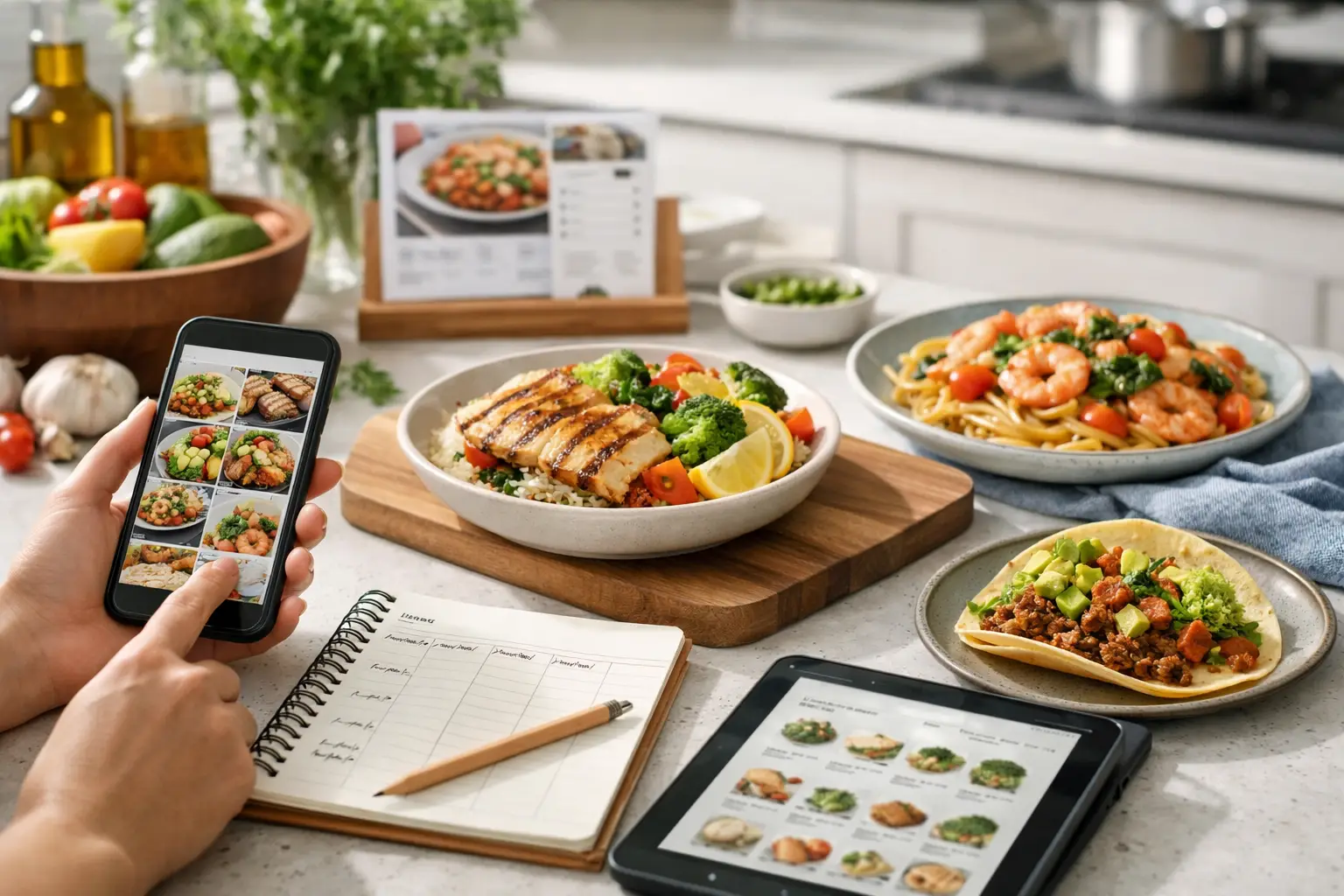
At 5:30 p.m., the hardest part of dinner is often not cooking.
It is deciding what to make with the chicken thawing in the refrigerator, vegetables that need using, limited time, and several people with different preferences.
The best recipe apps reduce that daily decision by connecting recipe ideas, pantry ingredients, weekly planning, grocery lists, and clear cooking guidance.
A beautiful recipe is useful only when it fits your actual evening.
For busy households, students, beginner cooks, shift workers, and anyone trying to waste less food, the right app should make the next step clearer:
- Decide what to cook
- Use ingredients already available
- Identify what is missing
- Follow clear cooking instructions
- Save successful meals for another night
Disclosure: FlavorLab is our own cooking and meal-planning platform. This guide explains the practical features people should consider when choosing a recipe app and identifies where FlavorLab may fit into that routine.
What Should a Recipe App Actually Solve?
A recipe collection is not automatically a complete cooking tool.
Saving dozens of pasta dishes may feel productive, but it does not answer what to make with half a bag of spinach, canned chickpeas, and 25 minutes before a late meeting.
Useful recipe apps begin with the constraints that shape real meals.
You may need:
- A dairy-free dinner for four
- A high-protein lunch
- A meal made from leftover chicken
- A recipe using vegetables that need using soon
- A dinner that takes less than 30 minutes
- A meal that avoids another grocery trip
- Clear instructions for a beginner cook
- A shopping list based on planned recipes
Searching or generating recipes around ingredients, cuisine, cooking time, serving size, and dietary preferences can turn an app from a source of inspiration into practical help.
FlavorLab connects personalized recipe ideas with pantry-first cooking, recipe discovery, meal planning, shopping organization, nutrition estimates, Cook Mode, and creator content.
The goal is not to give every dinner decision to an app.
It is to remove the repetitive mental work that makes cooking feel harder than it needs to be.
Start With Your Real Dinner Problem
Before choosing another recipe app, identify the point where your cooking routine usually breaks down.
Different features matter depending on whether you struggle with:
- Deciding what to cook
- Using leftovers
- Following recipes
- Planning several meals
- Remembering grocery items
- Avoiding duplicate purchases
- Accommodating different preferences
- Finding practical recipes for available ingredients
The most useful app is not necessarily the one with the largest recipe collection.
It is the one that removes the greatest amount of friction from your real routine.
When You Have Ingredients but No Plan
Ingredient-led recipe suggestions are especially helpful when food needs using and you do not want another grocery run.
You may have:
- Cooked rice
- Half a bag of spinach
- Several mushrooms
- An open sauce
- Leftover chicken
- Canned beans
- Frozen vegetables
A traditional recipe search may return meals requiring several additional ingredients.
An ingredient-first tool begins with what is already available.
FlavorLab’s Pantry Rescue is designed for this situation. Enter ingredients already in your kitchen and use them as the starting point for a practical meal idea.
Include basic staples you are willing to use, such as:
- Rice
- Pasta
- Eggs
- Onions
- Garlic
- Spices
- Stock
- Cooking oil
Treat the generated result as a starting point rather than an unquestionable rule.
Review the quantities, cooking time, equipment, dietary labels, and instructions before cooking.
If a suggested recipe calls for broccoli but you only have green beans, consider whether the cooking method and flavour profile will still work.
For help replacing unavailable ingredients, read the Recipe Substitution Guide for Everyday Cooking.
When You Need a Quick Weeknight Dinner
Cooking time is one of the most important recipe filters on a busy evening.
A recipe described as quick should consider more than the time food spends in the oven or pan.
The actual time may include:
- Gathering ingredients
- Washing produce
- Chopping vegetables
- Preheating equipment
- Preparing sauces
- Cooking
- Resting
- Cleaning between steps
A 20-minute recipe may take longer the first time you prepare it.
Look for recipes with:
- Short ingredient lists
- Familiar cooking methods
- Limited preparation
- Common grocery items
- Clear instructions
- Realistic timing
- Minimal specialized equipment
One-pan meals, bowls, stir-fries, tacos, soups, pasta dishes, and planned leftovers can all work well on busy evenings.
For practical inspiration, explore these quick weeknight dinner ideas.
When Meal Planning Never Makes It Past Sunday
Meal planning works best when it is flexible enough to maintain.
Planning every breakfast, lunch, and dinner for an entire month may be useful for some households, but it can also create pressure when schedules change or leftovers begin accumulating.
Start with three or four anchor meals.
Leave space for:
- Leftovers
- A pantry meal
- A freezer meal
- A quick breakfast-for-dinner option
- A meal out
- Changing work or school schedules
A helpful meal-planning tool should connect selected recipes to a weekly plan and shopping list.
This prevents the familiar problem of choosing meals on Sunday, purchasing ingredients from memory, and forgetting the lime, yoghurt, or tortillas needed to complete the plan.
It should also be easy to move a meal.
If Wednesday becomes hectic, move the longer recipe to Friday and use a simpler option instead.
Meal planning is not a test of discipline. It is a way to make the easier choice visible before hunger and time pressure take over.
When Grocery Shopping Creates Duplicate Purchases
The smartest shopping list is not necessarily the longest one.
It should reflect:
- The meals you intend to make
- Ingredients required by those meals
- Food already in your kitchen
- Items used across several recipes
- Ingredients that need replacing
- Household staples that are running low
Check your pantry, refrigerator, and freezer before shopping.
Pay particular attention to ingredients that are easy to forget or expensive to purchase twice, including:
- Proteins in the freezer
- Specialty sauces
- Baking ingredients
- Open packages
- Produce that needs using
- Dairy alternatives
- Less frequently used spices
You do not need to record every grain of rice for a pantry system to help.
Focus on foods that influence what you can cook and what you need to purchase.
Using the same ingredient across several planned meals can also reduce waste.
For example:
- Spinach can support pasta, eggs, curry, and soup.
- Tortillas can become tacos, quesadillas, or breakfast wraps.
- Cooked rice can become bowls, fried rice, or soup.
- Roasted vegetables can become a side dish, wrap filling, or grain bowl.
- Chicken can support dinner, sandwiches, soup, and salad.
For additional pantry-first inspiration, read 12 Recipes From Pantry Ingredients That Actually Work.
When Recipes Become Confusing Mid-Cook
Beginners and distracted cooks benefit from clear, sequential instructions.
Look for recipes that:
- Mention ingredient quantities where they matter
- Place preparation steps in a logical order
- Explain useful visual cues
- Include realistic cooking times
- Identify required equipment
- Explain when ingredients should be added
- Include appropriate food-safety guidance
Cook Mode can make a recipe easier to follow by presenting the instructions in manageable steps.
Keeping directions easy to follow reduces the frustration of repeatedly scrolling or losing your place while cooking.
Visual content can also help when you are learning:
- How thick a sauce should become
- How finely an ingredient should be chopped
- What properly browned food looks like
- How dough or batter should appear
- How a cooking technique is performed
A creator video should support the written recipe rather than replace clear instructions.
Not every recipe needs a video to be cookable.
FlavorLab connects selected recipes with creator cooking content where available. People interested in sharing recipes and cooking videos can learn more about the FlavorLab Founding Creators program.
When You Want Personalized Recipe Ideas
Personalized recipe suggestions can be useful when cooking around:
- Dietary preferences
- Available ingredients
- Training goals
- Budget-conscious foods
- Limited preparation time
- Serving requirements
- Preferred cuisines
- A particular craving or mood
The FlavorLab AI Chef can use those details to create a structured recipe with ingredients, cooking instructions, and estimated nutrition information.
You can also browse existing recipes on FlavorLab when you prefer to choose an available dish instead of generating a personalized one.
Personalization should still leave room for common sense.
Confirm that:
- Ingredient quantities make sense
- Cooking instructions are complete
- The cooking time is realistic
- The necessary equipment is available
- Dietary labels match the ingredients
- Meat, seafood, and eggs reach an appropriate safe temperature
- Allergy requirements have been checked carefully
Nutrition estimates can be useful for comparing meal ideas, but they are not medical advice or an exact guarantee.
Packaged ingredients, brands, preparation methods, and portion sizes can change the final nutritional values.
For a balanced comparison of personalized recipes and traditional cooking resources, read AI Recipes vs Cookbooks: Which Is Better for Everyday Cooking?.
The Best Experience Is a Connected Kitchen Workflow
Separate tools can solve individual parts of the dinner process.
You could use:
- A recipe website for inspiration
- A notes app for the grocery list
- A calendar for meal planning
- A video platform for cooking demonstrations
- A nutrition app for estimates
However, switching between several tools can create more work.
A connected kitchen workflow looks like this:
- Check what is already available.
- Choose or generate a suitable recipe.
- Add missing ingredients to the shopping list.
- Place the meal in the weekly plan.
- Follow clear cooking instructions.
- Save successful recipes for another evening.
- Use remaining ingredients in another meal.
FlavorLab brings these steps together through Pantry Rescue, recipe generation, discovery, meal planning, shopping organization, nutrition estimates, Cook Mode, and creator content.
This can be helpful for families because it makes meal planning easier to share.
One person can suggest a meal, another can check the shopping list, and the cook can follow the recipe without searching through old messages to find it.
For students and solo cooks, a connected workflow can help prevent purchasing ingredients for one meal and forgetting how to use the rest.
Test a Recipe App With a Small Plan
Do not begin by planning every meal for an entire month.
Test the app with a small and realistic routine:
- Select three dinners.
- Add one flexible leftover night.
- Keep one pantry or freezer meal available.
- Check which ingredients can support multiple recipes.
- Build the shopping list.
- Review what is already available before shopping.
- Move meals when the schedule changes.
After cooking, save recipes that worked well.
Record any useful changes, such as:
- Using less spice
- Adding another vegetable
- Increasing the serving size
- Replacing an expensive ingredient
- Preparing part of the meal in advance
- Making enough for lunch leftovers
Ignore recipes that were not a good fit.
A recipe app should support your actual cooking habits rather than forcing you to maintain an unrealistic routine.
Meal Planning Should Leave Room for Real Life
A useful weekly plan does not require seven perfectly scheduled dinners.
A flexible plan might include:
- Two planned recipes
- Two meals sharing ingredients
- One leftover night
- One pantry meal
- One open night
This provides structure without making the week feel rigid.
When work, school, weather, energy, or invitations change, move the meal rather than treating the plan as a failure.
For evenings when the original plan no longer works, keep these 15 meal ideas for tonight available as dependable alternatives.
How to Choose the Right Recipe App
Before choosing an app, ask:
What would make dinner easier this week?
Choose an Ingredient-First App When:
- Produce or leftovers need using
- You frequently begin with available ingredients
- You want to reduce unnecessary grocery trips
- Your schedule changes frequently
- You need flexible recipe suggestions
Choose a Planning-First App When:
- You like selecting meals in advance
- You want a calendar-based routine
- You prefer structured weekly shopping
- Your household follows a predictable schedule
Choose a Grocery-First App When:
- More than one person purchases groceries
- Household coordination is the main problem
- You already have dependable recipes
- You need synchronized shopping lists
Choose a Recipe-Organization App When:
- Your favourite recipes are spread across several places
- You want a private recipe collection
- You regularly repeat successful meals
- Recipe discovery is not your main problem
Choose a Connected Cooking Platform When:
- You want recipes based on your ingredients
- You need meal planning and shopping support
- You want clear cooking guidance
- You prefer recipe discovery and personalization in one place
- You want access to creator cooking content where available
Make Tonight’s Dinner Decision Easier
The best recipe app is not necessarily the one with the most recipes or the longest feature list.
It is the one that answers practical questions:
- What can I cook with what I already have?
- Which meal fits the time available tonight?
- What ingredients are missing?
- How can I use the remaining food later?
- Can I follow the cooking instructions confidently?
- Can the meal fit into the rest of the week?
When those parts work together, dinner becomes easier to begin and food already in the kitchen is less likely to be wasted.
Create a free FlavorLab account to discover recipes, generate meals from available ingredients, explore Pantry Rescue, review nutrition estimates, and build a more practical plan for the week ahead.