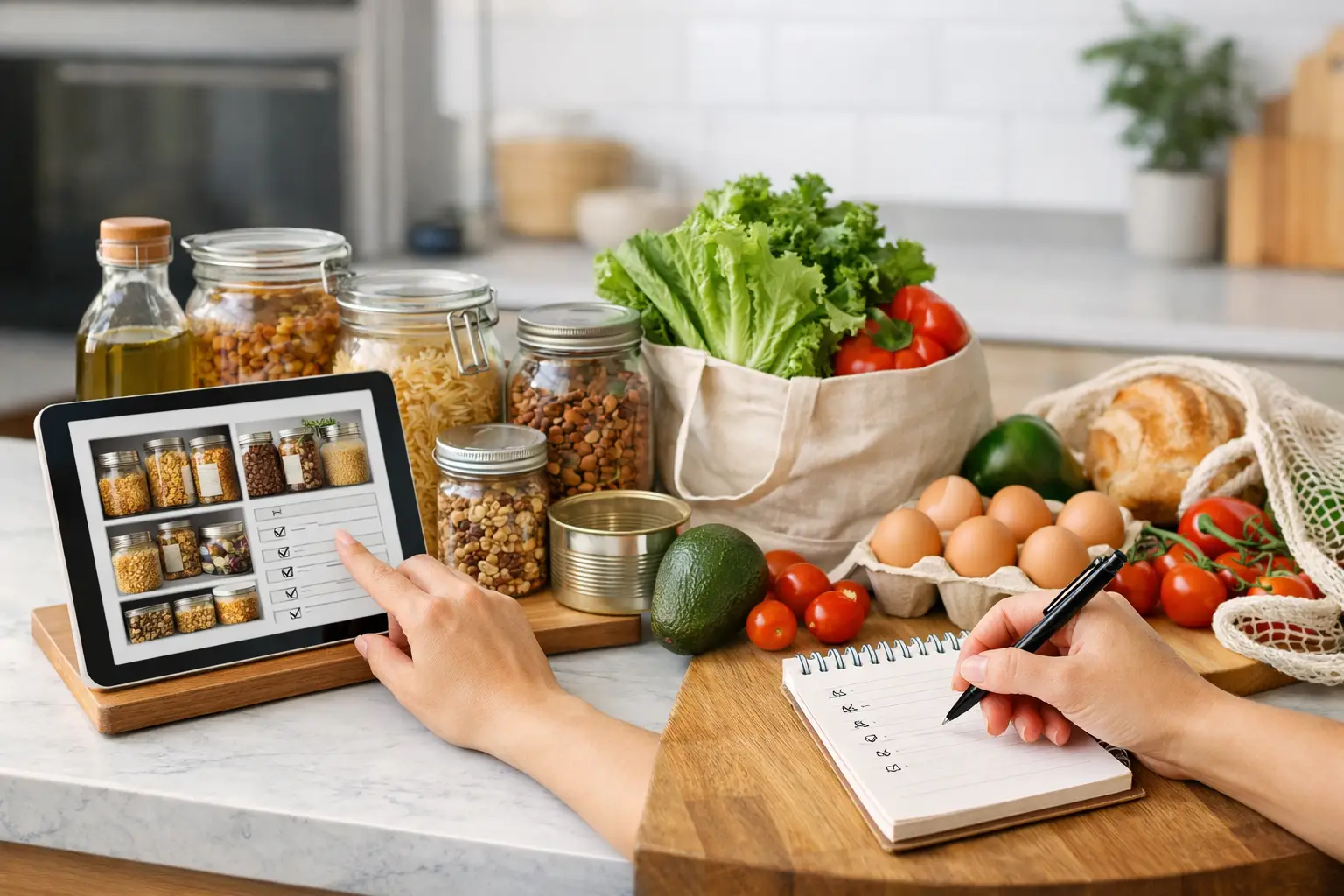
You open the refrigerator at 5:30 p.m., see a bag of spinach nearing its best-before date and half a carton of eggs, then add pasta to your shopping list because it is the only dinner idea that comes to mind.
That small moment explains the pantry tracker vs grocery list question.
Both tools can make home cooking easier, but they solve different problems. Using only one can leave money, ingredients, and useful dinner ideas on the table.
A grocery list helps you remember what to buy. A pantry tracker helps you remember what you already have and what needs using first.
For busy households, students, shift workers, and anyone trying to make fewer last-minute food decisions, the strongest system is usually not a choice between the two.
It is knowing when to use each one.
Disclosure: FlavorLab is our own cooking and meal-planning platform. This guide explains the differences between pantry trackers and grocery lists and identifies how FlavorLab connects these tools within its cooking workflow.
Pantry Tracker vs Grocery List: The Practical Difference
A grocery list is forward-looking.
It captures:
- Ingredients needed for upcoming meals
- Household staples running low
- Items requested by other household members
- Products needed for breakfast or lunch
- Ingredients you do not want to forget
- Supplies needed for a specific recipe
Its purpose is simple: make grocery shopping faster and more accurate.
A pantry tracker focuses on what is already in your kitchen.
It may include:
- Canned goods
- Rice, pasta, and grains
- Frozen fruit and vegetables
- Meat or seafood in the freezer
- Dairy products
- Fresh produce
- Open sauces and condiments
- Leftovers
- Ingredients that should be used soon
Depending on how detailed you want the system to be, a pantry tracker can also include quantities, storage locations, and optional use-by dates.
Think of the grocery list as your plan for bringing food home.
Think of the pantry tracker as your starting point before creating that plan.
One helps prevent forgotten purchases. The other helps prevent duplicate purchases and turns overlooked ingredients into possible meals.
Neither system needs to be perfect to be useful.
If tracking every spice jar sounds exhausting, do not do it. A practical pantry tracker should focus on the ingredients that affect meal decisions.
When a Grocery List Is Enough
A simple grocery list works well when your cooking routine is predictable.
Perhaps you:
- Make similar breakfasts each week
- Purchase a familiar group of staples
- Repeat dependable family meals
- Shop several times during the week
- Keep only a small amount of food stored
- Need only a few ingredients for planned dinners
In that situation, a grocery list may provide all the structure you need.
It is also useful for quick, focused shopping trips.
If you are going out for milk, bananas, and lunch supplies, opening a complete kitchen inventory may slow you down more than it helps.
The best tool is the one that matches the decision in front of you.
A grocery list becomes more valuable when it is built from a meal plan rather than from memory.
Instead of walking through the store and hoping dinner ideas appear, choose a few meals first and add only the missing ingredients.
You will still have flexibility, but there will be fewer random purchases competing for refrigerator space.
The limitation is that a grocery list cannot automatically tell you whether you already own an unopened bag of quinoa or a second bottle of soy sauce.
A list captures what you think you need. It does not always reflect what is currently available.
Without a quick pantry check, it is easy to purchase duplicates and overlook food that could have been used.
When a Pantry Tracker Earns Its Place
A pantry tracker becomes more useful when your kitchen contains a wider variety of ingredients.
This may include:
- Families managing larger weekly shops
- People cooking around dietary preferences
- Home cooks purchasing ingredients for several recipes
- People who freeze leftovers
- Anyone who batch-cooks grains or proteins
- Shoppers who purchase sale items in larger quantities
- People who frequently forget what is stored in the freezer
- Anyone trying to reduce food waste
A pantry tracker can make the familiar “What can I make with this?” moment less frustrating.
Imagine you have:
- Tortillas
- Black beans
- Salsa
- Bell peppers
- Shredded cheese
Those ingredients may not look like a planned meal at first glance.
A pantry check, however, reveals enough food to make quesadillas, burrito bowls, tacos, or a quick skillet bake before purchasing anything else.
For additional ideas based on available ingredients, explore 12 Recipes From Pantry Ingredients That Actually Work.
A Pantry Tracker Is Only Useful When It Stays Current
The waste-reduction benefit of a pantry tracker depends on how it is used.
A tracker that is never updated will not rescue the zucchini hidden in the crisper.
Keep the process light:
- Add important items after a larger shopping trip.
- Remove or update major items when they are finished.
- Check produce, leftovers, and opened packages regularly.
- Review the tracker before planning the next few dinners.
- Use optional dates for foods that need attention soon.
You do not need exact quantities for every item.
Knowing that you have plenty of pasta but no vegetables may be enough to shape the next grocery list.
A pantry tracker is particularly useful for ingredients with a short window of usefulness, including:
- Fresh herbs
- Leafy greens
- Berries
- Yoghurt
- Opened sauces
- Cooked grains
- Leftover meat
- Cut vegetables
- Thawed proteins
When you plan around these foods first, you create a more realistic menu and often reduce the number of additional ingredients needed.
FlavorLab’s My Pantry and Pantry Rescue tools let you save refrigerator, freezer, and cupboard items with optional use-by dates and use those ingredients as the starting point for meal ideas.
Why Using Both Makes Grocery Shopping Calmer
The most useful workflow starts with food already in your kitchen.
Before planning meals, scan your pantry, refrigerator, and freezer for ingredients that should be used soon.
Choose one or two meals that use those foods. Then add only the missing ingredients to the grocery list.
For example, imagine you already have:
- Chicken thighs
- Carrots
- Rice
- A partial bag of frozen peas
A pantry-first plan might turn those ingredients into a chicken and rice bowl.
Your grocery list may only need:
- One additional vegetable
- A sauce ingredient
- Fresh herbs
- A simple garnish
That creates a very different shopping trip from starting with a blank page and purchasing ingredients for several unrelated recipes.
This approach also leaves room for real life.
Choose:
- A few meals with overlapping ingredients
- One easy backup meal
- One leftover night
- Enough staples for breakfast and lunch
- An open evening for changing plans
Do not build a seven-day menu around meals that all require separate specialty ingredients unless you genuinely enjoy that style of cooking.
For more guidance on connecting kitchen tools into a realistic routine, read How Recipe Apps Make Weeknight Dinners Easier.
How Pantry Rescue Turns Available Food Into Meal Ideas
A pantry tracker tells you what is available.
It does not always tell you what those ingredients can become.
That is where an ingredient-led recipe tool can help.
FlavorLab’s Pantry Rescue begins with ingredients already in your kitchen and uses them to suggest a possible meal.
You might begin with:
- Cooked rice
- Spinach
- Mushrooms
- Leftover chicken
- Canned beans
- Frozen vegetables
- An open jar of sauce
Instead of searching through recipes requiring another large shopping trip, you can begin with those ingredients and identify what is still missing.
Review any generated recipe before cooking.
Check that:
- Ingredient quantities make sense
- Dietary labels match the ingredients
- Cooking instructions are complete
- The necessary equipment is available
- Cooking times are realistic
- Meat, seafood, and eggs reach an appropriate safe temperature
- Allergy requirements have been checked carefully
Generated recipes should support your judgement rather than replace it.
A Low-Effort Routine That Can Actually Last
The goal is not to turn your kitchen into a warehouse inventory system.
The goal is to make dinner decisions easier.
A short weekly routine is usually more sustainable than recording every item as it enters or leaves the cupboard.
Step 1: Check What Needs Attention
Look for:
- Fresh produce
- Leftovers
- Thawed proteins
- Opened packages
- Dairy products
- Cooked grains
- Foods approaching their use-by dates
Step 2: Select Several Meals
Choose meals that use the ingredients requiring attention first.
You can browse existing FlavorLab recipes or use the FlavorLab AI Chef when you want a personalized recipe based on particular ingredients, preferences, servings, or cooking time.
Step 3: Build the Grocery List
Add only the ingredients missing from the meals you selected.
Before finalizing the list, check the pantry again for expensive or frequently duplicated items.
Step 4: Update Important Categories After Shopping
You do not need to record everything.
Focus on:
- Proteins
- Produce
- Frozen foods
- Opened packages
- Specialty ingredients
- Foods you want help using
- Items with shorter use-by windows
Step 5: Adjust the Plan When Life Changes
If a planned meal no longer works, move it to another day.
Use leftovers, a freezer meal, or a simple pantry dinner instead.
The system should reduce pressure, not create it.
How to Manage Both Tools in a Shared Household
If several people share the kitchen, agree on a few simple rules.
For the grocery list:
- Add an item as soon as someone notices it is low.
- Check the list before going to the store.
- Remove or mark items when they are purchased.
- Avoid sending separate shopping requests through multiple messages.
For the pantry tracker:
- Update important items after the main shopping trip.
- Add ingredients that household members want help using.
- Record major freezer items.
- Remove finished products when practical.
- Use dates for foods that may be forgotten.
One person can update the tracker after the main shopping trip, or everyone can add only the ingredients they consider important.
Avoid treating the tracker as a strict rulebook.
Sometimes you will buy something because it is in season, on sale, or simply sounds good.
That is part of enjoying food.
The tracker is there to support an informed choice, not remove spontaneity from cooking.
Which Tool Fits Your Cooking Style?
The right choice depends on the problem you are trying to solve.
Choose a Grocery List When:
- You want faster shopping
- Your weekly routine is predictable
- You purchase a familiar group of ingredients
- You already know which meals you intend to make
- You need to coordinate shopping with another person
- Forgotten items are your main problem
Choose a Pantry Tracker When:
- You frequently throw out unused produce
- You forget what is stored in the freezer
- You purchase ingredients you already own
- You keep a wider variety of food at home
- You freeze leftovers or batch-cook
- You want to plan around use-by dates
Use Both When:
- You want to reduce duplicate purchases
- You want to plan meals from available food
- You need more variety without purchasing more ingredients
- You want a grocery list based on actual kitchen gaps
- You are trying to reduce food waste
- You want meal planning and shopping to work together
Your pantry inventory can prompt meal ideas for tonight, while the grocery list fills only the gaps.
Pantry Tracker vs Grocery List: Which Is Better?
Neither tool is automatically better.
A grocery list helps you remember what to bring home.
A pantry tracker helps you remember what is already there.
The strongest routine usually combines both:
- Check available food.
- Identify ingredients that should be used soon.
- Plan several practical meals.
- Add only missing ingredients to the grocery list.
- Update important pantry items after shopping.
- Adjust the plan when the week changes.
FlavorLab connects My Pantry, Pantry Rescue, personalized recipe generation, meal planning, and shopping organization in one cooking workflow.
Start small this week.
Note one ingredient that needs using, plan one meal around it, and add only the missing ingredients to your list.
Create a free FlavorLab account to save pantry items, generate recipes from available ingredients, organize meals, and build a more practical shopping plan.