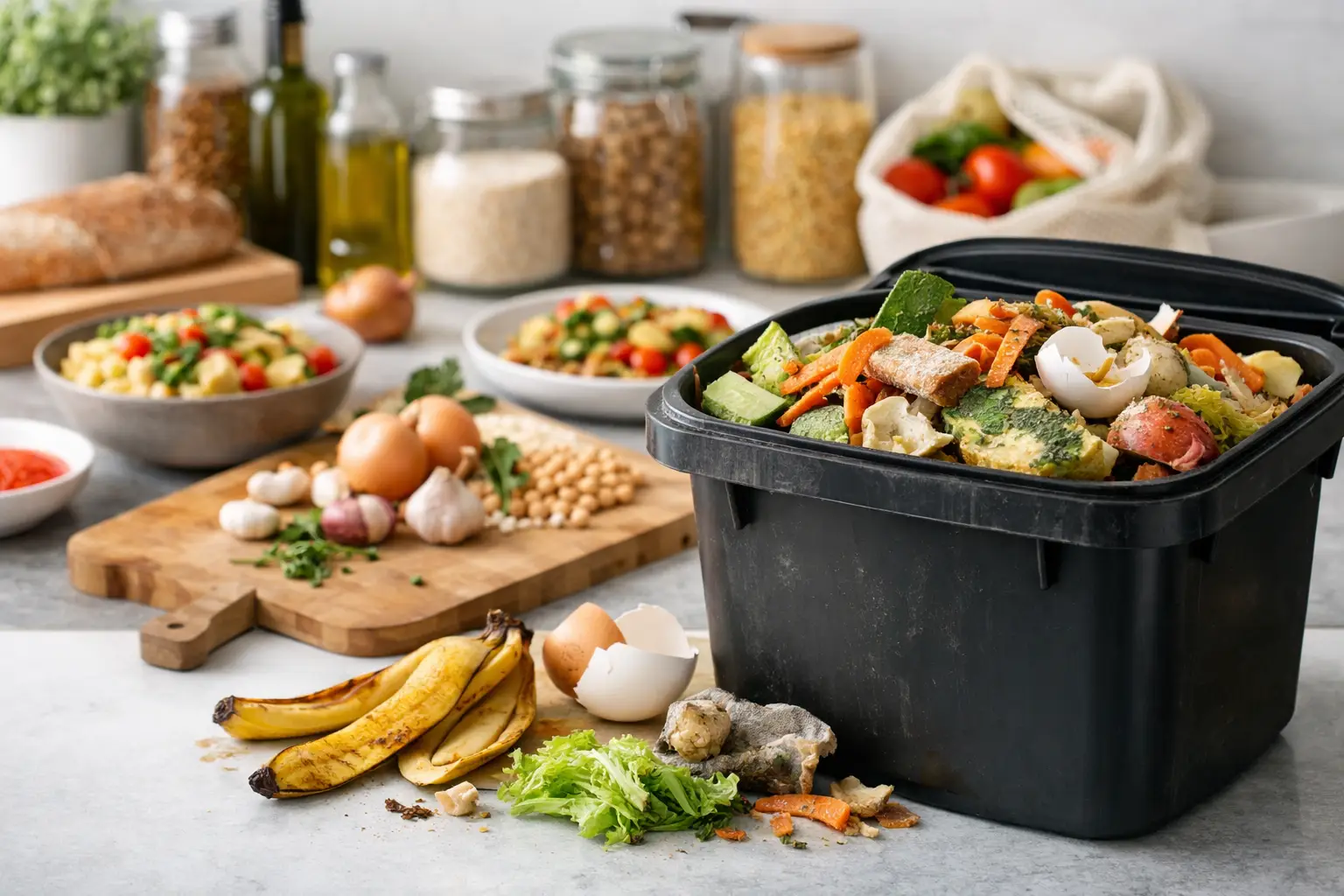
The half-used bag of spinach is obvious. The real clue is often the unopened item behind it: a second jar of pasta sauce, a bag of lentils bought for one recipe, or crackers that went stale before anyone remembered they were there. A useful pantry waste comparison is not about feeling guilty about what you throw out. It is a simple way to see where your kitchen routine loses track of food and where a few small changes can make weeknight cooking easier.
For busy households, food waste rarely comes from one big mistake. It builds through small decisions: shopping without checking the cupboard, buying ingredients for an ambitious meal, cooking more than the household will eat, or forgetting what is already open. Compare what leaves your kitchen with what comes into it, and patterns become much easier to fix.
What to compare in your pantry waste
Start with a one-week kitchen check. You do not need a spreadsheet or a perfect inventory. Keep a note on your phone and record food that is discarded, composted, or left uneaten. Include pantry items, fridge food, leftovers, and produce. The goal is to learn which kind of waste is happening, not to judge every carrot end.
A practical comparison has four parts:
- What was wasted: Name the item and roughly how much was left.
- Why it was wasted: Expired, forgotten, spoiled, stale, overcooked, disliked, or simply not used in time.
- What you bought instead: Did the same category get purchased again before the first item was used?
- What the meal plan expected: Was there a realistic plan for that ingredient, or was it bought for a meal that never happened?
The final two questions matter most. Throwing out a bruised apple is frustrating, but buying apples twice because the first bag was hidden in a drawer points to a repeatable problem. Likewise, an unopened can past its best-before date may be less urgent than a recurring pattern of fresh herbs bought for one dinner and discarded every week.
Compare food by how it enters your kitchen
Different food types need different fixes. Fresh produce is sensitive to timing and storage. Leftovers depend on portion size and whether they are visible and appealing the next day. Pantry staples can linger because they seem safe to postpone, even when they no longer fit your usual meals.
Try grouping your notes into fresh food, refrigerated food, leftovers, freezer food, and dry pantry items. If most waste is fresh produce, plan fewer fragile ingredients and choose meals that share them. If leftovers dominate, cook slightly smaller portions or build a designated leftover dinner into the week. If dry goods pile up, stop treating every recipe as a reason to buy a new specialty ingredient.
The difference between waste and a useful kitchen buffer
Not every unused ingredient is waste. A can of tomatoes, rice, oats, or frozen vegetables can be a valuable buffer on a hectic week. Keeping a few reliable basics means you can make dinner without another trip to the shop.
The distinction is whether the item has a job. A useful buffer is something your household reaches for regularly and can store well. Pantry clutter is food bought with good intentions but no clear place in your cooking routine. Three open bags of grains may look like options, but they can make meal decisions harder when everyone is already tired.
This is where a pantry waste comparison becomes more helpful than a strict “use everything” rule. You may decide that buying a favourite shelf-stable soup is worth it, even if it is not used every month. On the other hand, buying several unfamiliar sauces because they looked interesting may not suit a small kitchen or a busy family schedule. The right amount of backup food depends on your space, budget, household size, and cooking habits.
Watch for duplicate buying
Duplicate buying is one of the quietest sources of waste. It happens when you cannot quickly see what you have, when staples are stored in several places, or when shopping is done from memory. You might buy another bag of shredded cheese, then discover one already open in the freezer. Neither purchase is necessarily wrong, but the second bag adds pressure to use it before quality drops.
Before shopping, check three areas: the fridge door and produce drawers, the open items at the front of the pantry, and the freezer. These are the places most likely to contain ingredients that need a plan. Then write your list around meals that use those items first.
Keeping similar foods together also helps. Put baking supplies in one zone, grains and pasta together, snack foods in another, and open packages where they are easy to spot. A labelled bin for “use soon” items can be especially useful, but only if it stays small. If everything is marked urgent, nothing feels urgent.
Compare the meal you planned with the meal you actually cook
Many pantry problems begin before groceries even come home. A plan may include five different dinners, each with its own fresh ingredient, while the real week has late meetings, school activities, and low-energy evenings. The result is often takeout or a quick fallback meal while the planned ingredients wait.
A more realistic approach is to plan for your energy, not your ideal self. Choose two or three meals that use overlapping ingredients, one very quick dinner, and one flexible meal that can absorb odds and ends. For example, roasted vegetables can become grain bowls one night and a frittata or pasta sauce the next. Cooked chicken can appear in wraps, soup, or fried rice. A bunch of herbs can be blended into a sauce instead of being expected to garnish several separate meals.
There is a trade-off here. Repeating ingredients can feel less exciting than making five completely different meals. But it often saves money, reduces decision fatigue, and makes it more likely that fresh food gets used. Variety can still come from seasonings, sauces, cooking methods, and sides rather than a long list of one-off purchases.
Turn comparison notes into a better next shop
After one week, look for one pattern rather than trying to fix everything at once. If salad greens are regularly tossed, buy a smaller package or choose a heartier vegetable that lasts longer. If half a loaf of bread goes stale, freeze part of it on the day you buy it. If beans, rice, and canned tomatoes are collecting dust, plan one simple meal that uses them before adding more staples.
It also helps to make ingredients easier to recognize at decision time. Write “use tortillas” beside taco night, or keep a short note called “cook first” with ingredients that are open or nearing their best quality. When dinner is undecided, those notes are more useful than scrolling through recipes that require a separate grocery run.
Be sensible about dates, too. Best-before dates generally speak to quality rather than automatically meaning a shelf-stable item is unsafe. Check packaging, storage guidance, appearance, and smell, and when you are unsure, choose caution. The aim is to avoid unnecessary waste without taking risks with food that may no longer be good to eat.
Make leftovers part of the plan, not an afterthought
Leftovers become waste when they are vague. “Some chicken and vegetables” is easy to ignore. “Tomorrow’s chicken fried rice” has a purpose. Pack portions promptly, label them with the date, and place them where they will be seen. If your household does not enjoy repeat dinners, transform leftovers rather than serving the same plate again.
A flexible template helps: cooked vegetables can go into soup, eggs, pasta, quesadillas, or a grain bowl. Cooked grains work in salads, stir-fries, and breakfast bowls. Tomato sauce can be used for pasta, baked eggs, or a quick pizza-style toast. You do not need to force an ingredient into a meal that sounds unappealing. Choose a format your household already likes.
When you need an idea quickly, FlavorLab can help connect the ingredients already in your kitchen with a recipe that fits your time, servings, cuisine preferences, and dietary needs. Its Pantry Rescue feature is particularly useful when you have a few items to use soon but no clear dinner plan.
A pantry that gets used well will not look perfectly empty. It will look intentional: familiar staples on hand, open items visible, a few flexible meals planned, and less food waiting for an imaginary free evening. This week, pick three ingredients you already own, use Pantry Rescue at FlavorLabApp.ca, and turn them into a dinner before your next shop.