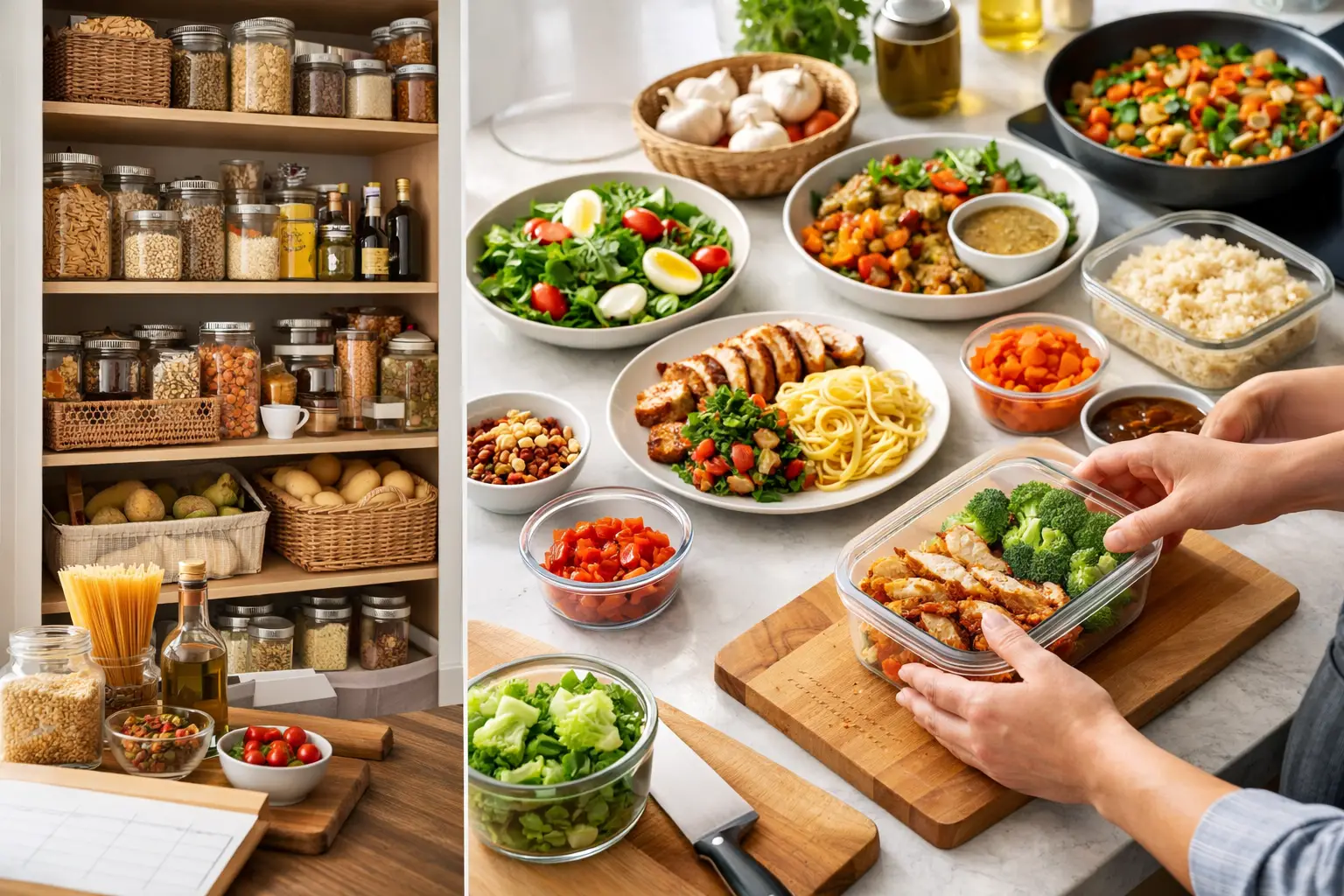
The bag of lentils at the back of the shelf, three open boxes of pasta, and a spice jar that expired two years ago all create the same dinner problem: you cannot tell what you have. Learning how to organize kitchen pantry is less about making shelves look perfect and more about making a Tuesday-night meal easier to start.
A useful pantry lets you spot ingredients quickly, use food before it gets forgotten, and build a more accurate shopping list. You do not need matching containers or a large walk-in pantry. A few practical zones and a simple reset routine can make a small cupboard work much harder.
Start by seeing what is really there
Before buying bins, labels, or jars, take everything out. It may feel inconvenient, especially in a busy household, but it is the quickest way to find duplicates and identify ingredients you have stopped using. Empty one shelf at a time if your pantry is large, so food does not take over the kitchen for the day.
Check best-before dates, open packages, and the condition of dry goods. Best-before dates are about quality rather than an automatic safety deadline, but anything that smells stale, has signs of pests, or is damaged should go. Set aside unopened items your household will not use for donation where appropriate.
As you sort, make three groups: keep, use soon, and let go. The use-soon group is valuable. It gives you a ready-made starting point for the next few meals, whether that is chickpeas for a curry, breadcrumbs for baked chicken, or oats for breakfast bars.
Create pantry zones based on how you cook
The best pantry layout depends on your household. A student cooking mostly for one may need quick grains, canned meals, and snack staples within reach. A family that makes packed lunches may need a dedicated breakfast and lunch shelf. Copying a social-media pantry setup only works if it matches your actual routine.
Begin with broad categories rather than highly specific labels. Most kitchens work well with zones for these four groups:
- everyday meal basics, such as pasta, rice, noodles, canned tomatoes, beans, broth, and cooking oils
- baking supplies, including flour, sugar, cocoa, baking powder, and decorating ingredients
- breakfast and snacks, such as cereal, oats, crackers, nut butters, and lunchbox items
- flavour builders, including herbs, spices, sauces, vinegars, and international pantry staples
Put the items you reach for most often between waist and eye level. Heavy bags, canned goods, and extra supplies belong on lower shelves. Less-used baking tools, seasonal ingredients, and back-up packages can sit higher up.
This arrangement saves more time than arranging every item by colour. A pantry should support the way you make decisions while cooking. When pasta, tomato sauce, lentils, and spices are easy to see, a meal idea comes together faster.
Keep meal ingredients close together
Some ingredients naturally belong in the same cooking flow. Keep pasta, noodles, grains, canned beans, and canned tomatoes in neighbouring areas rather than scattering them across several shelves. Store oils, vinegars, and commonly used seasonings near the kitchen workspace if your layout allows it.
You can also create a small “meal starter” section for ingredients that rescue busy nights: canned tuna, coconut milk, instant noodles, jarred sauces, tortillas, and shelf-stable soup ingredients. The exact contents depend on your preferences and dietary needs, but the purpose stays the same: make a satisfying meal feel possible before you reach for takeout.
Use containers only where they solve a problem
Clear containers can help with loose staples such as flour, rice, oats, sugar, and cereal. They let you see what is running low, protect food from moisture, and make awkward bags easier to stack. However, transferring everything into containers takes time and can create more work if you need to keep track of dates and cooking directions.
Use containers selectively. They are most useful for foods you buy repeatedly in larger packages. Keep the original packaging for specialty ingredients, single-use products, and items you do not use often. If you decant food, add a simple label with the item name and best-before date.
Baskets are equally helpful for corralling packets that tend to slide around, such as seasoning mixes, granola bars, instant soups, and snack bags. A bin labelled “use first” is one of the most practical additions you can make. Place items nearing their best-before date or partially used packages there, where they cannot disappear behind newer food.
Put first-in, first-out into practice
Organizing a pantry once is helpful. Keeping it functional requires a small habit: put newer groceries behind older ones. This first-in, first-out approach is common in food storage because it makes older products visible before fresh replacements.
When you unpack groceries, move existing cans, pasta, or cereal forward, then place the new items behind them. It takes less than a minute per category and can prevent the build-up of forgotten duplicates. For families, a visible snack bin can also reduce the number of half-open packages hiding in cupboards.
Try not to stockpile food simply because it is on sale unless you know where it will go and when you will use it. Buying several extra cans of beans is sensible if beans are part of your weekly meals. Buying five unfamiliar sauces because they were discounted can turn into clutter quickly.
Make your pantry work with meal planning
A well-organized pantry should answer two questions quickly: What can I cook now, and what do I need to buy next? Before planning the week, check the use-first bin and choose one or two ingredients to build meals around. That could mean planning tacos to use black beans, a tray bake for potatoes, or a soup that uses broth and canned vegetables.
This is where a digital pantry can be useful, particularly if more than one person shops or cooks. FlavorLab’s My Pantry helps you keep a record of ingredients on hand, while Pantry Rescue can turn available or soon-to-expire food into meal ideas. It is a practical bridge between organizing shelves and deciding what to cook with what you find.
You do not need to track every pinch of salt or every tea bag. Start with ingredients that affect meal planning most: proteins, grains, canned goods, produce, sauces, baking staples, and frozen items. Update the list when you do a grocery run or pantry reset, not every time you use a spoonful of something.
Label for people, not for perfection
Labels make shared kitchens easier, but they do not need to be elaborate. Clear, plain labels such as “pasta,” “breakfast,” “baking,” and “snacks” are enough. If children help themselves to snacks or school-lunch foods, place those items in an accessible basket and use names they will recognize.
Avoid organizing categories so narrowly that putting groceries away becomes a puzzle. For example, one “international ingredients” shelf may work better than separate containers for every cuisine. The goal is a system everyone can maintain, including on a rushed weekday evening.
Reset your pantry in 10 minutes each week
A short weekly check prevents a full pantry overhaul later. Before making your shopping list, straighten one or two shelves, move older food to the front, and check what belongs in the use-first bin. Combine duplicate open packages where sensible and remove empty boxes.
Once a month, take a closer look at foods you have not used. Ask whether they still fit the meals you make now. Tastes, schedules, and dietary needs change, and your pantry should change with them.
A pantry does not need to look styled to be successful. If you can find ingredients, see what needs using, and turn those items into dinner without a second grocery trip, it is doing its job. When you are ready to turn your newly organized supplies into a plan, try Pantry Rescue at FlavorLabApp.ca.