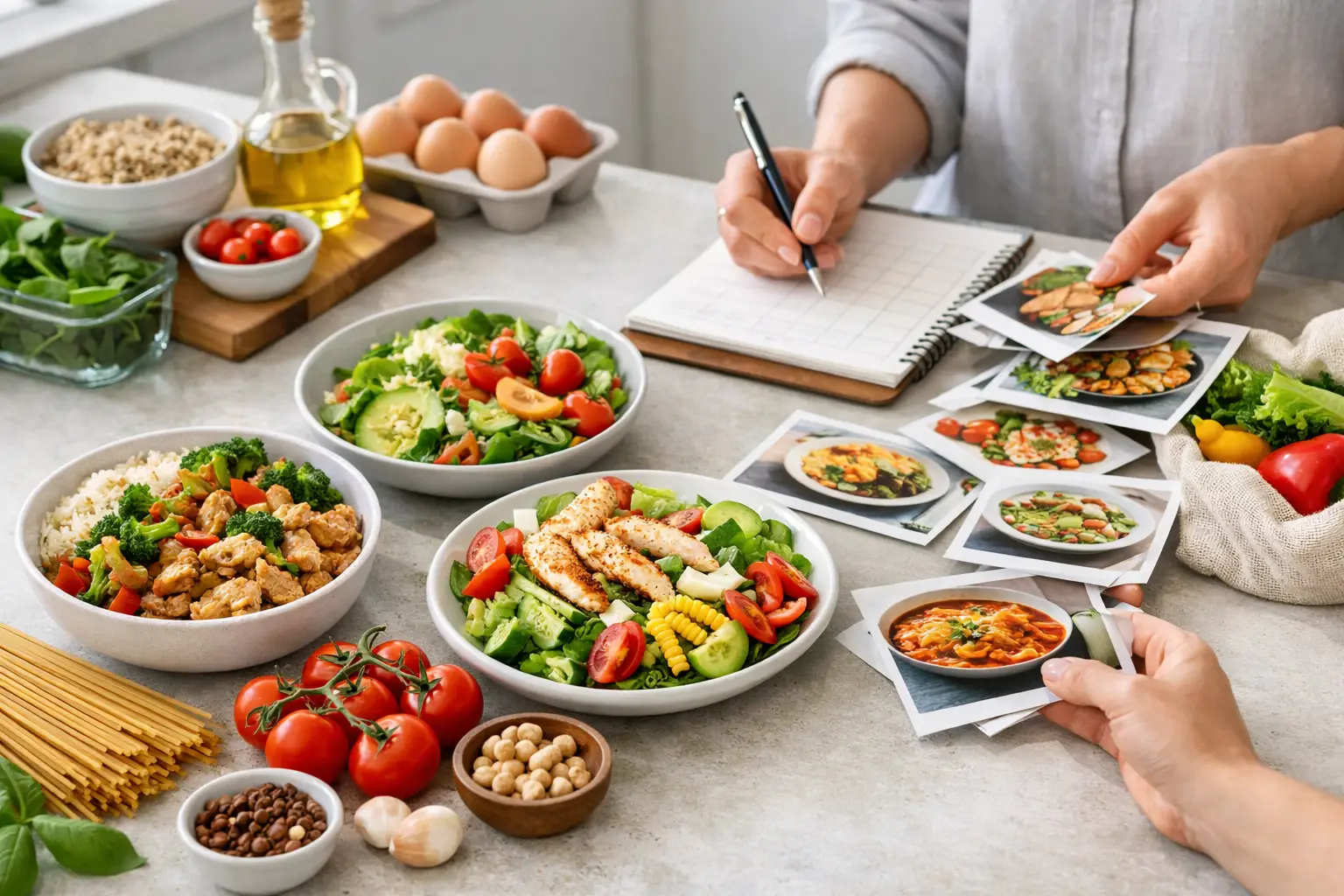
At 5:30 p.m., the hardest part of dinner is often not cooking. It is deciding. Learning how to choose weekday meals means making a few useful decisions before everyone is hungry, rather than searching for the perfect recipe when your energy is already gone.
A good weekday meal plan is not a colour-coded schedule full of ambitious dishes. It is a realistic set of options that matches your actual week: late meetings, school activities, tired evenings, groceries already in the fridge, and the occasional night when toast or leftovers are the sensible answer.
Start with your real week, not your ideal week
Look at the next five to seven days and identify the evenings with the least time and energy. These are not the nights to test a complicated new recipe or cook three separate components from scratch. Save 15-minute meals, freezer-friendly options, or leftovers for those days.
Then find one or two nights where cooking can be more relaxed. That is where a sheet-pan dinner, pasta sauce made from scratch, soup, or a new cuisine you want to try can fit. Planning around your capacity is more useful than planning around what you think a balanced week should look like.
For many households, a week might include two quick dinners, two regular cook nights, one leftovers night, one flexible night, and one meal that can be prepped ahead. The mix will change from week to week. That is a feature, not a failure.
Choose weekday meals using four filters
Before adding a meal to your plan, run it through four simple questions: How long will it take? What ingredients do I already have? Will the people eating it enjoy it? What will it leave behind for another meal?
Time is the first filter because prep time on paper does not always reflect the full evening. A 30-minute stir-fry can work if you have vegetables ready to chop. It may not work if you still need to shop, thaw protein, clean the kitchen, and help with homework. On busy nights, choose meals with fewer steps and fewer pans, not just a short stated cooking time.
Your pantry and fridge are the next filter. A meal idea becomes much more appealing when it uses the half bag of spinach, tortillas, cooked rice, or vegetables that need attention. This reduces waste and keeps the shopping list focused. It also helps you avoid buying ingredients for five unrelated recipes that each require a different sauce, herb, or specialty item.
Preference matters just as much. A meal can be nutritious and inexpensive but still be a poor choice if no one wants to eat it. Build around familiar formats - bowls, wraps, pasta, soups, tacos, eggs, or roasted trays of vegetables - and change the flavour profile when you want variety. A rice bowl can become a different dinner each week depending on the protein, vegetables, sauce, and toppings.
Finally, think one meal ahead. Roast extra chicken for sandwiches or grain bowls. Make enough rice for fried rice later in the week. Cook a larger pot of lentils for soup, salads, or stuffed wraps. Leftovers do not need to repeat dinner exactly to save time.
Give each night a job
It is easier to choose meals when every evening has a loose role. Instead of starting with a blank page, decide what kind of dinner that night calls for.
A Monday might be a low-effort meal after a full day. Tuesday could be a pantry meal. Wednesday may be the best night to cook a little extra for Thursday lunches. Friday might call for something social and shareable, such as build-your-own tacos or loaded baked potatoes.
This approach prevents the common mistake of planning five meals that all take the same amount of effort. Variety is not only about different cuisines. It is also about varying the workload. A creamy pasta, a big salad with protein, a soup, a tray bake, and a breakfast-for-dinner meal can all feel distinct without requiring a long ingredient list.
Build flexibility into the plan
Weekday meal planning works better when it leaves room to change your mind. Ingredients last longer than rigid plans, and schedules can shift quickly. Choose at least one meal that can move to another night without causing problems, such as pasta, quesadillas, omelettes, soup, or a grain bowl.
It helps to keep a small backup category in the kitchen too. Think canned beans, pasta, eggs, frozen vegetables, broth, tortillas, and a few sauces or seasonings you genuinely use. These are not “emergency” foods in a negative sense. They are the building blocks that keep you from ordering food simply because the original plan no longer fits the evening.
Flexibility is especially useful when fresh ingredients have different timelines. Plan delicate greens, fresh fish, or ripe produce early in the week. Put frozen items, sturdy vegetables, dried pasta, and canned ingredients later. If plans change, the meals with longer-lasting ingredients can wait.
Shop for overlap, not just recipes
The most efficient weekly shopping list is built around ingredients that appear in more than one meal. If you buy a bunch of cilantro for tacos, use it in a rice bowl or soup later. If you buy bell peppers for fajitas, slice extra for pasta, salads, or egg sandwiches. One roasted vegetable can work as a side dish, a pizza topping, or part of a lunch bowl.
This does not mean every dinner should taste the same. The goal is to change the format and seasoning while keeping the shopping practical. For example, ground turkey can become lettuce wraps one night and a tomato-based pasta sauce another. Chickpeas can become a crispy sheet-pan topping or a quick curry. A container of Greek yogurt may work in breakfast, a dip, or a sauce.
When you are choosing recipes, check whether one key ingredient creates an awkward amount of waste. Buying a full package of something for one tablespoon can be worth it if you will use it again. If not, substitute with an ingredient you already like and keep on hand.
Make room for dietary needs without making separate dinners
Dietary preferences can make weekday decisions feel more complicated, but a flexible base often solves the problem. Start with a meal structure everyone can share, then adapt one element. A grain bowl can offer different proteins. Tacos can include beans alongside meat. Pasta can have a dairy-free sauce option. A salad bar lets each person choose toppings.
If you are tracking nutrition or working toward a personal food goal, use estimates as helpful context rather than a rulebook. A weekday meal should still be satisfying, affordable, and practical to make. The most detailed plan is not useful if it leaves you hungry or requires ingredients you will not buy again.
Keep new recipes in the right proportion
Trying new food keeps cooking enjoyable, but novelty has a cost on a busy night. New recipes often take longer because you are reading instructions, measuring unfamiliar ingredients, and learning timing as you go. A useful rule is to anchor most of the week with meals you know, then add one new idea when you have enough time to enjoy it.
You can also make a familiar meal feel new by changing one thing: use a new seasoning blend, swap the vegetable, add a different sauce, or turn leftovers into a different format. This gives you variety without asking too much from a Wednesday night.
Use a tool that connects the decision to the kitchen
The gap between meal inspiration and dinner is where most plans fall apart. You may have a good idea, but not know what to buy, how to adapt it to what is in the fridge, or what to cook when the plan changes.
FlavorLab brings those decisions into one connected kitchen space. You can generate a recipe around a dish, ingredient, cuisine, serving size, cooking time, or food preference; turn ingredients that need using into ideas with Pantry Rescue; then add meals to a plan and organize the related shopping list. When it is time to cook, the recipe steps and Cook Mode help keep the plan usable rather than forgotten.
The best weekday meals are not always the most impressive ones. They are the ones that suit the night you are having, use food you already own, and leave tomorrow a little easier. For your next week, start by choosing just three dinners you can genuinely see yourself making, then build from there at FlavorLabApp.ca.