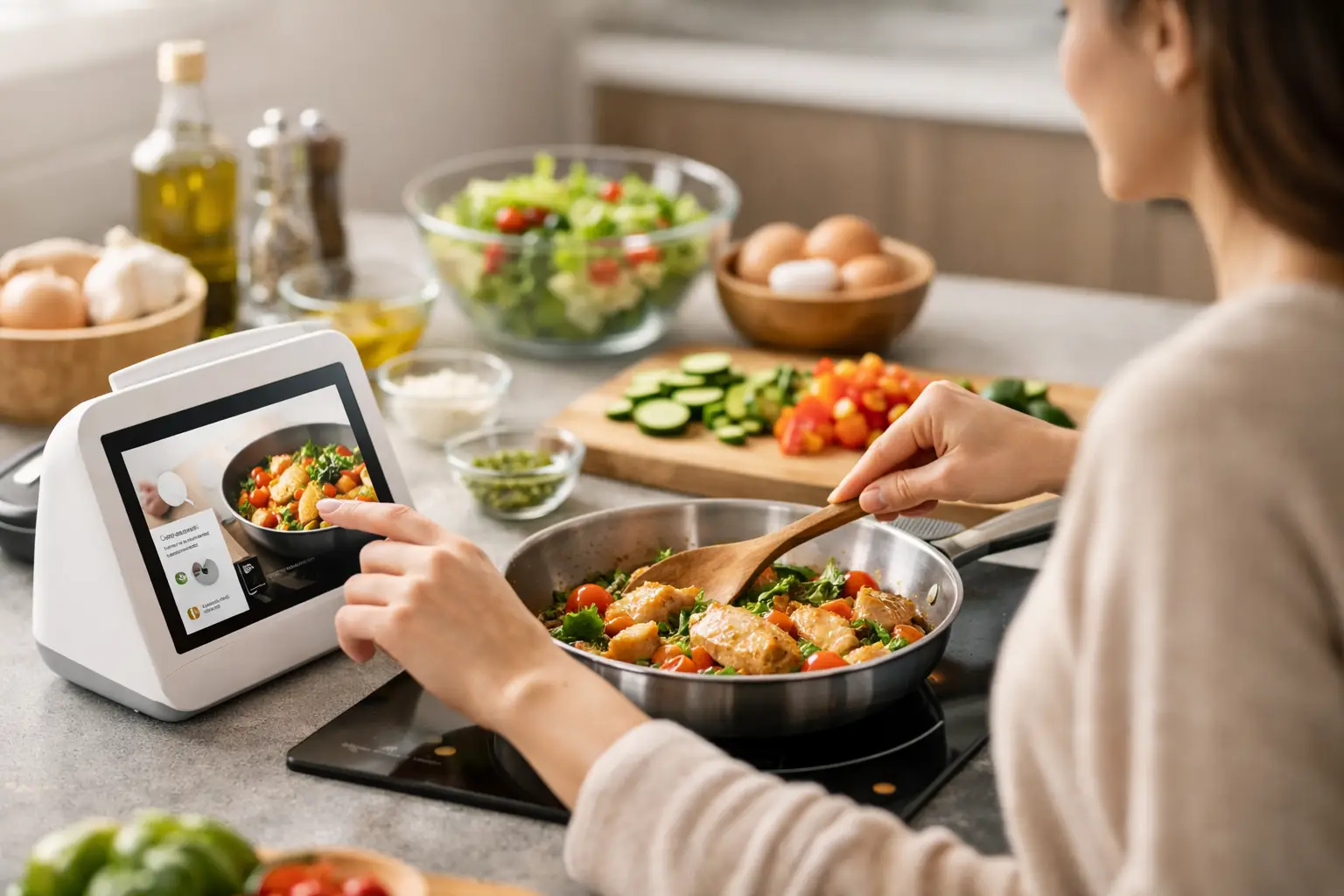
The pan is heating, your vegetables are half chopped, and the recipe suddenly says “prepare the sauce” without explaining what that means. This is exactly when learning how to cook with guided mode can make dinner feel less like a juggling act. Instead of constantly scrolling through a long recipe and guessing what comes next, you move through the meal one clear step at a time.
Guided cooking is especially useful on busy weeknights, when you are making a new dish, or when you simply do not have the mental space to plan every move in advance. It does not replace your judgement in the kitchen. It gives that judgement a better framework, so you can focus on the food in front of you.
What guided mode does while you cook
Guided mode breaks a recipe into smaller actions that are easier to follow at the stove. Rather than reading all the instructions at once, you work through a single instruction, then move to the next when you are ready. That simple change helps reduce missed ingredients, overcooked sides, and the familiar moment when you realise the rice should have gone on 25 minutes ago.
A useful guided cooking experience usually keeps the essentials close at hand: the current instruction, ingredient amounts, timing, and the next thing you need to do. It is not about turning cooking into a rigid test. It is about making the recipe easier to read when your hands are messy and your attention is split.
For beginners, this removes some of the uncertainty around recipe language. For experienced cooks, it can speed up routine meals while leaving room to improvise. If you already know how you like your stir-fry vegetables cooked, for example, you can still use that preference. Guided mode helps you remember the order, not dictate every personal choice.
How to cook with guided mode from start to finish
The best results start before you tap the first cooking step. Guided mode is most helpful when you treat it as your kitchen plan, not as something to open after the oil is already smoking.
Choose a recipe that suits the time you actually have
Start with the real question: how much time and energy do you have tonight? A 20-minute noodle bowl and a baked pasta may both look appealing, but they ask for different levels of attention. Check the total cooking time, serving size, and ingredient list before committing.
Also consider your kitchen setup. If your only large pan is already in the dishwasher, a one-pot meal may be the smarter choice. If you are feeding a family with different preferences, choose a recipe where toppings or spice can be adjusted at the table. Guided mode works best when the recipe itself fits your situation.
Do a quick prep pass before starting
You do not need to line up every ingredient in tiny bowls to cook well. But taking two or three minutes to read through the recipe will prevent common timing problems. Look for actions that need to happen early, such as preheating the oven, starting grains, thawing frozen vegetables, or bringing a pot of water to a boil.
Before you begin, make sure you have:
- all key ingredients and sensible substitutions
- the pans, pot, baking dish, and utensils the recipe requires
- enough clear counter space for chopping and plating
- a place to set your phone or tablet away from splashes and heat
This is also the right moment to wash produce, measure spices, and chop ingredients that will be added quickly. Recipes often say “add garlic and ginger” as though you have an extra minute to peel and mince them while onions brown. A little preparation gives you room to follow the steps calmly.
Follow the current step, but read one step ahead
The biggest advantage of guided mode is that it narrows your focus. Read the current instruction fully, do it, and mark it complete only when it is actually done. This sounds obvious, but it stops you from mentally racing through the whole recipe while forgetting what is happening in the pan.
At the same time, glance at the next step before you begin the current one. If you are sautéing mushrooms and the next instruction asks for stock, you will know to open the carton first. If pasta needs to be added right after the sauce is finished, you can check its cooking time before the sauce reaches the right consistency.
Think of it as cooking with one hand on the present and one eye on what is coming. That rhythm is much more useful than blindly advancing through prompts.
Use timers for anything that cannot be judged at a glance
Timers are helpful for roasting vegetables, simmering rice, baking, and boiling eggs. They are less useful for delicate steps such as frying garlic or searing thin fish, where colour, sound, and aroma matter more than a precise minute count.
Set a timer whenever a recipe gives you a range, then check near the earlier end of that range. Ovens run differently, pans hold heat differently, and chopped vegetables vary in size. Guided mode can keep timing visible, but your senses still decide whether food is ready.
For example, if a recipe says to cook onions for five to seven minutes, look for softened pieces with a little golden colour. If it says to reduce a sauce, notice whether it coats a spoon more thickly than before. These observations build confidence much faster than treating every number as absolute.
Pause when the recipe needs your attention
A guided recipe should support a pause, not pressure you to keep moving. Stop for a moment if you need to answer the door, settle a child, find an ingredient, or assess whether something is cooking too quickly. Lower the heat or move the pan off the burner if needed, then return when you can give the next step proper attention.
Pausing is also useful when an instruction does not match what you see. Perhaps your sauce is reducing faster than expected, or your potatoes are still firm after the suggested time. Do not keep following the screen just because it is there. Add a splash of liquid, lower the heat, or extend the cooking time based on the food itself.
Make guided cooking work for your real ingredients
Recipes are plans, not contracts. Guided mode is at its best when it helps you adapt without losing the flow of the meal. If you have broccoli instead of green beans, you can often swap them in, while adjusting the cooking time for their size and texture. If you are short on a fresh herb, use a smaller amount of dried herb or leave it out when it is not central to the dish.
The trade-off is that some substitutions change more than flavour. Replacing cream with a thinner milk, for instance, can affect how a sauce thickens. Swapping a quick-cooking protein for a larger cut may require a different cooking method. When an ingredient has a structural role, slow down and check whether the rest of the method still makes sense.
Dietary preferences deserve the same care. A recipe can be adapted for many needs, but confirm ingredient labels and choose substitutes that work for your household. Guided instructions provide direction, while you remain the person making decisions for the people at your table.
Avoid the habits that make guided mode less useful
The most common mistake is starting without reading the ingredient list. The second is assuming every instruction must be followed at the same speed. Your stove may be hotter, your vegetables may be cut larger, or you may be doubling the recipe. Let the recipe guide you, but do not ignore the evidence in your kitchen.
Another issue is trying to cook several unfamiliar components at once. If you are new to a recipe, simplify where you can. Choose one main dish and an easy side, rather than attempting a sauce, a grain, roasted vegetables, and dessert simultaneously. Once you know the recipe, you can add more moving parts next time.
Finally, taste near the end when it is safe to do so. Salt, acidity, sweetness, and spice often need small adjustments. A squeeze of lemon, a pinch of salt, or a spoonful of water can bring a dish back into balance. Guided mode can show the sequence, but tasting teaches you how the finished dish should come together.
Build confidence one cooked step at a time
Guided cooking is not about needing help forever. It is a practical way to learn patterns: start the longest-cooking ingredient first, prep before high-heat steps, taste as you go, and adjust when the food asks you to. After a few meals, those habits become easier to carry into recipes you make without any prompts.
When dinner decisions are the hard part, use FlavorLab to generate a recipe around your available ingredients or preferences, then take it into Cook Mode and focus on one step at a time. Your next useful move is simple: choose a meal you genuinely want to eat and cook it with enough guidance to enjoy the process.