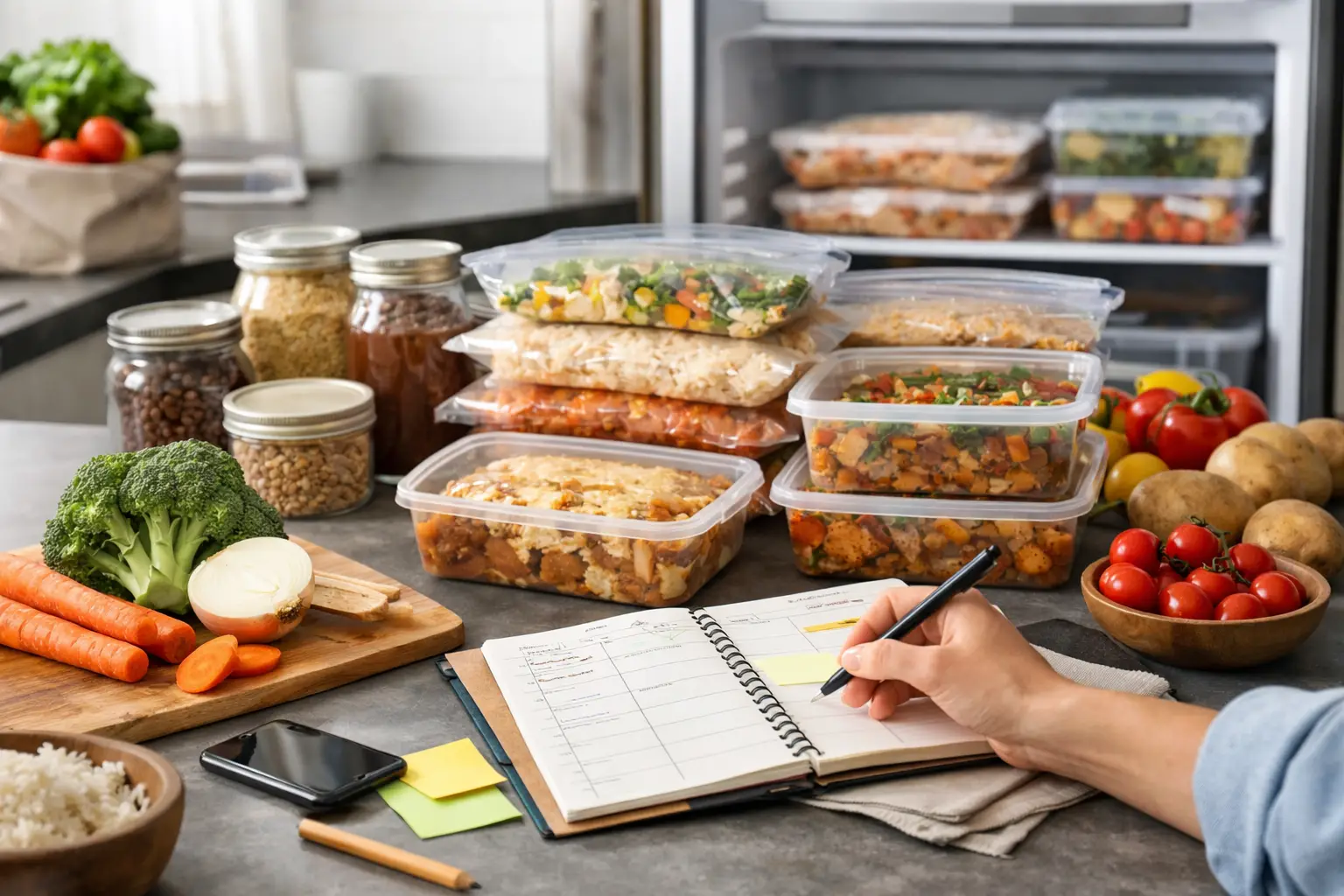
A freezer meal should make a hectic Tuesday easier, not become a frosty mystery you avoid for six months. Learning how to plan freezer meals starts with choosing meals your household will actually want to eat, then building a small system for portions, labelling, and using what you already have.
The goal is not to fill every inch of your freezer in one marathon weekend. For most busy home cooks, a realistic freezer plan means having a few dependable dinners, breakfasts, or components ready when time, energy, or fresh ingredients are limited.
How to Plan Freezer Meals Around Real Life
Start with the next two to four weeks, not an imaginary version of a perfectly organised month. Look at your calendar for late workdays, school activities, travel, exams, or weekends when you know cooking will feel like a lot. Those are the nights freezer meals are meant to cover.
Then decide what kind of help you need. A family with packed evenings may want full dinners they can reheat quickly. A student with limited freezer space might be better served by individual portions of soup, rice bowls, or breakfast burritos. If you enjoy cooking but hate prep on weeknights, freeze chopped vegetables, cooked beans, sauces, and marinated proteins instead of complete meals.
A useful first target is six to eight portions total. That could mean two family-sized dinners and two individual lunches, or four dinners for a smaller household. Planning too much on your first attempt often leads to duplicate meals, an overloaded freezer, and food that gets forgotten.
Choose Recipes That Freeze Well
Not every favourite recipe benefits from freezing. Meals with sauces, braised meats, beans, grains, soups, stews, casseroles, curries, and baked pasta generally hold up well. Many breakfast foods, including muffins, pancakes, burritos, and egg bites, can also be practical choices.
Some ingredients need a little thought. Crisp salads, cucumber, raw potatoes, and delicate herbs do not usually return from the freezer with their best texture. Creamy sauces can separate, although they often come back together with gentle reheating and a stir. Pasta can become soft if it is fully cooked before freezing, so undercooking it slightly is often the better call.
Choose recipes with shared ingredients to make your shop simpler. For example, a batch of ground turkey could become taco filling and a lentil-turkey tomato sauce. The same peppers, onions, and spinach could work across breakfast burritos, a curry, and a pasta bake. This reduces waste while keeping the meals different enough that dinner does not feel repetitive.
If dietary preferences are part of your household routine, build the plan around them from the beginning. It is easier to freeze dairy-free chilli or vegetarian shepherd’s pie in portions than to make separate meals later. You can also keep flexible toppings, such as cheese, fresh herbs, avocado, or crunchy seeds, outside the freezer and add them when serving.
Take Inventory Before You Shop
The most budget-friendly freezer meals often begin in the pantry and freezer you already have. Check for half-used bags of vegetables, leftover cooked rice, canned tomatoes, beans, tortillas, broth, and proteins that need a plan. These are often the ingredients that get pushed to the back while you buy more of the same thing.
Write down what must be used first, then choose recipes that make use of it. A bag of frozen broccoli can go into a chicken and rice bake. Tomatoes and beans can become soup or chilli. A few lingering wraps can become breakfast burritos. Your meal plan should answer the question, “What can I turn into dinner before it goes to waste?”
Next, make one combined shopping list for the ingredients you are missing. Group it by produce, protein, dairy or alternatives, pantry items, and freezer supplies. Include practical items such as freezer bags, containers, parchment paper, and labels if you need them. There is nothing worse than finishing a batch of food and discovering you have no way to store it properly.
Plan a Prep Session You Can Finish
A freezer-meal session should fit the time and energy you have. If you have two hours on Sunday, make one large pot meal and one tray bake rather than attempting five elaborate recipes. You can also prep in stages: shop one day, chop vegetables another evening, and cook or assemble the meals when you have a longer window.
Look for overlapping tasks. Start rice or a sauce while you chop vegetables. Brown one large batch of meat, then divide it between recipes. Use the oven for two dishes at once if their temperatures are close enough and both recipes can be adjusted safely. Clean as you go, especially before switching from raw ingredients to cooked food.
For beginners, assembly-style meals are often easier than fully cooked ones. Try a labelled bag of fajita vegetables and seasoning, a prepared slow-cooker soup kit, or a baking dish of unbaked enchiladas. You still get the benefit of less decision-making and less chopping on a busy day, without committing to a huge cooking project.
Portion, Cool, and Label Everything
How you package food determines whether it becomes convenient later. Freeze meals in the portions you will use. A large casserole may work for a family of four, but it is frustrating for one or two people who only want lunch. Soups, sauces, and chilli are especially useful in single servings or two-serving containers.
Cool cooked food promptly before freezing. Dividing a large batch into shallow containers helps it cool more quickly. Once it is no longer steaming heavily, transfer it to freezer-safe containers or bags, leaving some space for liquids to expand. For freezer bags, press out as much air as possible and freeze them flat. They stack neatly and thaw faster than bulky containers.
Every label should include four details:
- the name of the meal
- the date it was frozen
- the number of portions
- simple reheating or finishing instructions
“Soup” is not enough when you have three similar containers. “Lentil tomato soup, 2 portions, frozen March 10, thaw overnight, reheat on stovetop” is much more likely to get used. A strip of masking tape and a marker are completely fine.
Make Freezer Meals Part of Your Weekly Plan
Freezer meals work best when they are scheduled, not saved indefinitely for an emergency that never seems to arrive. Each week, choose one or two meals to use and place them into your meal plan. Move a meal to the fridge the night before when possible, then reheat it until hot throughout.
Keep a simple freezer inventory on your phone, a note on the fridge, or within your meal-planning routine. Cross off meals as you use them and add new ones after each batch. This makes it easier to see what you have, prevents accidental duplicates, and helps you rotate older meals forward.
Leave room for flexibility. If a dinner invitation comes up or you are suddenly craving something fresh, shift the freezer meal to another day. Freezer cooking should reduce pressure, not make your schedule feel stricter. It is also fine to use a frozen component alongside fresh food, such as cooked taco filling with a quick salad or freezer rice with freshly roasted vegetables.
Avoid the Most Common Freezer Meal Mistakes
The biggest mistake is making food your household does not enjoy just because it is supposedly “good for freezing.” Choose familiar flavours first, then experiment with one new recipe at a time. A freezer full of meals nobody wants is still food waste.
Another common issue is poor visibility. If containers are stacked randomly or unlabelled, the oldest meals disappear. Keep similar meals together, store flat bags upright in a bin like files, and put older items near the front. Avoid repeatedly opening the freezer while you decide what is for dinner.
Finally, do not expect freezer meals to solve every meal. They are one tool in a balanced routine that can also include quick pantry meals, fresh simple dinners, leftovers, and takeout on especially demanding days. A plan that leaves room for real life is the one you will keep using.
When you are ready to turn the ingredients you already have into practical freezer-friendly ideas, use Pantry Rescue and the Meal Planner at FlavorLabApp.ca to generate a recipe, organise your shopping list, and give future-you an easier dinner.