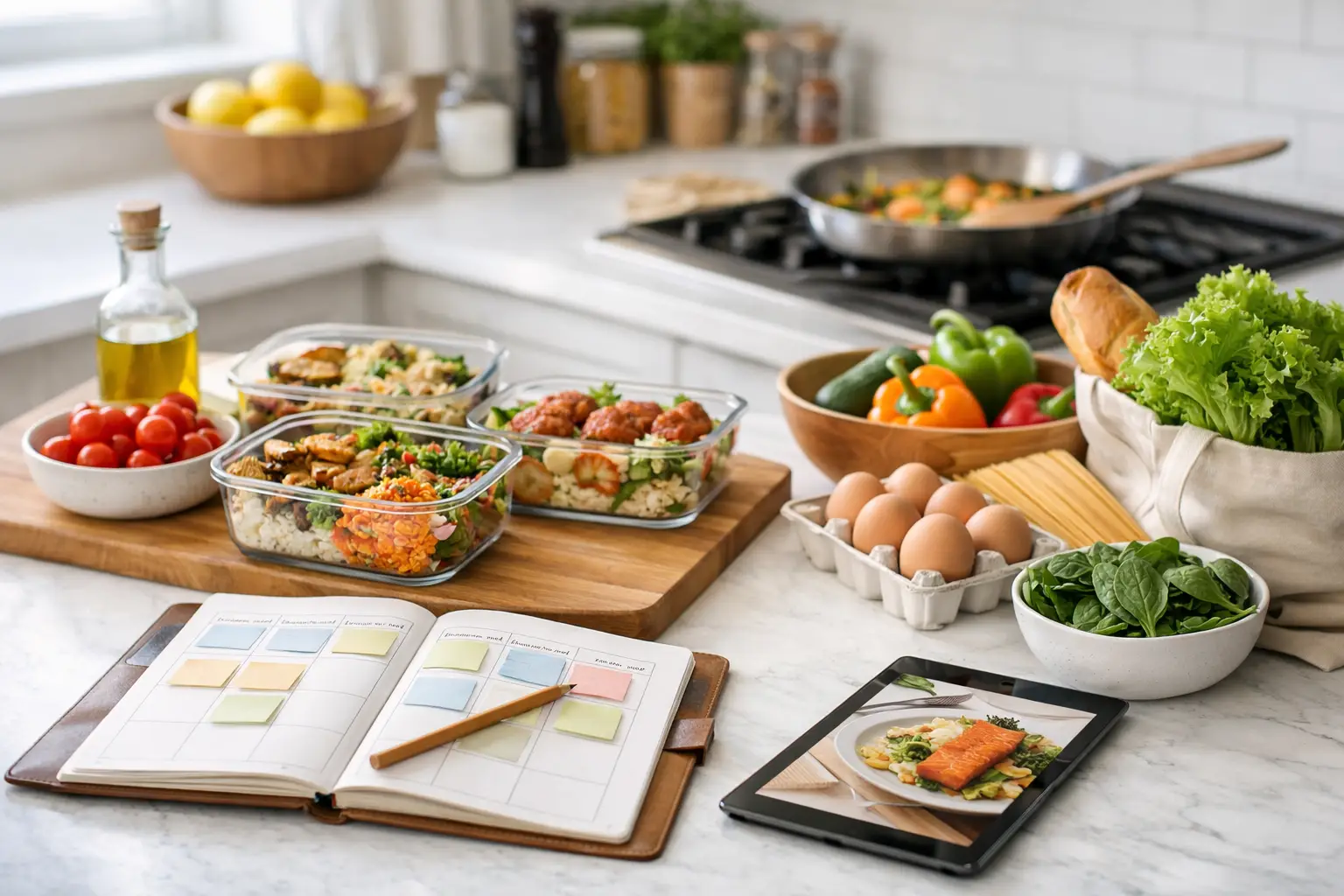
At 5:30 p.m., the question is rarely “What sounds exciting?” It is usually “What can I make with 20 minutes, a tired brain, and whatever is in the fridge?” That is why meal plan routines can make such a noticeable difference. They replace the daily scramble with a few practical decisions made when you have more time and energy.
Meal planning is not about following a rigid menu or cooking every meal from scratch on Sunday. For most home cooks, it is simply a way to decide what is realistic for the next few days, buy with a purpose, and make better use of food already at home. A good plan leaves room for leftovers, takeout nights, changing cravings, and the occasional plan that does not go as planned.
Why meal plan if your week is unpredictable?
A meal plan gives dinner a starting point. Instead of opening the fridge and hoping inspiration appears, you already know you have the ingredients for pasta on Tuesday, tacos on Wednesday, and a simple soup or sandwich night later in the week. That small amount of direction reduces decision fatigue, especially when several people in a household are hungry at once.
It also helps you match meals to the reality of your schedule. A slow-cooked dish may sound great, but not on the night your child has practice or you have an evening class. Planning lets you save longer recipes for a quieter day and reserve quick meals for packed evenings. Students can plan around study sessions. Families can plan around activities. Anyone can plan around the days they know they will have the least patience for chopping vegetables.
The goal is not perfection. The goal is to make the easiest good choice more obvious.
It can lower food waste without making meals boring
Food waste often begins with good intentions. You buy a bag of spinach for one recipe, a bunch of herbs for another, and a package of chicken because it was on sale. Then the week gets busy, and those ingredients are still waiting by Friday.
Meal planning helps ingredients do more than one job. If you buy peppers for fajitas, you might plan to use the rest in egg wraps, grain bowls, or a stir-fry. Roasted vegetables can become a side dish one night and part of a lunch the next day. A rotisserie chicken can cover sandwiches, soup, and a quick noodle bowl.
This does not mean every meal needs to feel like leftovers in disguise. It means you build variety from a smaller, more intentional set of ingredients. One week might revolve around tomatoes, greens, tortillas, and ground meat or beans. Another might feature rice, broccoli, eggs, and a favourite sauce. Repeating useful ingredients saves money and gives you more freedom to adapt.
Before making a shopping list, take a quick look at what needs using soon. Start with the mushrooms, the half bag of spinach, or the yogurt nearing its date, then plan one or two meals around those items. That approach is often more useful than choosing five brand-new recipes and buying every ingredient from scratch.
A plan makes grocery shopping clearer
Shopping without a plan can lead to two frustrating outcomes: a cart full of appealing ingredients that do not make complete meals, or several last-minute store trips for forgotten basics. A meal plan connects the recipe idea to the actual shopping list.
When you know the meals you expect to make, it becomes easier to check quantities. You may already have rice, soy sauce, canned beans, or spices. You can buy only what is missing instead of collecting duplicates in the pantry. You can also choose ingredients that work across multiple meals, such as Greek yogurt for breakfasts, sauces, and a creamy topping.
For households with different preferences, planning can prevent the “there is nothing to eat” problem. You do not need to cook separate dinners for everyone. Try choosing flexible formats: build-your-own bowls, baked potatoes with toppings, tacos, pasta bars, or sheet-pan meals with a protein and vegetables served separately. The plan provides a framework while each person adjusts their plate.
A useful shopping list should also include the unglamorous essentials. If a recipe needs lemon juice, check whether you have lemons. If lunches depend on wraps, add wraps. If you are planning to cook a big pot of chili, make sure you have enough containers for leftovers. These small checks are what turn a meal idea into a meal you can actually make.
Planning supports your food goals, without turning food into homework
Some people meal plan to save time. Others want more vegetables, more protein at breakfast, more home-cooked lunches, or meals that suit a dietary preference. Planning is helpful because it lets you consider those needs before you are standing in front of the cupboard hungry.
For example, if you know afternoons tend to lead to expensive snack runs, plan a filling lunch with a protein, fibre-rich carbohydrate, and produce. If you are trying to cook more vegetarian meals, choose two for the week instead of making an all-or-nothing promise. If a family member avoids a particular ingredient, plan a simple swap early rather than scrambling at dinner.
Nutrition estimates and dietary filters can be useful planning tools, but they are not a reason to chase a perfect number. Appetite, activity, budget, culture, and personal preferences all matter. The best meal plan is one you will genuinely cook and enjoy, not one that looks impressive on paper.
How to build a meal plan you will actually use
Start smaller than you think. Planning seven dinners, seven lunches, and seven breakfasts can be useful for some people, but it can feel overwhelming if you are new to it. Try planning three or four dinners first, then leave space for leftovers, freezer meals, or a flexible night.
Choose meals by effort level, not just by flavour. Pick one meal that takes a little more cooking, two that come together quickly, and one that relies on convenience ingredients such as canned beans, bagged salad, frozen vegetables, or pre-cooked grains. This creates a plan that can survive a busy week.
Next, look for ingredient overlap. A simple example is planning chicken tacos, a chicken-and-vegetable tray bake, and chicken noodle soup. Another is buying a large container of yogurt for breakfast parfaits, marinades, and a sauce for bowls. Overlap reduces waste, but it also means less prep and fewer forgotten ingredients.
Finally, add a backup. Keep one low-effort option available for the night you skip the planned meal. It could be eggs and toast, pantry pasta, freezer dumplings, soup, or a grilled cheese with vegetables on the side. A backup is not a failure of the plan. It is part of a realistic plan.
Let the plan change when life changes
The biggest mistake is treating a meal plan like a contract. If Wednesday's tacos become Thursday's tacos, nothing has gone wrong. If you end up with extra leftovers, move the next meal forward. If fresh produce will not last, use it sooner and save a pantry meal for later.
It can help to plan in meal categories rather than exact recipes. Write “stir-fry night” instead of committing to one specific combination. When the day arrives, make it with tofu, chicken, shrimp, or chickpeas depending on what you have. Use broccoli, peppers, frozen vegetables, or whatever needs using. The category keeps the decision simple while preserving flexibility.
This is especially useful when you are learning to cook. You do not need a large personal recipe collection immediately. Build confidence with repeatable formats: soups, bowls, sheet-pan dinners, pasta, wraps, salads, curries, and breakfast-for-dinner. Once you understand the basic structure, you can change flavours without starting from zero.
Make planning part of your kitchen routine
A meal plan works best when it is connected to the rest of your kitchen, not kept as a forgotten note on your phone. Check your pantry before shopping. Keep the shopping list close to your plan. Save recipes you want to repeat. Notice what your household actually eats, not only what you hope it will eat.
FlavorLab brings those steps together in one connected recipe, pantry, meal-planning, shopping, cooking, and creator-content space. You can use available ingredients to generate an idea, turn chosen meals into a plan, and organize what you need to buy. If dinner plans are already slipping, Pantry Rescue can help turn ingredients you have into a useful next meal instead of another forgotten container in the fridge.
Start with your next three dinners rather than an entire week. Choose one meal built around an ingredient you already have, one quick favourite, and one recipe that feels new but manageable. Then use your plan to make a focused shopping list and give tomorrow night's dinner a head start.