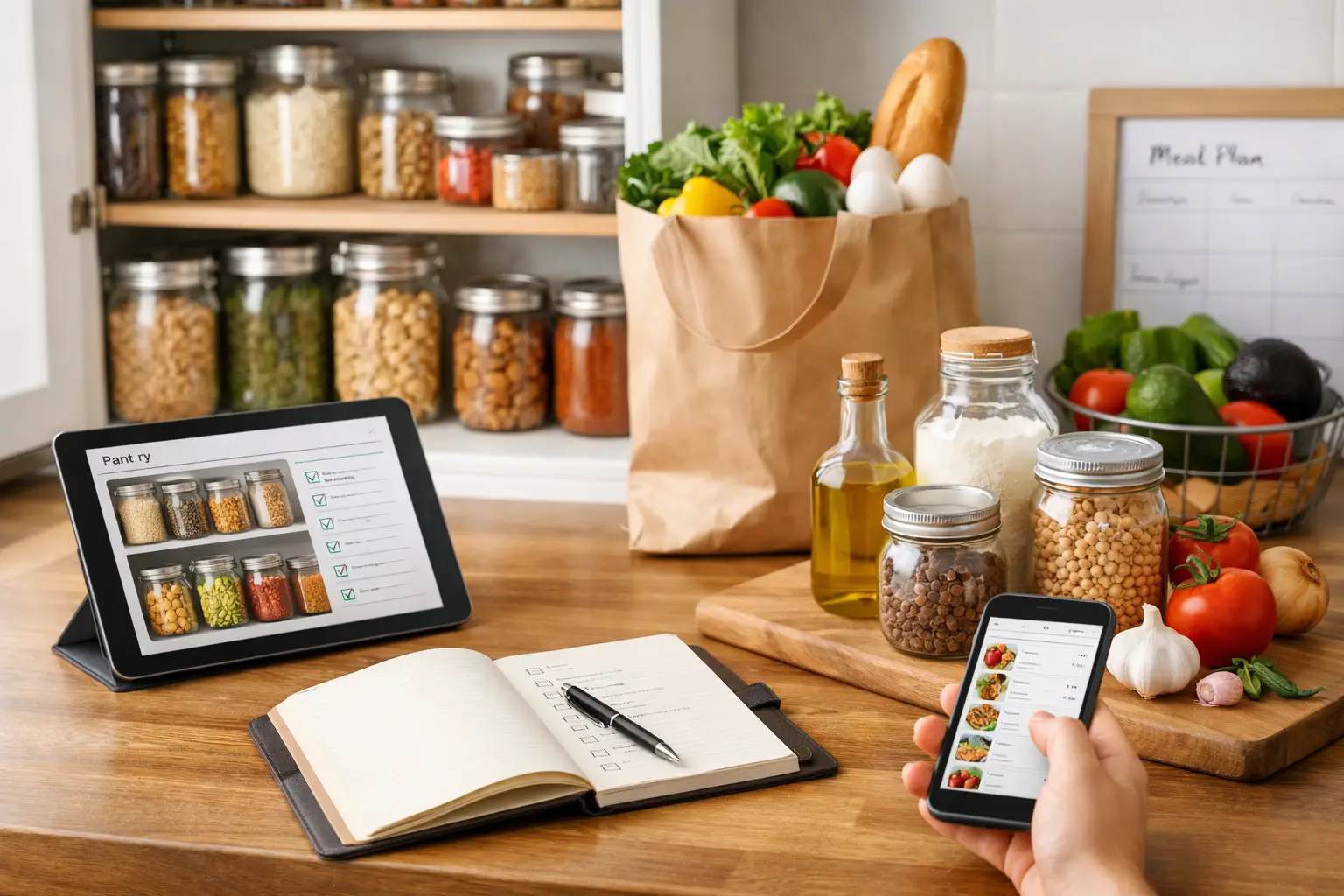
A half-used bag of spinach, three cans of tomatoes and a mystery container in the freezer can somehow still leave you asking, “What can I make for dinner?” That is the gap the best pantry tracking tools are meant to close. The right one does not just create another list to maintain. It helps you see what you have, remember what needs using, and turn those ingredients into a realistic meal.
For busy households, students and anyone trying to waste less food, pantry tracking works best when it fits the way you already cook. Some people need a quick inventory. Others need meal ideas, a shopping list and a plan that stops them from buying a fourth jar of paprika. Here is how to choose the tool that will genuinely earn its place in your kitchen.
What makes a pantry tracker useful?
A pantry tracker can be as simple as a note on your phone or as connected as a platform that links ingredients with recipes and meal planning. Neither option is automatically better. The useful one is the one you will update often enough to trust.
Before choosing a tool, think about where dinner decisions usually go wrong. If you repeatedly buy food you already own, a clear inventory may be enough. If the bigger issue is staring at a full fridge without a plan, look for recipe suggestions based on your ingredients. If family members shop or cook separately, shared lists and an easy-to-read pantry view matter more than lots of detailed fields.
The strongest options reduce friction. You should be able to add an item in seconds, organize it in a way that makes sense to you, and find it again when you are planning dinner. Features are only helpful when they remove a decision rather than create another chore.
Best pantry tracking tools by kitchen style
1. A simple notes app for the low-maintenance cook
A basic note is the easiest place to start. Make headings for fridge, freezer and cupboard, then add items as you notice them. You can keep a short “use first” section at the top for produce, leftovers and opened packages.
This approach is free, fast and flexible. It is especially practical for students, small households or anyone who only wants to track a handful of ingredients. It also works well for a temporary reset after a big grocery trip or before moving.
The trade-off is that a list cannot tell you what to cook. It also depends on everyone remembering to edit it. If your note becomes a long, ungrouped scroll, it may be technically accurate but not very useful at 5:30 p.m.
2. A spreadsheet for detail-oriented planners
A spreadsheet gives you more control over categories, quantities, expiry dates and locations. You might track whether something is in the door of the fridge, the chest freezer or the back of a pantry shelf. Colour-coding items that need to be used soon can make a weekly food check much clearer.
Spreadsheets suit households that buy in bulk, preserve seasonal food or manage dietary preferences carefully. They are also useful when you want a broader view of spending and stock over time.
But detail comes with upkeep. Recording every spice, snack and sauce can turn into an administrative task. Consider tracking only ingredients that are easy to forget or expensive to replace: freezer proteins, fresh produce, dairy, grains, canned goods and opened condiments. A partial list you use is better than a perfect one you abandon.
3. A shared household list for busy families
For couples, roommates and families, the best pantry tracking tool may be a shared list rather than a personal inventory. The goal is simple: one person notices that rice is low, another can see it before shopping, and nobody comes home with duplicates.
Set a few ground rules. Add an item when you open the last package, not when it is completely gone. Keep “need soon” separate from “nice to have.” And choose one person to do a quick weekly review of produce and freezer items.
This style is less about precise quantities and more about communication. It prevents small shopping mistakes, but it still leaves the familiar question of how to turn available ingredients into dinner.
4. A connected pantry and meal-planning platform
A connected tool is often the most practical choice when your pantry is only one part of a larger cooking routine. Instead of tracking food in isolation, it links what you have to recipes, meal plans and a shopping list.
This matters because ingredients are not the end goal. Meals are. A package of chicken, some carrots and a can of chickpeas become more valuable when you can quickly get ideas that suit your available time, serving size or dietary preference.
FlavorLab brings this workflow together through My Pantry, Pantry Rescue, recipe generation, meal planning and a combined Shopping List. Add the ingredients you want to use, then use Pantry Rescue to find meal ideas around what is already in your kitchen or what should be used soon. If you need something more specific, you can generate a recipe based on a dish, cuisine, cooking time, ingredients or food goal, then add missing items to your plan.
This approach is particularly helpful for people who do not want another standalone tracker. Your pantry list has a purpose: helping you decide what to cook and shop with more intention.
Features to look for in the best pantry tracking tools
The best pantry tracking tools are not necessarily the ones with the longest feature list. Look for functions that match your real habits.
Easy item entry is the starting point. If adding food feels slow, you will stop doing it. Choose a system where you can quickly add staples and adjust your inventory without needing perfect measurements.
Flexible categories make the list easier to use. Most kitchens benefit from fridge, freezer and pantry sections, while others may want baking supplies, lunch ingredients or baby and kid snacks. Categories should help you find food, not make you sort endlessly.
Use-soon visibility is more valuable than an intimidating collection of dates. You do not need to record the exact date on every box of crackers. Focus on food that spoils, leftovers and opened packages. A short priority list can prevent more waste than a fully detailed spreadsheet.
Recipe support is where a tracker becomes a dinner helper. Seeing “mushrooms, eggs, tortillas and cheese” is useful. Getting a practical idea for a mushroom quesadilla, breakfast-for-dinner wrap or frittata makes action much more likely.
Shopping integration closes the loop. When you plan meals around pantry ingredients, you should only need to add the missing items. This makes a grocery list more focused and reduces the habit of buying ingredients for recipes you never get around to making.
How to keep your pantry tracker from becoming another chore
Start with a reset, not a full catalogue. Spend 15 minutes identifying food that needs attention: produce, leftovers, thawed freezer items and opened packages. Add those first. Then include your dependable staples, such as pasta, rice, beans, canned tomatoes, oats and cooking oils.
Build one short weekly habit around it. Before grocery shopping, check the pantry tracker and choose two or three ingredients to use in the coming days. Before meal planning, look at what is already available. This gives you a realistic starting point instead of planning a week of meals that all require a full shop.
It also helps to plan for flexibility. Keep one or two meals open for a pantry rescue night. That may mean tacos made from beans and vegetables, pasta with an improvised sauce, grain bowls or soup built from odds and ends. The exact meal can change based on what needs using.
Do not try to record every item forever. If an ingredient is cheap, long-lasting and easy to replace, it may not need close tracking. Save your attention for food that is perishable, costly, frequently duplicated or likely to disappear at the back of the freezer.
The better question is not “What do I have?”
A pantry tracker is useful when it changes the next decision. It should help you answer: What can I make tonight? What should I use first? What do I actually need to buy?
If your current system only gives you a list, try connecting that list to your meals. Open your pantry, pick a few ingredients you want to use, and use Pantry Rescue at FlavorLabApp.ca to turn them into a dinner plan before they are forgotten.