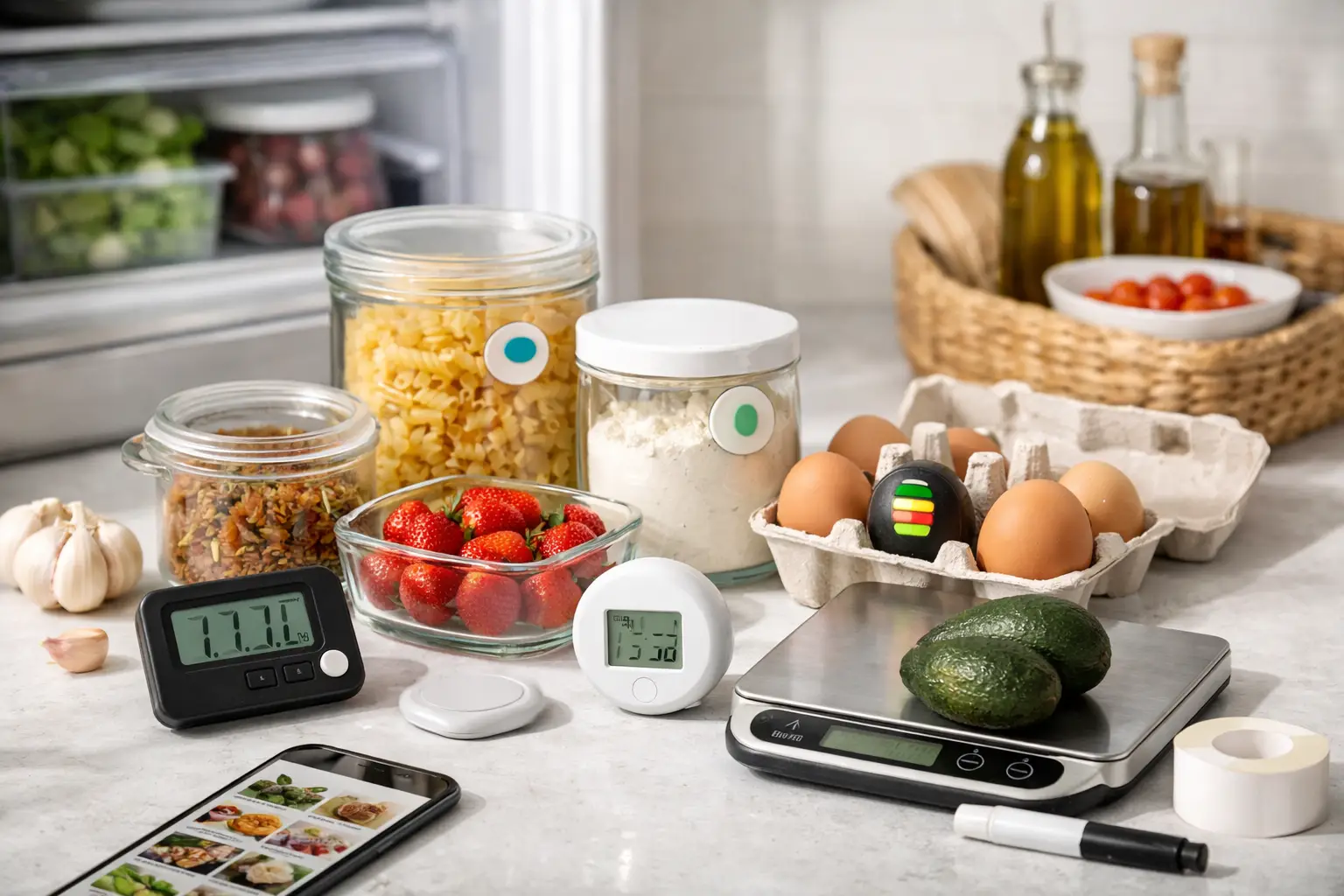
A bag of spinach disappears behind yogurt cups. Half an onion dries out in the crisper. Suddenly, dinner feels like another grocery run when there is food at home that could still make a great meal. The best tools for ingredient expiry do not need to turn your kitchen into a warehouse. They simply make it easier to see what you have, remember when you bought it, and cook the ingredients that need attention first.
For most home cooks, the right system is a mix of one physical tool and one digital habit. The goal is not perfect tracking. It is fewer mystery containers, fewer last-minute throws into the compost bin, and faster answers to the question, “What can I make tonight?”
What an ingredient expiry tool should actually do
Expiry dates are useful, but they are not the whole story. In Canada, a best-before date generally speaks to freshness and quality for unopened products, while food can spoil sooner or later depending on how it is stored. A container of cooked rice, cut produce, or opened dairy also needs a different kind of reminder than a sealed pantry item.
The most helpful tools let you track three simple details: what the ingredient is, when you opened or bought it, and when you want to use it. A good system should also fit your real routine. If entering every spice jar feels like homework, you will stop doing it by Thursday.
The best tools for ingredient expiry
1. Removable food labels and a permanent marker
For leftovers, opened jars, meal-prep ingredients, and freezer portions, labels are hard to beat. Write the item and the date on the container as soon as it goes into the fridge. “Chili - Monday” is often enough. If you prefer more detail, add a use-first date such as “Use by Thurs.”
Choose removable labels or washable freezer-safe tape so containers do not end up covered in old dates. This is the lowest-cost option and works especially well for shared homes, busy families, and students with limited fridge space.
The trade-off is that labels only help if everyone uses them. Keep the marker beside the fridge or food containers, not in a drawer across the kitchen.
2. A fridge whiteboard
A small whiteboard on the fridge is ideal for ingredients that are nearing their best moment, rather than every item you own. Make one short section called “Use This Week” and add things such as mushrooms, chicken, fresh herbs, opened salsa, or ripe bananas.
This works because the information is visible at the exact moment you decide what to cook. It also helps households avoid buying duplicates. Before shopping, take a quick look at the board and build one or two meals around what is already there.
Keep it selective. A whiteboard packed with 30 items becomes background noise. Five to eight priority ingredients is usually enough.
3. Clear containers for leftovers and dry goods
Clear storage containers are not technically a tracking tool, but they solve a major expiry problem: forgotten food. When leftovers are hidden in opaque containers or loosely wrapped at the back of the fridge, they are easy to miss until they are no longer appealing.
Use clear containers for prepared food, chopped vegetables, washed fruit, and dry goods you reach for often. Pair them with a date label, and you have a system that makes food visible and identifiable. Square or stackable containers can also make a small fridge or pantry easier to scan.
Avoid transferring everything just for the sake of it. Produce often keeps best in the packaging or storage method designed for it. The purpose is to improve visibility where it helps, not create extra dishes.
4. A first-in, first-out fridge zone
A first-in, first-out zone is a simple organiser or basket placed near the front of the fridge. Put older produce, open packages, and ready-to-eat leftovers there. New groceries go behind them.
This method is especially useful when your household shops once a week and tends to forget what was already open. A shallow bin labelled “Eat First” gives soon-to-expire ingredients a home without requiring an app, a spreadsheet, or daily notifications.
You can create the same system in the pantry. Keep older cans, pasta, grains, and baking supplies at the front when you restock. It takes a minute after a grocery trip and can prevent a surprisingly large collection of duplicate flour bags and forgotten crackers.
5. Calendar reminders for high-risk items
A phone calendar is useful for the few items that are easy to overlook but costly to waste. Think fresh meat you plan to cook later in the week, a large tub of yogurt, specialty cheese, or ingredients bought for one specific recipe.
Set a reminder for one or two days before you expect to use the item. Name the reminder clearly: “Cook salmon” is better than “Food reminder.” If plans change, freeze or repurpose the ingredient rather than letting the notification become another ignored alert.
This approach is best for people who already live by their phone calendar. It is less useful for tracking every ingredient, because too many reminders quickly lose their value.
6. A simple pantry spreadsheet
A spreadsheet can be a strong choice for households that buy in bulk, follow dietary preferences, or share responsibility for cooking and shopping. Track the item, quantity, date purchased, best-before date if relevant, and storage location. Sort by date to see what needs to be used next.
The benefit is control. You can check your pantry before making a shopping list and avoid buying another bag of lentils when two are already open. The downside is maintenance. Spreadsheets work best when you focus on longer-lasting pantry and freezer foods rather than trying to log every carrot.
7. A pantry and meal-planning app
For home cooks who want ingredient tracking to lead directly to dinner ideas, a pantry-focused app is usually more useful than a standalone expiry list. Look for one that lets you add what you have, flag ingredients you want to use soon, and turn those ingredients into practical recipes.
This is where a connected kitchen tool can save time. Instead of seeing “zucchini, tortillas, black beans” as three separate reminders, you can use them as the starting point for a meal. The useful question becomes not just “When does this expire?” but “What can this become?”
FlavorLab brings that workflow together through My Pantry and Pantry Rescue, helping you use available or soon-to-expire ingredients as a prompt for meal ideas. You can then build a recipe around your time, serving size, cuisine preference, or dietary needs, rather than forcing yourself into a recipe that requires another long shop.
8. A weekly five-minute food check
The tool that makes every other tool work is a repeatable check-in. Pick a time that already fits your routine, such as Sunday afternoon, the night before grocery shopping, or when you plan the week’s meals. Scan the fridge, freezer, and pantry, then decide what needs to be used first.
You do not need to count every item. Look for leafy greens, soft fruit, opened sauces, cooked leftovers, thawed foods, and produce that is beginning to lose its crunch. Make one realistic plan: stir-fry the vegetables, blend fruit into smoothies, turn leftover roast chicken into wraps, or freeze portions you will not reach in time.
Build a system you will keep using
Start with the smallest setup that solves your biggest problem. If leftovers are your weak spot, use labels and clear containers. If fresh produce gets forgotten, add an Eat First bin and a weekly fridge check. If meal planning is the missing link, choose a pantry tool that turns ingredients into recipes instead of another list to manage.
Be realistic about how food is handled, too. When in doubt about whether something is safe to eat, do not rely on a date label alone. Storage conditions, packaging, appearance, smell, and the type of food all matter. When you are unsure, it is safer to discard it.
The best expiry system is not the most detailed one. It is the one that helps you notice a wilting bunch of cilantro on Tuesday and turn it into dinner before it becomes waste. Next time your fridge looks full but dinner feels unclear, visit FlavorLabApp.ca and use Pantry Rescue to turn the ingredients you already have into a meal plan.