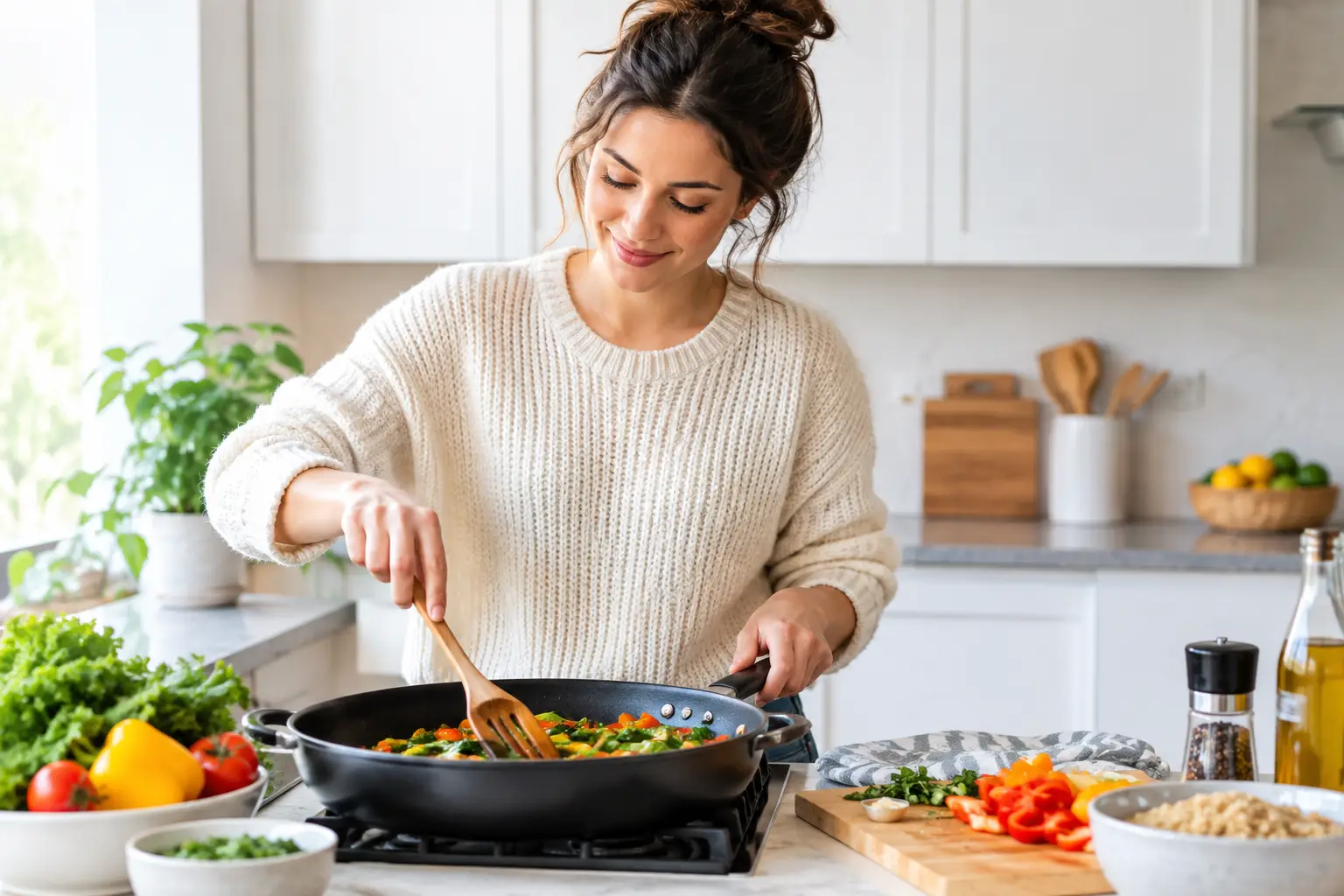
A bag of spinach wilting in the crisper, half a can of beans in the fridge, and no interest in washing three pots: that is the real starting point for a cooking solo guide. Cooking for one is not simply a smaller version of family dinner. It needs its own approach - one that makes meals feel satisfying without creating a week of identical leftovers or a kitchen full of dishes.
The goal is not to cook an elaborate meal every night. It is to build a small set of habits that help you decide faster, buy with purpose, and turn what you have into something you actually want to eat.
Start with a flexible solo cooking plan
A detailed seven-day menu can be useful, but it can also feel restrictive when your schedule changes or you suddenly want something different. For solo cooking, plan around a few ingredients and meal types instead of assigning every dinner in advance.
Choose two proteins, two vegetables, one grain or starch, and a few flavour builders for the week. For example, eggs and chickpeas, broccoli and peppers, rice and potatoes, plus garlic, lemon, cheese, and a favourite sauce can become several very different meals. Make a veggie rice bowl one night, a crisp potato-and-egg skillet another, then fold the remaining vegetables into a quick soup or wrap.
This approach makes grocery shopping less wasteful because each item has more than one possible use. It also leaves room for takeout, plans with friends, or a night when toast and fruit is exactly the right dinner.
Shop for overlap, not for one perfect recipe
Single-serving recipes can be helpful, particularly when you are learning. But buying a specialty ingredient for one meal is often what makes cooking solo feel expensive. Before adding something to your list, ask where else it will go.
A tub of plain yogurt can become a creamy sauce, a breakfast topping, or the base for a quick marinade. Tortillas can become tacos, breakfast wraps, or baked crisps for soup. A bunch of herbs is easier to use when you decide early that it will appear in more than one meal.
Frozen vegetables deserve a regular place in a one-person kitchen, too. They are not a compromise when fresh produce will not be used quickly. Keep a few options you genuinely like, such as peas, spinach, corn, or mixed vegetables, and use only what you need. Canned beans, lentils, tomatoes, tuna, and coconut milk can play a similar role in the cupboard.
Use components without eating meal prep all week
Many people avoid meal prep because they picture five identical containers lined up in the fridge. Cooking solo works better when you prep components, then change the final meal.
Cook a small pot of rice, roast a tray of vegetables, or make a simple vinaigrette. Store each part separately. On the first night, combine them in a warm bowl with a fried egg. The next day, turn the same rice and vegetables into a stir-fry with soy sauce and sesame oil. Later in the week, add them to a soup or tuck them into an omelette.
The trade-off is that component cooking takes a little thought at the start of the week. In return, you get much more variety than you would from pre-assembled meals. If even that feels like too much, prepare one useful base only. Cooked grains, washed greens, or a chopped onion can save enough time to change your weeknight routine.
Make recipes work at one serving
Not every recipe scales down neatly. Baking is the clearest example, because reducing an egg or a tiny amount of leavening can get awkward. For regular meals, though, scaling down is usually straightforward.
Start by halving a four-serving recipe, then treat the second serving as a planned lunch or freezer portion. Trying to divide every ingredient by four may leave you with a quarter of an onion and a vague sense of annoyance. Cooking two portions is often the sweet spot: almost the same effort, but with a useful meal waiting for you.
Use your senses as you adjust. A smaller pot may cook more quickly, while a crowded small pan can steam food instead of browning it. Taste sauces before serving, especially salty or spicy ones. You can always add more seasoning, but fixing an over-salted single serving is much harder.
Keep a short list of reliable one-pan dinners
A one-pan meal is not just about fewer dishes. It removes decisions. When you know how to make a dependable skillet dinner, soup, noodle bowl, or sheet-pan meal, you are less likely to let good ingredients go unused.
A useful formula is protein plus vegetables plus a filling base plus a sauce or seasoning. Think chickpeas, chopped vegetables, and couscous with lemon and herbs. Or ground meat or lentils, frozen vegetables, and noodles with a savoury sauce. The exact ingredients can change, but the structure stays familiar.
Do not force every dinner into the same format, though. A salad with warm roasted vegetables can feel right in summer, while a simple curry or baked potato may be more appealing on a cold evening. The best solo routine gives you options without asking you to reinvent dinner each night.
Make leftovers intentional
Leftovers become frustrating when they are accidental. They are useful when they have a job. Before cooking, decide whether extra food is tomorrow's lunch, a freezer meal, or an ingredient for another dinner.
A roasted chicken thigh can become a grain bowl at lunch, then a quesadilla with cheese and greens the next evening. Extra cooked lentils can be stirred into pasta sauce, added to soup, or mixed into a salad. Label freezer containers with the meal and date so they do not become mystery blocks at the back of the freezer.
It also helps to portion leftovers while you are cleaning up, rather than leaving the whole pan in the fridge. A ready-to-grab container is far more likely to become lunch. Cool food promptly, refrigerate it, and reheat until it is steaming hot. If you are unsure how long something has been stored, choose caution over wishful thinking.
Let your appetite set the serving size
Cooking for one does not mean every meal must be perfectly measured. Some nights call for a lighter snack-style dinner; other nights you may want enough food for lunch tomorrow. Learning your own patterns is more helpful than following a serving number blindly.
Keep foods that make a small meal more complete: eggs, cheese, canned beans, leafy greens, fruit, nuts, bread, and a few sauces or seasonings you enjoy. These are the ingredients that turn leftover rice into dinner or a bowl of soup into something more filling.
If you are cooking around a dietary preference, focus on flexible swaps rather than creating an entirely separate pantry. Beans can replace meat in many bowls and sauces, dairy-free alternatives can work in familiar dishes, and gluten-free grains can become the base of meals everyone enjoys. The right choice depends on what you like, what you can access, and how much time you have.
Make the decision before you get hungry
The hardest part of solo cooking is often deciding what to make at 6 p.m. A pantry list, a short collection of favourite meals, and a simple plan for ingredients nearing their best can remove that daily stall.
This is where a connected kitchen tool is practical rather than gimmicky. FlavorLab can help you turn available ingredients into meal ideas with Pantry Rescue, generate a recipe around your time, serving size, cuisine, or food goal, and keep meal plans and shopping needs organized in one place. Use it when you have half a pepper and cooked rice to use up, or when you want a clear recipe instead of another round of scrolling.
Cooking alone can be one of the easiest ways to become more confident in the kitchen because every meal teaches you what works for you. Start with what is already in your fridge, choose one realistic dinner, and use Pantry Rescue to give those ingredients a better ending.