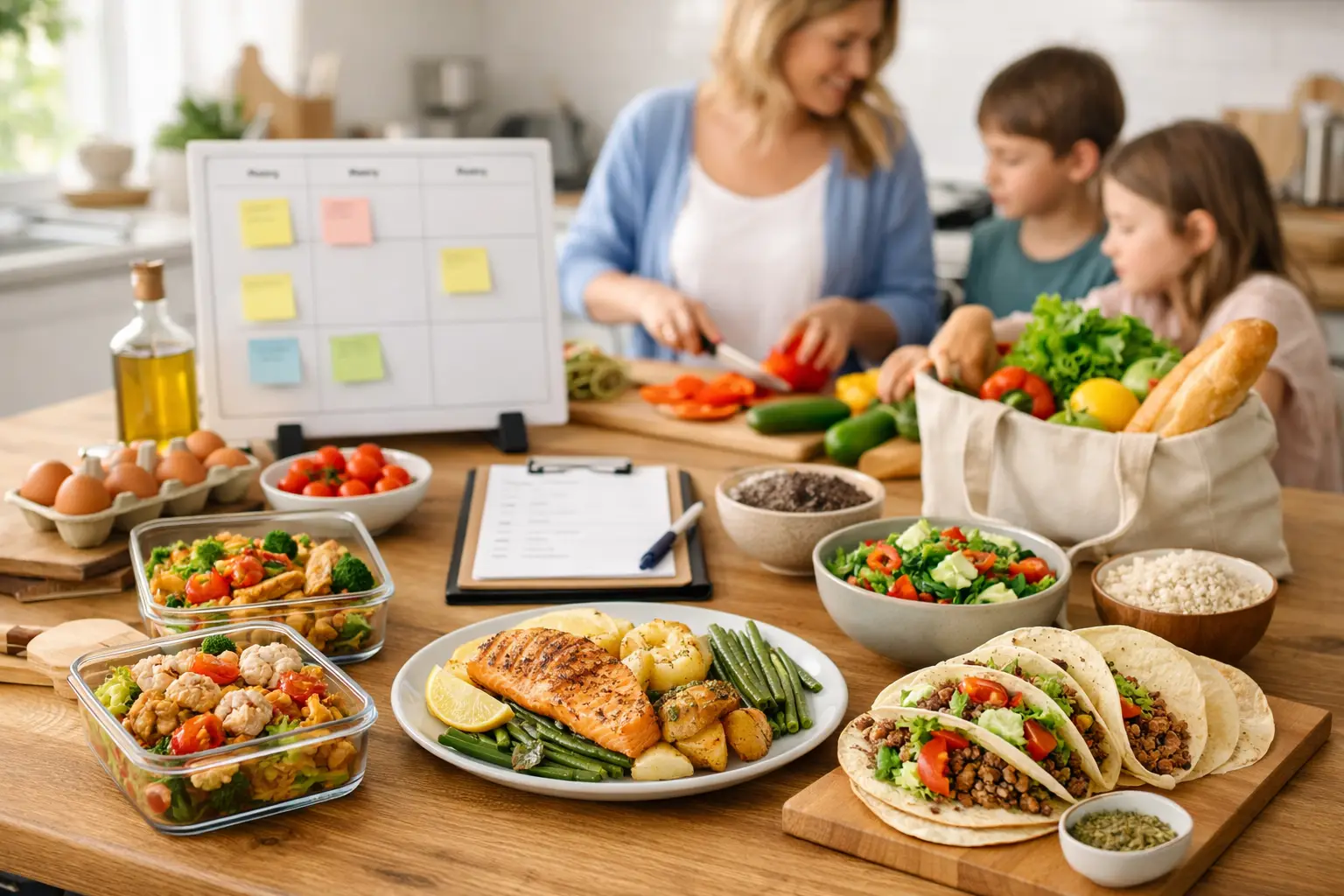
The 5 p.m. question is rarely, “What would everyone enjoy eating?” More often, it is, “What can I make with 30 minutes, one tired child, a nearly empty fridge, and no desire to visit the shop again?” This family dinner planning example is built for that exact moment. It gives you a realistic five-night plan with shared ingredients, room for changing schedules, and meals that do not require cooking something entirely new every evening.
A good dinner plan is not a strict menu you must follow perfectly. It is a short list of decisions made before the busiest part of the week arrives. The goal is to buy with purpose, use what you have, and keep enough flexibility for leftovers, appointments, and the occasional night when toast or cereal is the honest answer.
A family dinner planning example that stays flexible
Imagine a household of four: two adults, two school-aged kids, and a week that includes one late work meeting, one activity night, and a Friday when everyone is tired. The family likes familiar food but is happy to try one new flavour each week. There are no major dietary restrictions, although one person prefers milder spice.
Before planning, take five minutes to check the fridge, freezer, and cupboards. For this example, you already have rice, pasta, canned tomatoes, onions, garlic, frozen peas, a bag of carrots, shredded cheese, tortillas, eggs, and a few chicken breasts. You also find half a bunch of broccoli that should be used soon.
That inventory changes the plan. Rather than starting with five random recipes, build meals around those ingredients and buy only the pieces that connect them: ground turkey or beef, black beans, lettuce, bell peppers, Greek yoghurt, bread, bananas, and fruit for lunches.
Here is the week:
- Monday: Sheet-pan chicken, broccoli, carrots, and rice. Roast chicken pieces with broccoli and carrots while rice cooks. Keep the seasoning simple with garlic, paprika, a little oil, salt, and pepper. Make extra chicken and rice on purpose.
- Tuesday: Chicken quesadillas with black beans and crunchy veg. Slice Monday’s chicken, add black beans and cheese to tortillas, then serve with lettuce, peppers, and yoghurt. Put a mild filling on the table first, then offer hot sauce or chilli flakes for anyone who wants more heat.
- Wednesday: One-pot tomato pasta with peas. Use canned tomatoes, onion, garlic, pasta, and frozen peas. This is the low-effort meeting-night dinner. Add cheese at the table and serve fruit on the side.
- Thursday: Build-your-own rice bowls. Reheat the remaining rice and set out sautéed peppers, black beans, any leftover chicken, lettuce, yoghurt, and cheese. Each person can assemble a bowl that suits them, which helps when appetites and preferences differ.
- Friday: Breakfast-for-dinner omelettes and toast. Eggs, cheese, leftover vegetables, and toast make a quick finish to the week. If you have a few extra minutes, roast the last carrots or serve sliced fruit alongside.
The value of this plan is not that every meal is impressive. It is that Monday’s cooking makes Tuesday and Thursday easier, while Wednesday and Friday need very little energy. You are using the same ingredients in different forms, so the shopping list stays manageable and less food gets forgotten at the back of the fridge.
Start with your week, not your recipes
The biggest planning mistake is choosing meals based only on what sounds good on Sunday. A rich, hands-on meal may be perfect for a quiet weekend but unrealistic on the night of a parent-teacher meeting or a late commute.
Start by looking at the calendar. Mark the two busiest nights, then assign your easiest meals there. Think one-pot pasta, breakfast-for-dinner, freezer-friendly soup, wraps, or a tray bake that mostly cooks itself. Save a meal with chopping, simmering, or a new technique for the night you have more time.
It also helps to decide which type of dinner each night needs to be. You might choose one cook-once-and-reuse meal, one fast pantry meal, one build-your-own dinner, one leftover night, and one comfort-food favourite. This gives the week variety without requiring five separate sets of ingredients.
If your household is unpredictable, plan four dinners instead of seven. Keep one backup option that needs almost no thought, such as eggs and toast, pasta with sauce from the cupboard, or frozen leftovers. Planning fewer meals can be more useful than planning every night and feeling like you have failed when plans change.
Choose ingredients with more than one job
A family dinner plan becomes easier when ingredients can travel across meals. Roasted vegetables can go beside chicken, inside wraps, or into omelettes. Cooked rice can become bowls, fried rice, or a side dish. Plain Greek yoghurt works as a topping, dip, or base for a quick sauce.
This does not mean every dinner must taste the same. Change the format and seasoning. Chicken with roasted vegetables feels different from chicken quesadillas, even when the core ingredients overlap. A tomato pasta night also breaks up the week so no one feels they are eating repeats.
Aim for a few dependable building blocks: one protein, one carbohydrate, two or three vegetables, and one flavour booster such as cheese, yoghurt, herbs, a sauce, or a seasoning blend. Then make each meal flexible enough for different ages and tastes. Serving spicy toppings separately, for example, lets one dinner work for people with very different heat preferences.
Turn the plan into a shopping list you will use
Once the meals are chosen, write the list by checking each recipe against what is already in the kitchen. Do not rely on memory. A duplicate bag of carrots is harmless; a duplicate package of food that will not be used before it spoils is not.
Group the list in a way that matches your shop: produce, proteins, dairy, bakery, and cupboard items. Add breakfast and lunch needs only after the dinner ingredients are covered. For a busy family, it is also wise to add one or two convenient extras, such as pre-washed greens or canned beans. Convenience is not a shortcut you need to justify when it helps dinner happen.
Quantity depends on your family’s appetite and whether you want leftovers. If Tuesday’s quesadillas need leftover chicken, cook more chicken on Monday than you would for one dinner alone. That small adjustment is what makes the plan work. Leftovers should be assigned a job, not treated as a hopeful bonus.
Make prep useful, not ambitious
Sunday meal prep does not need to mean spending three hours filling matching containers. For many households, 20 to 30 minutes of light preparation is enough. Wash produce, chop onions and peppers, cook rice if it stores well for your schedule, and put the ingredients for the first two dinners where you can see them.
You can also do prep immediately after dinner. While Monday’s tray is in the oven, rinse the lettuce for Tuesday and set aside the cooked chicken before it reaches the table. On Wednesday, chop a few extra peppers for Thursday’s bowls. These small actions are easier than a large prep session because they fit around the meal already happening.
Be realistic about what your family will eat. A plan that includes five unfamiliar recipes may look exciting but can create waste if children reject them or adults run out of energy. A better rhythm is three familiar dinners, one flexible leftover meal, and one new idea. Let everyone choose part of the new meal, such as the sauce, vegetable, or cuisine.
Adjust the example for your household
The same framework works for smaller households, students sharing a kitchen, or families with dietary preferences. For two people, halve the plan but intentionally make extra pasta sauce or rice for lunches. For a vegetarian week, swap chicken and ground meat for lentils, tofu, chickpeas, or extra beans. If one person avoids dairy, keep cheese and yoghurt as optional toppings instead of building them into the whole dish.
If food waste is the main problem, begin with the ingredients that need using first. Broccoli, soft peppers, herbs, cooked grains, and opened yoghurt should shape the earliest meals. Shelf-stable and frozen foods can carry you later in the week.
When you are stuck, use your available ingredients as the starting point rather than searching for a perfect recipe. FlavorLab can help you turn what is in your kitchen into a specific recipe, plan meals around it, and bring the ingredients together in one shopping list. Its Pantry Rescue tool is especially useful when you spot produce that needs attention before the next shop.
The best plan is the one that lowers the pressure at dinner time, not the one that looks most organised on paper. Start with one busy week, adapt this family dinner planning example to the food you already have, and create your next set of meal ideas at FlavorLabApp.ca.