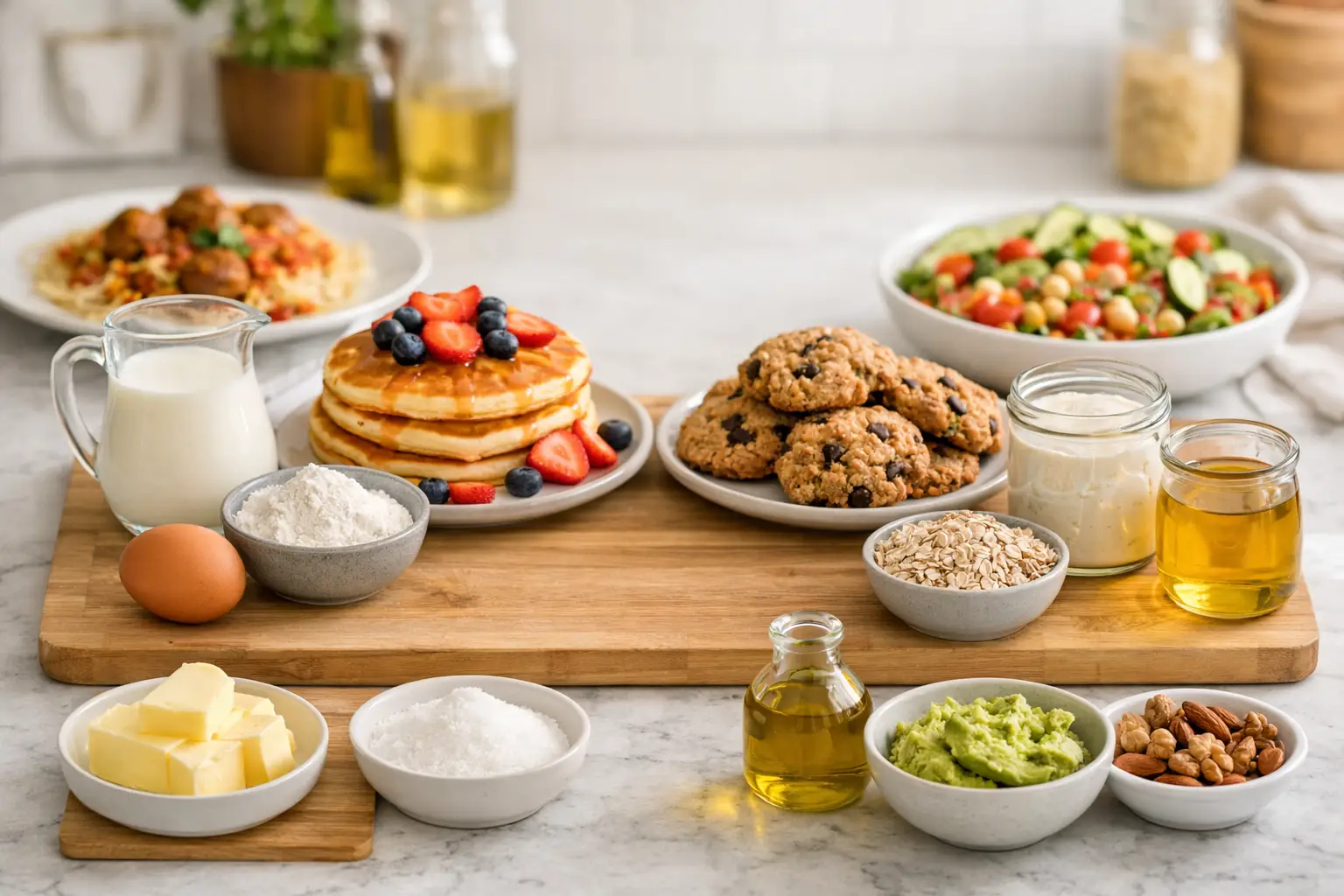
A missing ingredient should not automatically mean changing dinner plans. If a recipe calls for sour cream but you have plain yogurt, or you are short one egg halfway through baking, a thoughtful substitution can save the meal. Knowing how to make ingredient swaps is less about memorizing a giant chart and more about understanding the job an ingredient does.
Some ingredients add moisture. Others create structure, thicken sauces, bring acidity, or carry flavour. Replace that function, and your recipe has a strong chance of working. Replace it without considering the role, and you may end up with thin soup, dry muffins, or a sauce that tastes oddly flat.
Start by asking what the ingredient does
Before reaching for the closest-looking item in your fridge, pause for a quick check. Is the ingredient there for flavour, texture, moisture, binding, colour, or lift? In many everyday dinners, you can swap freely because the ingredient is not doing a precise technical job. In baking, small changes matter more because ingredients work together to create a particular structure.
A can of diced tomatoes in a curry, for example, brings liquid, acidity, and a little sweetness. Crushed tomatoes can replace it easily, while tomato paste needs water added because it is concentrated. For a creamy pasta sauce, milk may work in place of cream, but the sauce will be lighter and less rich. You can compensate with a small amount of butter, cheese, or a flour slurry if the recipe needs more body.
Think of a swap as an adjustment, not always a perfect copy. A good dinner can be different from the original recipe and still be exactly what you need.
How to make ingredient swaps by category
The easiest substitutions are usually within the same category. Similar ingredients tend to behave similarly, but taste and texture still deserve attention.
Dairy and creamy ingredients
Plain Greek yogurt can stand in for sour cream in dips, tacos, baked potatoes, and many sauces. It is tangier and may be thicker, so stir it in over low heat rather than boiling it hard. Plain yogurt works too, although it can be looser. For a dairy-free creamy element, unsweetened plant-based yogurt or a blended white bean mixture may suit savoury dishes, depending on the flavour you want.
When a recipe calls for milk, an unsweetened plant-based alternative often works in pancakes, soups, and sauces. Choose one with a neutral flavour for recipes where dairy is not meant to stand out. Coconut-based products can be delicious in curries and soups, but they bring a distinct taste that may not suit a classic mac and cheese.
Butter and oil are often interchangeable for sautéing. Butter adds richness, while oil usually has a cleaner flavour and handles higher heat better. In cookies or pastry, however, the swap changes spread, tenderness, and flavour, so expect a slightly different result.
Eggs and baking basics
Eggs are one of the trickiest ingredients to replace because they can bind, lift, moisten, or enrich. First, identify their role. One egg in pancakes, muffins, or quick breads can often be replaced with a simple binder such as a flax-and-water mixture, applesauce, mashed banana, or commercial egg replacer. Each choice affects flavour and texture: banana adds sweetness and a fruity note, while applesauce can make baked goods softer and more moist.
If eggs are providing lift in a cake, a replacement may not create the same airy crumb. This is where choosing a recipe designed around your needs can be more reliable than heavily adapting one. For savoury dishes such as fried rice, a scrambled egg substitute changes the final dish more noticeably, so build flavour with vegetables, tofu, seasoning, or sauce rather than expecting an identical result.
For baking powder, do not substitute baking soda one-for-one. Baking soda needs an acidic ingredient, such as yogurt or lemon juice, to react. Baking powder already contains what it needs to create lift. If you are short, it may be better to make a smaller batch than improvise a large amount.
Grains, pasta, and starches
Rice, couscous, quinoa, noodles, potatoes, and bread each make a meal feel filling, but they cook differently. If you swap rice for quinoa in a bowl, prepare it separately according to its own cooking time and add it at the end. Do not assume it can simmer in the same amount of liquid for the same length of time.
Pasta can often be replaced with another shape, but smaller shapes cook faster and may absorb more sauce. For a gluten-free option, use a pasta you enjoy and watch it closely, as some varieties soften quickly. In soups, potatoes, beans, lentils, or grains can replace noodles, though each will change thickness and cooking time.
Cornstarch and flour both thicken sauces, but they are not equal swaps. Cornstarch thickens quickly and creates a glossy finish; flour needs more cooking time and gives a more opaque sauce. If using flour, whisk it into fat first or mix it thoroughly with cold liquid to prevent lumps.
Vegetables, herbs, and flavour builders
This is where you can be most flexible. Use spinach instead of kale, zucchini instead of eggplant, or broccoli instead of green beans when the cooking method is similar. A sturdy vegetable that needs longer roasting should not be added at the same time as delicate greens. Cook in stages so nothing turns mushy.
Fresh herbs and dried herbs also need different handling. Dried herbs are more concentrated, so use less than the fresh amount and add them earlier to give them time to soften. Fresh herbs are brightest when stirred in near the end. If you are out of parsley, basil, or cilantro, choose another herb based on the dish rather than skipping freshness entirely. Green onion, lemon zest, or a spoonful of pesto can bring back some of that finishing lift.
For onions and garlic, shallots, leeks, chives, garlic powder, or onion powder can help. They are not identical, but they can fill the same aromatic role. Start modestly with dried seasonings, taste, and add more as needed.
Keep flavour balanced after the swap
A recipe may be technically complete but still taste as though something is missing. That is usually a balance issue. When you replace a salty cheese with a milder alternative, you may need a pinch more salt. When you use canned tomatoes instead of fresh, a little sugar may soften their sharpness. When you omit a rich ingredient, acid or seasoning can keep the dish interesting.
Taste at key points, especially after adding a substitute. Ask whether the dish needs salt, acidity, sweetness, heat, or richness. Lemon juice or vinegar can brighten a heavy sauce. A little olive oil, butter, nut butter, or cheese can make a leaner dish feel more satisfying. Use small amounts and reassess rather than adding everything at once.
Know when not to force a swap
Not every substitution is worth making. If the missing ingredient is the centre of the dish - such as chicken in a chicken-focused recipe, or chocolate in brownies - choosing a different recipe may be easier and more enjoyable. The same applies to recipes with a short ingredient list, where every item is noticeable.
Allergy and dietary needs also call for extra care. Check package labels and avoid assuming that a replacement is suitable for everyone at the table. If you need to make several swaps at once, simplify the recipe where possible. A one-pan grain bowl is generally more forgiving than a layered baked dessert.
When your fridge looks random, use the ingredients you actually have as the starting point. FlavorLab’s Pantry Rescue can turn available or soon-to-expire food into meal ideas, while its recipe tools can help you request a dish built around your preferred ingredients, cuisine, serving size, and dietary preferences.
The best swap is the one that gets a good meal on the table without wasting food or sending you on an extra store run. Open FlavorLabApp.ca, enter what is in your kitchen, and generate a recipe that works with it.