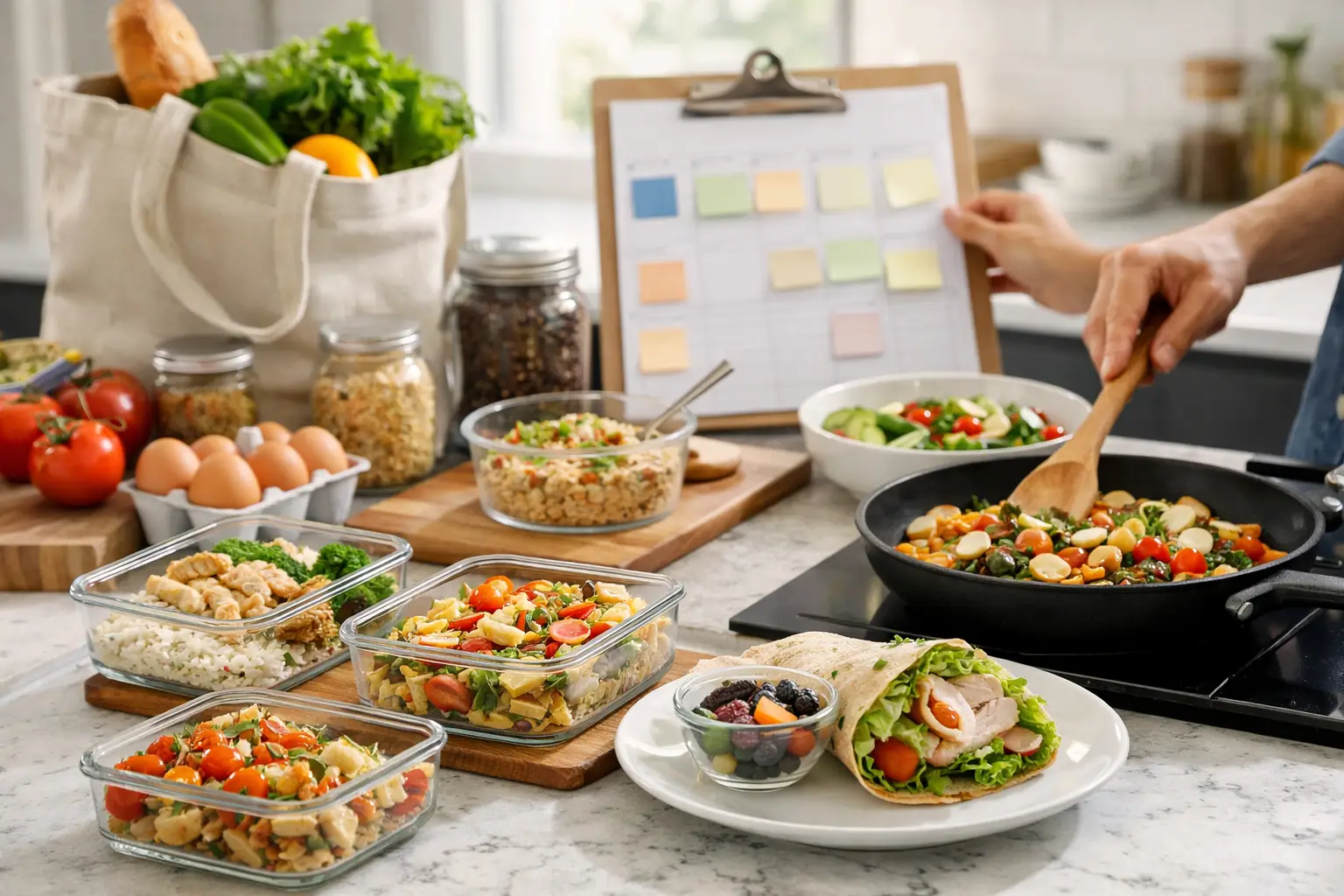
A good student meal plan is not a colour-coded spreadsheet full of meals you will never make. It is a realistic answer to the 6 p.m. question: what can I cook with what I have, how long will it take, and will it still fit my budget? The best student meal plans leave room for late classes, changing schedules, shared fridges, and the occasional night when toast is the plan.
For most students, the goal is not perfect meal prep. It is buying food with a purpose, using it before it goes soft, and making a few dependable meals feel different across the week. Start there, and cooking becomes less of a daily decision.
Build student meal plans around flexible ingredients
A rigid plan can fall apart the moment a lab runs late or a friend invites you out. Instead of assigning a completely different recipe to every day, choose a small group of ingredients that can work in several meals.
Think of a weekly shop as building blocks. A bag of spinach can go into eggs, pasta, wraps, grain bowls, and soup. Roasted vegetables can become a side dish one night and a filling for quesadillas the next. Cooked rice works with stir-fries, burrito bowls, fried rice, or a quick breakfast with an egg.
Choose two proteins, two carbohydrate bases, a few vegetables, and one or two flavour shortcuts. For example, you might buy eggs and chickpeas; rice and pasta; onions, peppers, carrots, and spinach; then salsa and a jar of curry sauce. That combination gives you several directions without requiring a long, expensive list of specialty ingredients.
This approach also helps when you share kitchen space. You can make one pan of roasted vegetables or one pot of rice, then use only the amount you need at each meal. There is less pressure to store five fully assembled containers in a crowded fridge.
Pick three anchor meals, not seven perfect dinners
Plan three dinner ideas you genuinely expect to cook, then make them flexible enough for leftovers. A practical week could include chickpea curry with rice, sheet-pan sausage and vegetables, and pasta with spinach and a quick tomato sauce. The remaining nights can use leftovers, freezer meals, breakfast-for-dinner, or a pantry meal.
If you know that Wednesday is your longest day, do not schedule a recipe with multiple chopping steps. Make that your leftover night or plan something fast, such as eggs on toast with fruit and sautéed greens. Meal planning works best when it follows your actual week instead of the week you wish you had.
Start with the food you already own
The cheapest ingredient is usually the one waiting at the back of your cupboard. Before shopping, take five minutes to check your fridge, freezer, and pantry. Look for food that needs using soon, plus staples you forgot you had: canned beans, noodles, oats, frozen vegetables, tortillas, or a half bag of rice.
Then plan meals around those ingredients first. If you have tortillas, eggs, cheese, and a pepper, breakfast wraps or quesadillas are an easy win. A can of tomatoes, pasta, lentils, and onion can become a filling dinner. Frozen berries and oats can cover several breakfasts without another grocery run.
This is where students often save more than they expect. Food waste is rarely caused by buying one extravagant item. It usually comes from small purchases that do not connect to a plan: herbs for one recipe, a second bag of produce, or a sauce bought for a meal that never happens.
Keep a short running note on your phone with foods that need using. It does not need categories or perfect quantities. A simple list such as “half broccoli, yogurt, tortillas, mushrooms” is enough to guide your next meal and prevent duplicate purchases.
Shop for overlap, not variety for its own sake
Variety matters, but it does not require a different shopping list every day. Use flavour changes to make familiar ingredients feel new. The same roasted vegetables can taste completely different with taco seasoning and salsa one night, then curry spices and yogurt the next.
When money is tight, buy ingredients with a clear role in at least two meals. This is especially useful for fresh produce. If you buy a bag of carrots, plan to use them in a snack, soup, stir-fry, or roasted tray meal. If you buy a loaf of bread, think beyond sandwiches: toast with eggs, grilled cheese, croutons, or French toast can help finish it.
Some convenience foods are worth it, depending on your schedule. Pre-washed greens, frozen chopped vegetables, canned beans, and bagged salad can cost more per serving than their basic alternatives, but they may reduce the chance that food goes unused. The right choice is the one you will actually cook.
A simple shopping list should include staples you are running low on, ingredients for your three anchor meals, and a few easy backups. Those backups might be soup, frozen dumplings, canned tuna, instant noodles with added vegetables, or a freezer portion of a previous meal. They are not a failure of planning. They are part of a plan built for real life.
Make one cooking session do more work
You do not need to spend Sunday afternoon preparing every meal. Even 30 to 45 minutes of light prep can make weekday cooking feel easier.
Cook one base, such as rice, potatoes, pasta, or quinoa. Prepare one versatile protein, like baked chicken, lentils, tofu, or hard-boiled eggs. Wash greens, chop a few vegetables, and make or buy a sauce you enjoy. Keep the components separate so they can become different meals rather than identical leftovers all week.
For example, cooked rice, roasted carrots and peppers, and chickpeas can become a bowl with salsa on Monday. On Tuesday, turn them into a wrap with cheese. By Thursday, sauté the remaining rice with an egg and soy sauce. The ingredients are repeated, but dinner does not have to feel repetitive.
If batch cooking is not your thing, prepare ingredients as you go. Double a recipe when you are already cooking, then freeze one or two portions. This spreads the work across the month and gradually builds a useful stash for busy weeks, exam periods, or days when your kitchen motivation disappears.
Keep breakfast and lunch almost automatic
Dinner gets the most attention, but breakfast and lunch can quietly drain your budget if they are not planned. Pick two or three options you can repeat without getting bored. Overnight oats, yogurt with fruit and granola, eggs on toast, or smoothies made with frozen fruit are all easy to adjust based on what is available.
For lunch, leftovers are ideal, but they are not the only option. Wraps, grain bowls, pasta salad, soup, and snack-style lunches can be assembled quickly. Keep a few shelf-stable options around for days when there is nothing prepared. A peanut butter sandwich, fruit, and milk may not be exciting, but it is usually more affordable and satisfying than an unplanned purchase between classes.
Plan for nutrition without making meals complicated
A student meal plan does not need to track every number to be nourishing. Aim for a simple mix: a source of protein, a carbohydrate for energy, vegetables or fruit when you can, and fats that make meals satisfying. It could be lentils with rice and spinach, pasta with tuna and peas, or a peanut butter banana smoothie alongside toast.
If you follow a dietary preference, use substitutions that fit the meals you already like. Beans, tofu, eggs, dairy, fish, and meat can all play different roles depending on your needs and budget. For specific medical nutrition needs or allergies, speak with a qualified health professional and check ingredient labels carefully.
Estimated nutrition information can be useful for understanding a recipe, but it is best treated as a guide. Portions, brands, substitutions, and cooking methods can all change the final result.
Use a plan that can change with you
The most useful meal plan is one you can revise. If you did not cook Tuesday's dinner, move it to Thursday. If a roommate uses the last onion, choose another recipe rather than ordering food by default. If your spinach is wilting, make that tonight's priority.
FlavorLab can help make that adjustment practical. Add what you have in My Pantry or use Pantry Rescue to turn soon-to-expire ingredients into meal ideas. You can generate a recipe around a dish, ingredient, cuisine, serving size, cooking time, or dietary preference, then add meals to a planner and bring the ingredients together in one shopping list.
Try building your next week around three flexible dinners and the ingredients already in your kitchen. Then generate a recipe or organise your shopping list at FlavorLabApp.ca before you head to the store.